Virtual Production

Virtual production is a fast-growing space with ever-evolving tools, but one mainstay for media servers, playback, and compositing is Assimilate’s Live FX Studio. Available with a perpetual, yearly, or three month license, this powerful piece of software can help you pull off advanced image-based lighting (IBL), as well as keying, masking, metadata creation, and more. I talked to
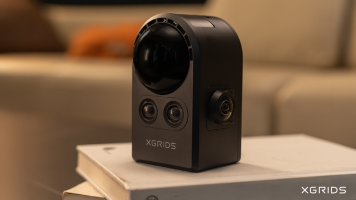
While you may have heard about the XGRIDS PortalCam in our introduction to Photogrammetry and Gaussian Splatting, inside the camera and its ecosystem are some truly unique capabilities that deserve a closer look. What's the most effective way to do spatial capture? What is a

Looking to learn more about the LED volume walls used in the burgeoning field of OSVP (on-set virtual production)? These walls are a key component of the process, serving as true-to-life backgrounds, sets, and locations for OSVP. Volume walls are composed of multiple LED displays (also called cabinets) that are seamlessly joined together to form a custom-size screen on which your background footage and real-time graphics are shown. Here, we’re going over key specs for the most visible component, the displays themselves.
Configuration
The first

Blending a high-resolution video display with live action, real-time computer graphics, camera tracking, and game engine software to create immersive environments, virtual production is rapidly transforming the face of video production. To streamline your VP or XR (extended reality) stage setup, consider getting a jump start with the help of a turnkey VP package.
LED Nation P1.86mm GOB Video Wall Turnkey Kit for
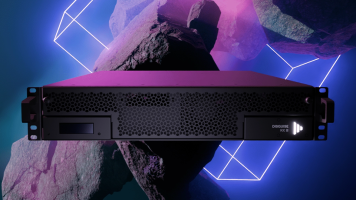
Recognized as one of the most innovative art and design schools in the US, CIA (Cleveland Institute of Art) strives to prepare its students for emerging careers in the latest visual technologies, including the burgeoning field of virtual production. The lack of a comprehensive resource for these technologies spurred CIA to turn to Disguise Services and The Studio B&H to design and construct the IML (Interactive Media Lab)—a full-service immersive/interactive facility.
Cleveland Institute of Art
The Challenge
CIA’s goal was to create a

Are you looking to learn more about the LED volume walls used in the burgeoning field of OSVP (on-set virtual production)? These walls are a key component of the process, serving as true-to-life backgrounds, and in effect, sets and locations for OSVP. Volume walls are composed of multiple LED displays that are seamlessly joined to form a custom-size screen on which your prerecorded background plates are played back. Here we'll go over the component that stiches together those displays and controls the behavior of your LED volume wall:

In a recent Explora article, we went over the basics of media servers for in-camera virtual effects (ICVFX) and virtual production (VP), describing these beefy machines for media playback and distribution to LED processors for LED walls and volumes. A VP media server can be a custom hardware solution or software installed on an off-the-shelf machine, but either type needs to have a

B&H is excited to announce that our new Virtual Production and XR (Extended Reality) category is now live. Initial offerings include products for cinema capture, broadcast, live events, sports, education, and more, with an emphasis on LED volumes, IMLs (Interactive Media Labs), content creation, advertising, and tradeshows.
Current subcategories for browsing include
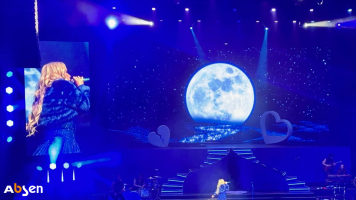
Country music artist Megan Moroney is one of the genre's fastest-rising stars. Following the success of her breakout hit "Tennessee Orange," Moroney's debut album Lucky and follow-up release Am I Okay? helped cement her place among country music's most in-demand artists. As her popularity has grown, so too has the scale and complexity of her live productions.
Supporting a nonstop, international tour that spans a wide range of countries, venues, and conditions requires a video system capable of delivering exceptional visual performance in
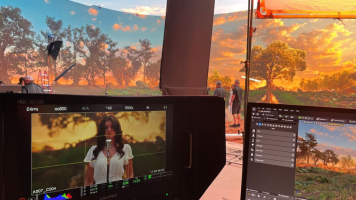
Trilogy Studios was developed as a cutting-edge virtual production facility designed to support film, television, automotive, commercial, and branded content creation. Rather than building a single LED volume, the team behind Trilogy Studios envisioned a comprehensive, multistage environment that would provide content creators with the flexibility to produce a wide range of projects within a controlled and highly immersive production space.
To bring this vision to life, Trilogy Studios partnered with virtual production systems integrator
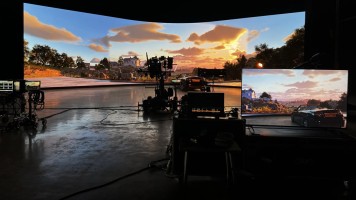
LED panels are a key component of the LED volume walls that form the backdrop for virtual production, an increasingly popular technique used in feature film and television production. This emerging technology enables productions to recreate the look of fictional worlds, far-flung or difficult-to-access locations, or multiple real-world sites in the controlled, safer, and more comfortable environs of a soundstage. Crucial specs to look for in an LED panel include a low pixel pitch of <3mm (high-density pixel count), high brightness levels,
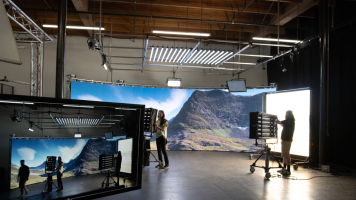
Lighting hasn't really changed in the past few decades. Sure, new fixtures, faster cameras and lenses, and shooting styles may change, but the essence of lighting really hasn't changed. The look of the scene is still driven by the DP and still created by the lighting designer; it is still all about ratios, and no matter how technology advances, lighting is a powerful tool for putting realism and drama on screen.
What Is Image-Based Lighting?
Simply put, image-based lighting (IBL) is using lighting fixtures to mimic the effects of natural
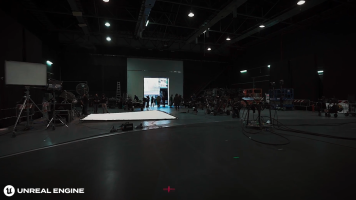
Your virtual production (VP) system isn't just playing back high-resolution video in the background. To work as believable 3D your system must be able to render in real-time and in high frame rate realistic 3D environments. To create and playback these environments you need creation software.
What Is Unreal Engine?
Simply put, it is an advanced real-time creation tool that powers your virtual production. It is based on 3D computer graphics gaming engine, and I remember playing Unreal as a multiplayer first-person shooter game, way back in the
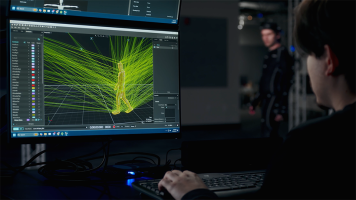
The goal of this article is to provide you with an introduction to motion capture, its uses and requirements. As with any journey, it begins with the first few steps.
Motion Capture (MOCAP)
MOCAP is the process of recording high-resolution movement of objects or people and capturing it into a computer system. It has numerous applications, including military, sports, medical, and, of course, for entertainment. While you could trace the roots of motion capture all the way back to the seminal motion capture experiments like Muybridge’s exposures
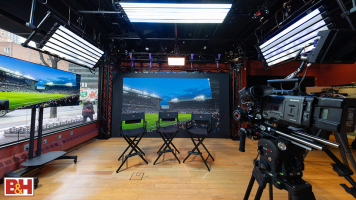
Getting ready to prep or shoot your latest video project? In addition to being the largest photography store in the USA, B&H Photo also incorporates The Studio alongside a state-of-the-art technology space, The Studio Technology Center (STC). The team focuses on providing complete professional video solutions while The Technology Center serves as an access hub to latest cinema and broadcast technology,