
Coming four years after the release of the FX3 and three years after the FX30, Sony’s new FX2 digital cinema camera surprised a lot of people who expected a successor to the existing FX models, not an entirely new offering that sits somewhere between the two. A true hybrid capable of stunning (though slightly cropped) 4K60p video and sharp 33MP stills, the FX2 is a unique proposition in a market crowded with high-quality options. We got some hands-on time with the camera and dove deep into three flagship features that separate it from its predecessors and could earn it a spot on your next production. As we’ve already published extensive reviews of the FX3 and FX30, I’ll be focusing exclusively on features unique to the FX2.
All Eyes on the Viewfinder
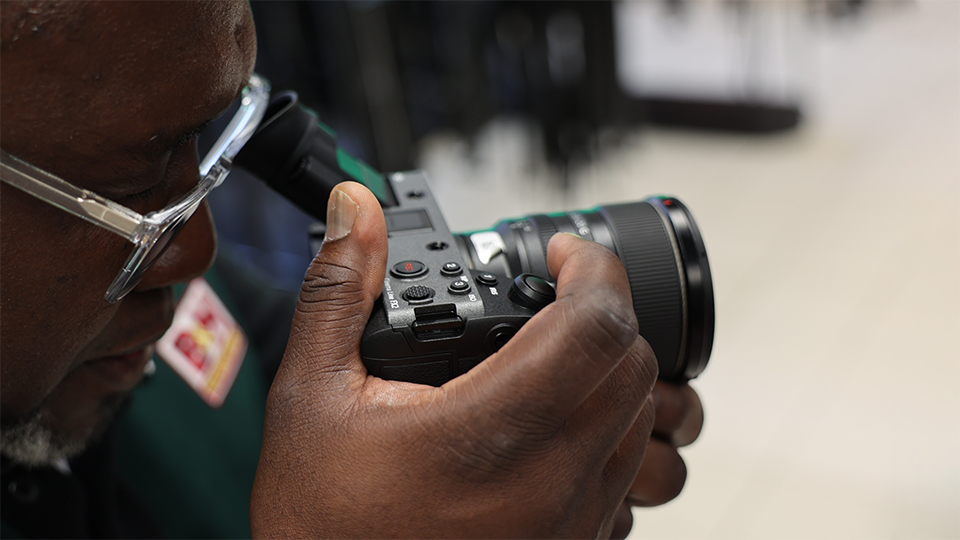
The main hardware upgrade with the FX2 is its tilting 3.68m-dot OLED viewfinder, which feels like a nice bridge between the fixed viewfinders of Sony’s Alpha line and the larger, more robust viewfinders seen on high-end CineAlta cameras like the VENICE and VENICE 2. The FX2’s viewfinder is extremely useful in bright and sunny conditions, as well as any other environments with competing light and visual stimulation. Putting an eye to it can truly immerse you in the image you’re capturing, plus it’s a great additional point of contact for steadying the camera when shooting handheld – see the photos with my patient model, indie filmmaker Orville Herry, for a good visual representation of that.
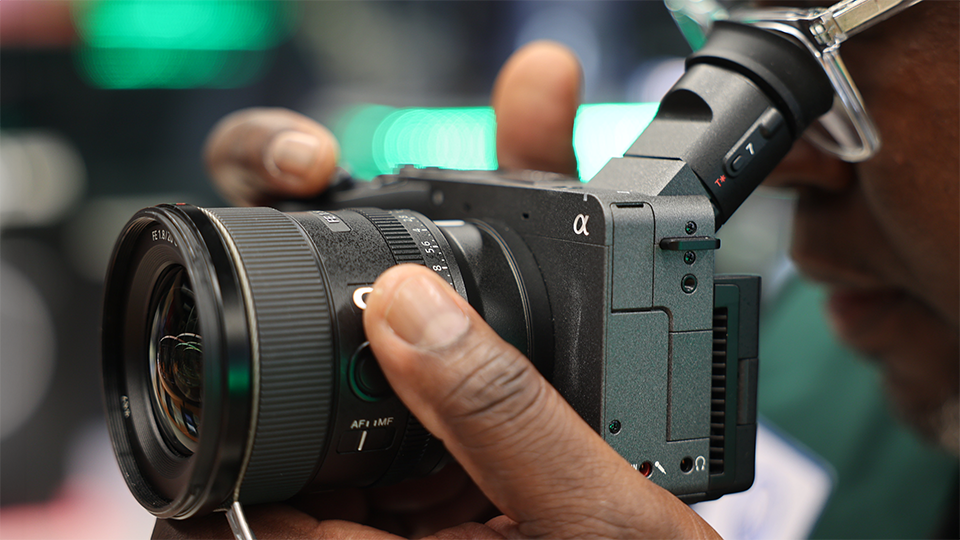
While incredibly handy in some scenarios, there are many types of shots where the viewfinder simply won’t be easily accessible–think high, low, or side angles–and shooters who depend on the tap-to-focus abilities of the fold-out LCD will likely find themselves still mostly sticking to that. The viewfinder also sits quite close to the camera’s hot shoe, so it will sometimes battle for space with accessories like lavalier receivers and shotgun microphones. The viewfinder is an exciting and well-executed hardware addition, but I didn’t find myself utilizing it as much as I expected. If I were mostly outside, especially capturing wildlife, that would be a different story.
A True Hybrid Sensor
The FX2’s 33MP full-frame CMOS Exmor R sensor, previously seen in the Sony a7 IV, is more than capable of capturing great video and photos. 4K up to 30p is oversampled from 7K, and 4K at 60p has only a slight crop to it. The megapixel jump from the FX3’s 12.1MP sensor is noticeable when cropping into photos or videos, but it comes at the cost of the astounding low light capabilities of the FX3. The FX2 has dual base ISOs of 800 and 4000, compared to 800 and 12,800 on the FX3. I think people shooting scripted or commercial content (aka those with controlled lighting) will benefit from the added megapixels, but documentary and unscripted shooters who face uncertain lighting conditions might be wise to stick to the versatility of the FX3. Also, disappointingly, while the FX3 and FX30 can shoot 120p in 4K, the FX2 can only manage it at 1080p.

For content creators, location scouts, wedding videographers, and anyone else who might be switching between photo and video at a moment’s notice, the FX2 has a brand new feature that could make your life easier–log color profiles for photo. For the first time in a Sony camera, you can shoot your photos in log color spaces like S-Gamut3.Cine that perfectly match up with S-Log3 video. That also means these photos can be edited in the same workflow as your video–think coloring them in a video-centric program like DaVinci Resolve versus needing to jump to photo-based software like Adobe Lightroom. That can also simplify LUT workflow if you want to use the same LUTs on log photos and video. This is a cool feature that I hope carries onto future Sony cameras, but it appeals to a very specific hybrid userbase.
AI Autofocus Comes Into Focus
The final big differentiation point for the FX2 is its AI processing unit, which promises to assist users with autofocus, auto-framing, and image stabilization. Sony claims a 30% improvement in human and animal eye recognition versus the FX3 and FX30, though this is hard to test in real world conditions. As any Sony shooter will happily tell you, the eye tracking has been top-of-class for years now, and it works extremely well in all but the most difficult scenarios (think super low-light, huge crowds, or frequent obstructions). In my regular testing, I can’t say I found the FX2’s autofocus to be noticeably snappier or more reliable than what you get with the FX3 and FX30, though that might change as the processing unit gathers information about frequent subjects or is put to use in more complicated environments. Same goes for the image stabilization, which still struggles with walking or running but remains useful for panning, tilting, and eliminating micro-jitters.
AI Auto Framing is basically cropping into the image to keep a desired subject in frame. I find auto-framing a super useful feature for PTZ cameras that can physically move themselves, but for a camera like the FX2 that relies entirely on cropping into a fixed image, I don’t think the resulting footage holds up for many use cases outside of basic social media content. Sure, the standard image out of the FX2 is more detailed and sharper than most comparable models, but it still can’t hold up to a ton of cropping, and the effect looks cold and sterile to me. I’m sure Sony will continue to improve the processing unit through firmware updates, but as it stands now, it didn’t make a huge impact on my experience with the camera.

The FX2 is a great option for people who want reliable Sony autofocus and the full-frame look of the FX3 but need a higher megapixel count for photography work or cropping into video. The tilting viewfinder is a unique addition that could be a gamechanger for some but largely ignored by others in favor of the fold-out touchscreen LCD or an external monitor. I used it whenever I was shooting outdoors, but often needed to go back to the LCD to lock focus onto subjects. Being able to shoot photos in S-Log3 is also certainly useful for a subset of users, but it feels like the sort of incremental move usually seen in firmware updates. If you’re a true hybrid shooter, the FX2 is worth a look. If you already have an FX3 or FX30, don’t expect yourself to be totally green with envy.
For more information about the Sony FX2, including features, specs, and highlights, be sure to check out the detailed product page.
