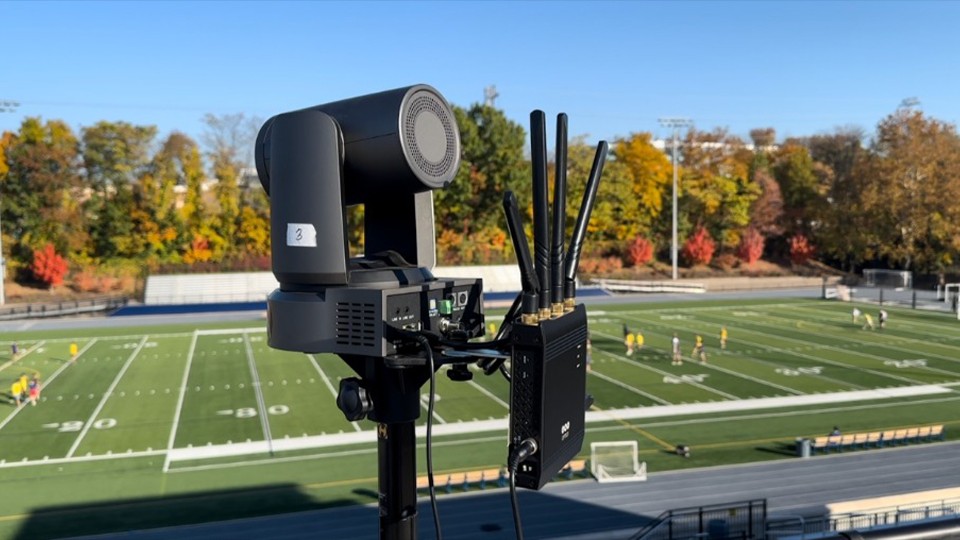
The proliferation of PTZ (pan-tilt-zoom) cameras being used for sports coverage and broadcasting should not come as a surprise. They offer seamless operation and flexible installation options thanks to their relatively small size and remote-control capabilities from a central location. The benefit of using a PTZ camera over a standard fixed camera for sports coverage (and live events in general) is their ability to pan horizontally and tilt vertically for a wider coverage area and better angles over fixed cameras, coupled with zoom functionality to capture action close up from long distances.

When combined with the ability to remotely control the PTZ camera with a joystick, an app, or software, it makes perfect sense for PTZ cameras to be the standard with live broadcasts and streaming like sports. In the past, getting comprehensive sports coverage meant complicated manned camera setups. Today, PTZ cameras allow minimal operators to do the job remotely with precision, eliminating the logistic shortcomings of having a full camera and production crew.
Things to Consider
It goes without saying, but sporting events are not all the same. Obviously, a high school basketball game is nothing like the Super Bowl, so the way you’d cover a high school basketball game will not be the way you’d cover a professional NFL game in a stadium. The variables you need to consider when using PTZ cameras for sports coverage are the size of venue (stadium, arena, field, court, gymnasium, etc.), whether the broadcast will be indoors or outdoors, and the budget. All things considered, larger venues will typically warrant larger budgets that allow for multi-camera usage.
Another thing to consider is the desired optical zoom range. This is also dependent on the size of the venue and the budget. Optical zoom is essentially the lens elements physically moving to bring the subject closer. It magnifies the captured image while preserving the resolution of the image to maintain full detail and clarity.
The size of the image sensor will factor in the image quality captured. Common image sensor sizes include 1”, 1/1.5”, 1/1.8”, 1/2.5”, and 1/2.8”. Larger image sensors like the 1” sensor captures more light. More light captured means improved performance in low-light conditions with minimal noise and artifacts, better dynamic range, high image quality at maximum zoom range, and flexible depth of field control. Typically, the more expensive cameras with larger image sensors are often paired with lenses capable of longer zooms.
Three common optical zoom ranges are 12x, 20x, and 30x. Of course, one isn’t limited to just those zoom ranges, but for the sake of brevity, those three ranges can cover the gamut from small, medium, to large venues. For smaller spaces, a lens with 12x optical zoom will suffice, while 20x will work in medium-sized venues, and 30x zoom or higher in larger venues.
The last thing to keep in mind is that a higher zoom range means you will have a narrower field of view. It’s simple physics and there’s no way around it. The more you zoom in, the less of the surrounding scene is captured. The operator will have to decide what range works best for their application.
Camera Positioning
The ideal camera placement depends on the size of venue, the number of PTZ cameras being used, and the type of sport being played. Typically, the camera should be placed above the heads of the athletes to deliver clear visuals for the broadcast without the action being blocked by fans, personnel, or people on the sidelines or bench.
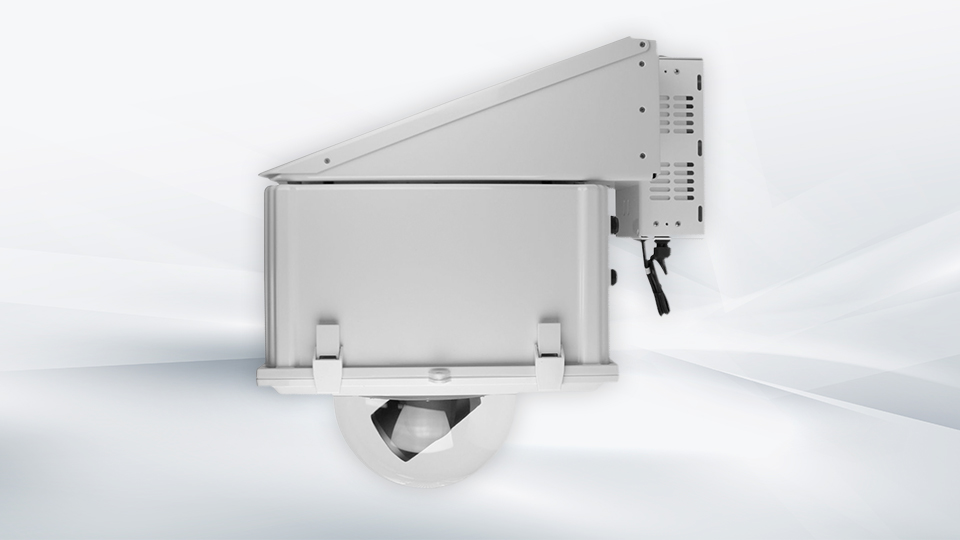
In some indoor venues, there are often designated press boxes and cordoned areas that allow for an elevated vantage point. Venue permitting, you can also mount your camera on tall/large stands, tripods, or poles. The same applies with outdoor venues, but with outdoor venues you must consider inclement weather. Outdoor camera enclosures like the Dotworkz HD12 COOLDOME will securely house a PTZ camera, keeping it safe from poor weather conditions while securely mounted.
Coverage & Techniques
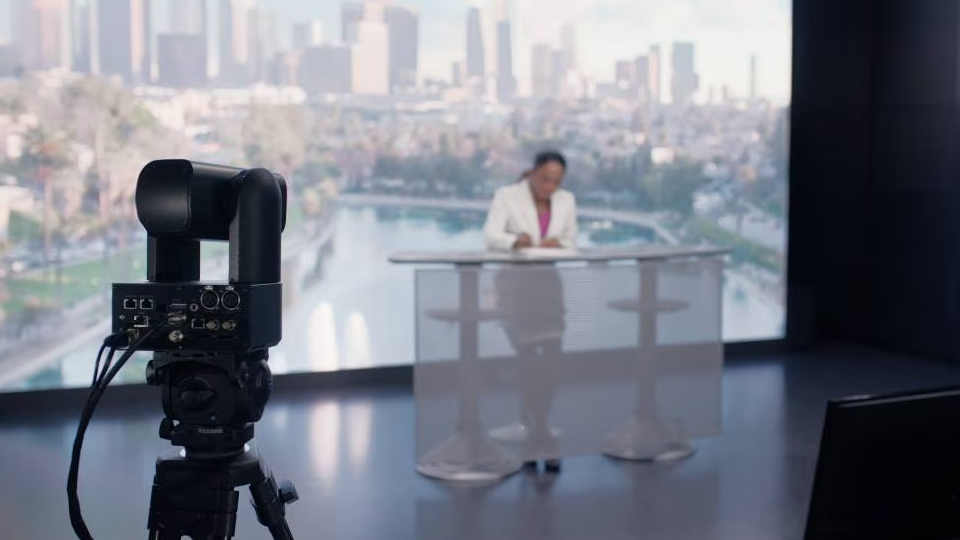
For coverage in smaller venues, like a middle school gymnasium, a single-camera setup can suffice. For larger venues like sporting events at the college, semi-pro, and professional level, a multi-camera camera setup is necessary. For sports like football, basketball, and soccer, where scoring is on opposite ends of the field, you’ll want to implement the 180-degree camera placement rule.
The 180-degree camera rule essentially means that the cameras should be positioned on the same side of the field to ensure that viewers don’t get confused by the directions the athletes are moving. Camera angles in opposite directions means every time the other team has possession of the ball, the vantage point and direction for viewers will be entirely different. You want visual consistency.
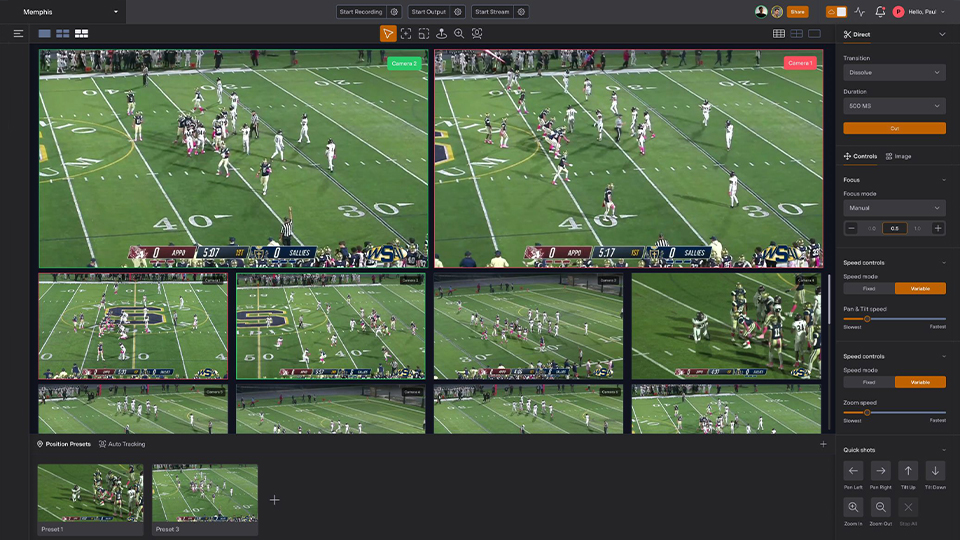
One popular approach with multi-camera setups is having the PTZ cameras face the middle of the field, while an additional camera can be used for a wide view of the field. Additional cameras can be placed along the goal line, basket, or endzone for close-ups and zoom-ins on players and action specific sequences, ensuring all vantage points are covered.
Using Presets
Presets are great tools for PTZ cameras. You can create specific camera angles as presets that the camera will recall, allowing operators to switch between different vantage points and angles.
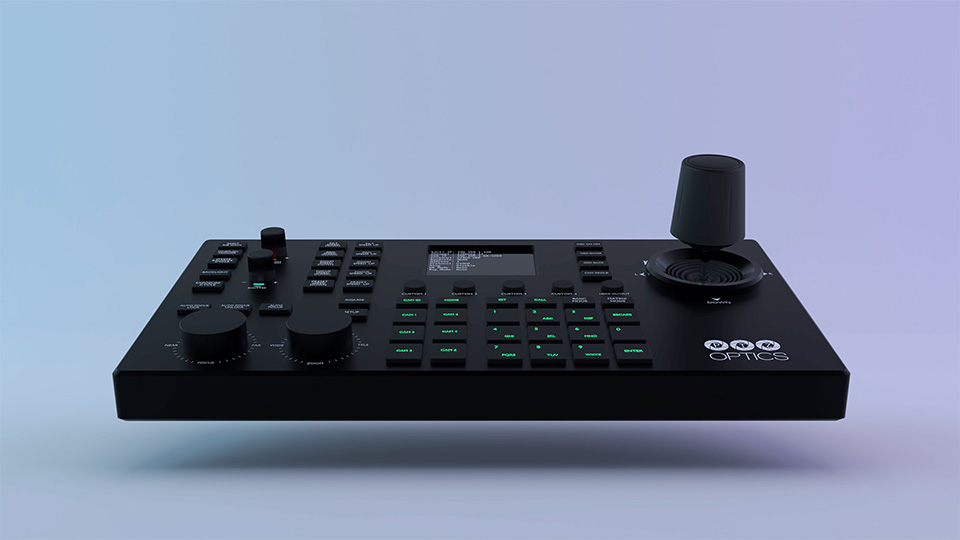
Devices like the PTZOptics SuperJoy NDI|HX/IP & Serial PTZ Camera Joystick Controller allows an operator to control up to 28 PTZ cameras. An operator could easily send multiple cameras preset commands for panning, tilting, and zooming simultaneously. Switching preset positions is a fluid and precise for the camera, and based on the flow of a game, utilizing present in a multi-camera setup with few operators is a game changer.
Camera Features to Consider
When dealing with the fast-paced nature of sports, you’ll need cameras that capture high-resolution video for cropping while maintaining quality, have high frame rates for fluid motion without blur, auto-tracking, and auto-framing for capturing players in motion. With larger venues, zoom capability should also come into consideration.
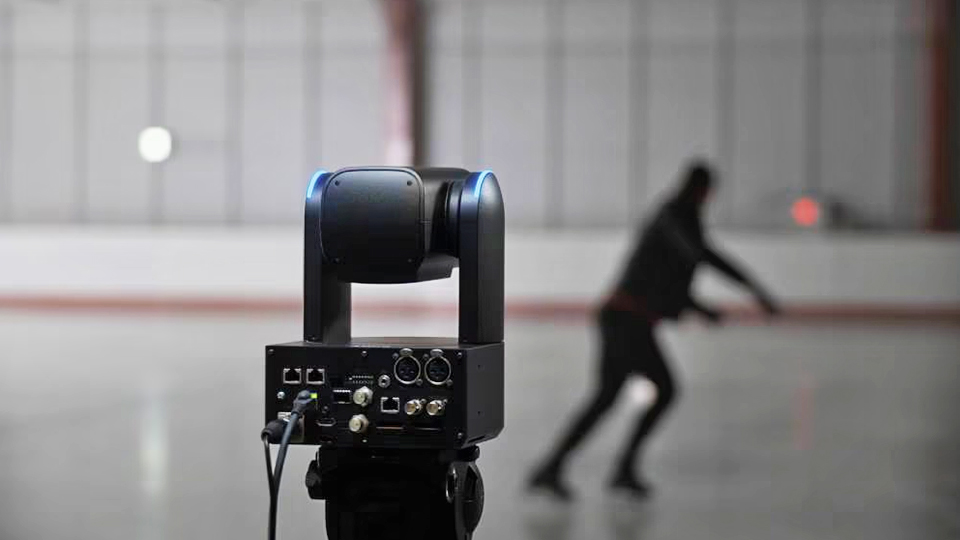
A camera like the Sony BRC-AM7 4K60 PTZ Camera with AI Auto-Framing features UHD 4K60p output, 20x optical zoom, built-in AI auto-framing and auto-tracking, and works well for sports coverage.
For more info about using PTZ cameras for sports coverage, feel free to give us a call, reach out via chat, or stop by the NYC Superstore.
