Search results for: studio lighting light metering basics
About 10 filtered results
by Mathew Malwitz · Posted
Imagine, if you will, a photo shoot. Your subject is a striped, orange cat bouncing off of the walls. You have your camera raised to your brow, finger on the trigger, waiting for the perfect pose. He turns his gaze toward you, but his head is constantly moving. No matter, you quickly fire a few frames, figuring that you finally nailed the shot. You check your shots, only to see a series of blurry portraits.
If this sounds like a situation you’ve been in before, we know the feeling. That’s why, today, we’re taking a look at settings for pet

by Freddy Gerngross · Posted
One of the most common aspects of podcasting that gets in the way of a newcomer’s success is setting and adjusting proper levels. Too quiet and your podcast won’t grab the listeners’ attention, too loud and it will be fatiguing to listen to—and if it’s too quiet and too loud, the listener will be adjusting the volume for the entire podcast!
Proper leveling and loudness are key for audience retention and the success of any podcast. In this short guide, we will go over the basics of leveling out the audio for your podcast.
Getting the Right

by Freddy Gerngross · Posted
It’s impossible to deny the role the synthesizer has had in shaping our culture—from defining the sound of music from the mid-twentieth century and today, to creating the quirky beep-boops of R2D2, these electronic instruments have left an indelible mark on the eardrums of modern society. In this guide, we will give an overview of some of the holy grails of electronic instruments and appreciate the specific synthesizers that defined the sound of generations.
Roland Jupiter-8
If you even get the opportunity to play one of the roughly 3,300

by Mathew Malwitz · Posted
Photographing pets is something you likely do daily, whether it be with a phone or a dedicated camera. I don’t know about you, but I have thousands of pics of my pup filling up my photos app. After all, pets are part of the family, and we want to capture them in the best possible light. In this quick guide, we’re going to look at 10 ways you can improve your pet photography with practical creative tips and techniques as well as gear.
1. Get to your pet’s level. If there’s one trick to make your images more engaging, it’s to physically shoot

by Freddy Gerngross · Posted
DJing, whether a hobby or profession, is an expensive endeavor. Whether you’re just getting into DJing, a seasoned professional looking to upgrade your gear, or a venue looking to install a permanent DJ station, we have some incredible products on offer at B&H this holiday season—and doesn’t matter if you’re on a budget or ready to ball out.
All-in-Ones/Controllers: Baller | Budget
Turntables:

by Cory Rice · Posted
The equipment used by fashion photographers varies considerably, depending on what is being photographed and who is behind the camera. In general, the kit requirements for documenting a fashion show are more standardized than those for creating editorials. There are successful fashion photographers who can fit all of their gear in a single bag—and others who require an entire equipment truck. This article is aimed at photographers getting started with fashion productions. Photographers interested in capturing runway should read Theanos Nikitas

by Todd Vorenkamp · Posted
Often, we need to add extra light to a scene to ensure we have enough light to create an image, freeze movement, or simply enhance the scene for the sake of the photograph. The primary way photographers do this is by using a flash.
The electronic flash has been around since 1931 and, today, there are several variations—all with different potential uses for the photographer. Here, we will take a quick look at the types, compare them, and discuss the benefits of each type.
Terminology Basics
Before we dive into flash types, let’s get familiar
by Allan Weitz · Posted
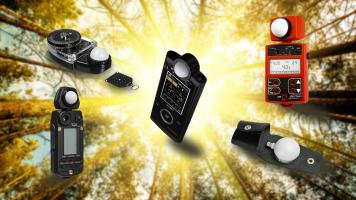
Almost every camera sold at B&H contains a light meter designed to calculate extremely accurate exposure readings, typically with a choice of Spot, Average, and Segmented metering modes. Good as they are, handheld light meters still have the upper hand when it comes to analyzing light.
For starters, the meter in your camera only reads reflected ambient light. If you’d prefer to take an incident reading, i.e., measure the light falling onto you subject rather than reflecting off your subject, you can’t do it without having to add

by Jill Waterman · Posted
Here’s a hot tip: In addition to photo, video, and audio gear, as well as other tech products, B&H carries thousands of books and tutorials covering the fields of photography, video, audio and computers, plus inspirational titles to get your creative juices flowing. For all you bibliophiles out there, we’ve compiled this shortlist of must-have publications spanning photography basics, photo careers, marketing and promotion, business practices, teaching photography, lighting technique, specialty photo subjects, creative inspiration,
by Bjorn Petersen · Posted
Rarely does a camera come along that piques the interest of such a broad variety of photographers. Often, cameras are targeted solely at the professional reportage shooter, or the street photographer, the hobbyist, or even the collector. Cameras have a way of generating an identity based on, of course, their specifications, as well as numerous other qualities including legacy, design, and intended use. These factors alone can isolate cameras, or even genres of cameras, and generate a stigma surrounding a certain type of camera. Medium format