Portable Podcaster
Essentials
Video Essentials
Accessories
Building a portable podcasting kit can be an enjoyable project, not only because it promises geographical freedom, but also because small things are cute and fun to use. If you’re taking your podcast on the road or spending a day on the field, you’ll need gear that’s compact and portable but also powerful enough to get the job done effectively and efficiently. So, what kind of equipment should you pack in your bag?
What is a Portable Podcasting Setup?
A portable podcasting setup is a kit of compact gear designed for podcasting that you can take on the road or on location to record a complete and professional podcast.
What Do You Need for a Portable Podcasting Setup?
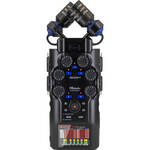
Portable Recorder
While you can use a dedicated audio interface for your microphone in the studio, a transportable setup requires a portable recorder. This is because it can capture your audio
straight to the device so that you don’t have to schlep around with a computer or other related accessories. Portable recorders can also be battery powered, allowing you to record anywhere. The other advantage of portable recorders is that they can typically also be used as audio interfaces should you choose to record to your computer in real time. Lastly, video podcasters should note that many portable recorders can be connected directly to one’s camera, saving you the time of syncing audio with video in post-production.
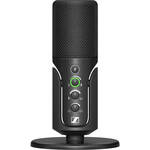
Tabletop Mic Stand
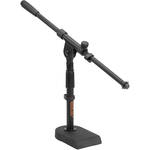
If you’re recording inside and you have the desk space, it’s a good idea to have a mic stand to minimize any bumps or rumbles. No one wants to lug around a full-sized microphone stand. So, you may want to buy a modest desktop stand with a weighted base that can be detached for easy portability.
Batteries or Power Banks
As mentioned above, portable recorders can run off regular batteries while also having the ability to operate with a USB power source. There’s nothing worse than running out of batteries in the middle of a podcast when you’re nowhere near a wall outlet or store that sells AAAs. So always have a generous supply of batteries or a couple of small yet powerful power banks.
Camera
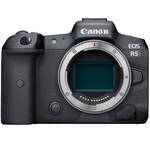
Both consumer camcorders and mirrorless cameras have their own advantages. Consumer camcorders are the most wallet-friendly option for video recording, and they also require less manual operation, making them generally easier to use. Many come with all-in-one zoom lenses and have long-lasting batteries. That said, for some users, it may be wise to eventually invest in a mirrorless camera. instead. Mirrorless cameras not only tend to be smaller and lighter, but more importantly, they capture higher quality video, partly because they typically have better lenses, which are interchangeable. For example, if you want to separate your subject from the background to improve focus and enhance definition, a mirrorless camera has that capability, while a typical budget camcorder doesn’t. And though devices like the iPhone Pro have come a long way in terms of image quality, they still don’t offer the same flexibility as mirrorless cameras.
Streaming Switcher
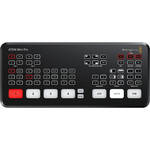
For video podcasters and streamers, a video switcher can be an invaluable tool. It not only gives you the ability to record and stream from the same unit, but also lets you control multiple video sources, effects, images and audio, allowing you to edit in real time and add different types of media for a more engaging show.
A video switcher works by offering a number of inputs for different devices. A typical video switcher features multiple HDMI inputs and outputs, combo jacks for audio, USB-C connections for computers, UVC capable cameras and USB-C microphones. Many also provide XLR-1/4 inch connections for mics and instruments, as well as a specialized ethernet connections for streaming directly off the device. In terms of operation, they tend to feature rows of buttons to switch between cameras, scenes and on-board media. Of course, this is a very basic overview of how switchers works
Lighting
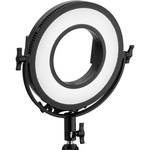
While typical LED light panels can create fantastic scenes, they are not always the most portable (although some LED panels can be quite compact, like on-camera LED panels). For this reason, it’s a good idea to check out some monolights, which are typically very compact, while still being able to support modifiers, like softboxes. You may also want to look into some compact yet sturdy lightweight light stands, which can be a huge relief for folks who have had to carry around clunky stands in the past.
It's a great feeling to be liberated from the confines of your computer and home podcasting system. Having a portable podcasting kit will give you the freedom to create wherever you want, even if you find yourself in the middle of nowhere.