Home Entertainment Turntables

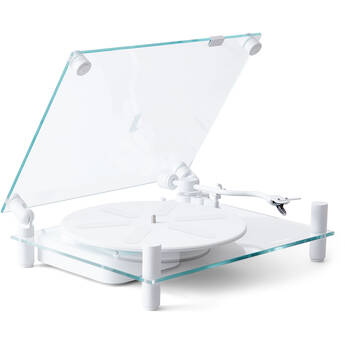
Transparent TT-W Manual Two-Speed Turntable with Bluetooth (White)
- Plays 33 1/3 and 45 rpm Vinyl Records
- Built-in Bluetooth 5.0 Wireless Output
- Clear Tempered Glass Plinth
- Ortofon OM 5E MM Cartridge Included
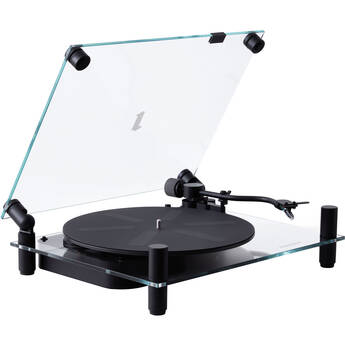
Transparent TT-B Manual Two-Speed Turntable with Bluetooth (Black)
- Plays 33 1/3 and 45 rpm Vinyl Records
- Built-in Bluetooth 5.0 Wireless Output
- Clear Tempered Glass Plinth
- Ortofon OM 5E MM Cartridge Included
Technics SL-1500C Manual Three-Speed Direct-Drive Turntable (White)
- Plays 33 1/3, 45 & 78 rpm Vinyl Records
- Manual Operation
- Coreless Direct-Drive Motor
- Ortofon 2M Red Cartridge Preinstalled
Technics SL-1500C Manual Three-Speed Direct-Drive Turntable (Silver)
- Plays 33 1/3, 45 & 78 rpm Vinyl Records
- Manual Operation
- Coreless Direct-Drive Motor
- Ortofon 2M Red Cartridge Preinstalled
Technics SL-1500C Manual Three-Speed Direct-Drive Turntable (Black)
- Plays 33 1/3, 45 & 78 rpm Vinyl Records
- Manual Operation
- Coreless Direct-Drive Motor
- Ortofon 2M Red Cartridge Preinstalled
Reloop TURN X Manual Three-Speed Turntable
- Plays 33 1/3, 45 & 78 rpm Vinyl Records
- Manual Operation
- Ortofon 2M Blue Cartridge Preinstalled
- Quartz-Driven, High-Torque Direct Drive
Dual Electronics CS 618Q Manual Three-Speed Turntable (Walnut Veneer)
- Plays 33 1/3, 45, 78 rpm Vinyl Records
- Quartz-Stabilized Direct Drive
- Die-Cast Aluminum Platter
- Aluminum Tonearm in Twin-Gimbal Mount
ELAC Miracord 60 Manual Two-Speed Turntable (Gloss Black)
- Plays 33 1/3 and 45 rpm Vinyl Records
- Aluminum Die-Cast Platter
- Carbon-Fiber Tonearm
- Stereo RCA Output
Audio-Technica AT-LPA2 Manual Two-Speed Turntable
- Plays 33 1/3 & 45 rpm Vinyl Records
- Fully Manual Operation
- External Motor/Power Control Box
- Clear Acrylic Plinth & Platter
Teac TN-5BB Three-Speed Semi-Automatic Turntable
- Plays 33 1/3, 45 & 78 rpm Vinyl Records
- Manual Belt-Drive Operation
- Ortofon 2M RED Cartridge Installed
- S-Shaped Tonearm Designed by SAEC
Andover Audio Andover-One MK2 Manual Two-Speed Turntable
- Plays 33 1/3 and 45 rpm Vinyl Records
- Arrives Assembled and Precalibrated
- 2-Way 6-Speaker Speaker System
- 200W Bi-Amplified Dual Direct Drive Amp
Technics SL-1300G Grand Class Manual Three-Speed Direct Drive Turntable (Silver)
- Coreless DC Direct Drive Motor
- Spins at 33 1/3, 45 & 78 rpm
- Two-Layer High-Rigidity Chassis
- Three-Layer Platter
Choosing Home Entertainment Turntables
The market for turntables is booming, as music lovers realize that sound quality from vinyl is richer and truer than digital sound. There's plenty to consider. Automatic record players are ideal for those wanting convenience, while classic stereo turntables appeal to purists. Some include amplifiers and speakers, and others connect to sound systems. Many have USB outputs for recording on computers.
Manual vs. Automatic Audio Turntables
A classic turntable is almost completely manual. You place the tonearm above the first track and use a cueing mechanism to lower it onto the record. At the end of the record, you lift the tonearm with the cueing mechanism, and return it to its home position. There's an adjustable weight to balance the tonearm, and an antiskating device to correct tracking.
At the other end of the spectrum are automatic models that place the tonearm in the correct position before automatically lowering it onto the record. When the tonearm reaches the end of the record, it's automatically raised and returned to its home position. The turntable then stops.
Many audiophiles believe manual turntables have better sound fidelity and cause less record wear. However, modern automated record players are surprisingly good and their mechanisms more sensitive, so wear isn't the issue it once was.
Turntable Drive Systems
Record players have a relatively heavy platter, which damps vibrations, and a mat to protect records. A classic turntable has a belt drive that isolates the platter from motor vibration. Together with the heavy platter, it provides a precisely controlled speed with very low levels of wow and flutter distortion. A switch changes the turntable's speed from 33 to 45 rpm.
Advances in electronics led to the introduction of direct drive turntables, where the motor is physically connected to the turntable platter. You adjust the platter speed electronically, and there's often a stroboscope to check that the turntable speed is correct. DJs like direct drive record players because they can adjust the speed and tempo to their liking.
Preamplifiers for Digital Turntables
The signal from the tone cartridge is not very strong, and needs amplification, which is why many sound systems have phono inputs with built-in preamplifiers for record players. If your system doesn't have a phono input, you can get a turntable with its own preamplifier. Alternatively, use separate phono amplifiers to boost the signals for your sound system.
Connecting to a Sound System
If you have a conventional sound system, use the RCA connectors to connect your turntable to the phono input. If your sound system doesn't have phono inputs, use a preamplifier to connect to the inputs used by CD players and changers. USB turntables and most preamplifiers also have USB outputs that allow direct connection to computers or USB-compatible TVs and home theater systems. Another way is connecting to digital music players using Bluetooth-compatible record players. Some players have their own amplifiers and speakers.
Enjoy the rich fidelity of vinyl music with turntables from B&H Photo and Video.