
Sony Global
STEM

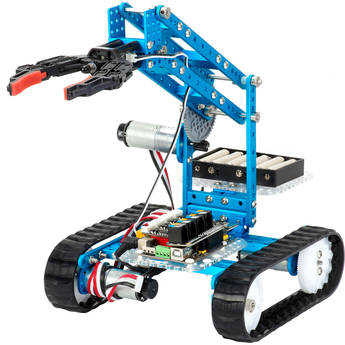
Makeblock mBot Ultimate 2.0 10-in-1 Robot Kit
- Arduino & Raspberry Pi Compatible
- Anodized Aluminum Mechanical Parts
- Ten Building Forms
- Includes mBlock Coding Software

Makeblock mBot2 Programmable Robot
- Programmable DIY Robot
- Powered by CyberPi
- Supports Block-Based & Python Coding
- Encoder Motors for Precise Control
Matatalab M1B Intelligent Microscope
- 400x Image Magnification
- Take Photos and Record Videos
- Up to 1920 x 1080 Resolution
- Upper and Lower Light Source
DJI 2400mAh Intelligent Battery for RoboMaster S1
- For RoboMaster S1
- 2400mAh, 25.92 Wh
- Up to 35 Minutes of Power
- Built-In Battery Management System
DJI Vision Markers for RoboMaster S1
- For DJI RoboMaster S1
- Works with Vision Tracking & Targeting
- Set of 14 Self-Supporting Markers
- 2 x Numbers 1-5, Question Mark & Heart
DJI AC Power Cable for RoboMaster S1 Charger
DJI Safety Goggles for RoboMaster S1
DJI Gel Beads for RoboMaster S1 (2 Bottles)
- Ammo Designed for the RoboMaster S1
- 2 Bottles / Approx. 20,000 Total Beads
- Safe and Non-Toxic
Makeblock LiPo Battery for mBot Robot Kit
- For mBot Robots
- 1800 mAh of Power Capacity
- Provides up to Five Hours of Runtime
- LiPo Battery Chemistry
DJI Cable Package for RoboMaster S1
- For DJI RoboMaster S1 Tank
- Replacement Cables for All S1 Modules
- 1 x Camera & 7 x Data Cables
Makeblock USB 2.0 Bluetooth Adapter
DJI Chassis Armor Kit for RoboMaster S1
- For DJI RoboMaster S1 Tank
- Provides Protection for Inner Structure
- 4 x Armor Plates
Makeblock CyberPi Pocket Shield
- 800 mAh Power
- 3.7 Volts
- 2.96 Wh
- Dual DC Motor Interfaces
Makeblock mBot Add-On Pack for Six-Legged Robot
DJI Gel Bead Container for RoboMaster S1
- For DJI RoboMaster S1
- Portable Gel Bead Ammo Storage
- Holds Approximately 430 Gel Beads
- Two Holes for Draining Excess Water
Matatalab Activity Box for Tale-Bot Pro
- For Matatalab Tale-Bot Pro
- Five Double-Sided Interactive Maps
- One Double-Sided Blank Map
- 32 Command Cards
DJI E1C28 Charger for RoboMaster S1 Intelligent Battery
- For RoboMaster S1 Intelligent Battery
- Recharges a Single Battery
- Full Recharge in Approx. 90 Minutes
- AC Charging Cable Required; Not Included
DJI Mecanum Wheels for RoboMaster S1 (Pair)
- For DJI RoboMaster S1 Tank
- Parts to Create/Repair 2 Mecanum Wheels
- 2 Rubber Types for Durability & Traction
- Damping Rings Help Absorb Impacts
Matatalab Creator Kit for Vincibot
- For Matatalab VinciBot
- 20+ Building Forms
- Over 400 Building Blocks
- For STEAM Education
Makeblock CyberPi Go Kit
- Teaches Computer Science and STEAM
- Single-Board Computer
- Works with the mBlock Coding Editor
- Supports Block-Based Coding
DJI Gamepad for RoboMaster S1
- For DJI RoboMaster S1
- More Intuitive Control of the RoboMaster
- Analog Stick, Four Physical Buttons
- Fire Gel Beads & Access Skills/Options
Makeblock Bluetooth Controller V1
- For Bluetooth MakeBlock Robots
- Designed for Kids Ages 6 & Over
- Familiar Gaming Controller Design
- Range of up to 33'
A school can be any institution where instruction is given and gained and, for many students, that means at home. Whether it’s part-time, full-time, or just temporarily, home schooling can be a great way for students to learn about a wide range of subjects and disciplines. Of those subjects, perhaps none is more important, and more beneficial, than those included included in the STEM curriculum.
What is STEM?
STEM is an acronym that’s derived from the four disciplines in its core curriculum: Science, Technology, Engineering, and Math. In practice, STEM education is taught in a hands-on manner, with an interdisciplinary approach, so that students can see how each discipline works together and how they have real-world use and application.
For example, many STEM-based curricula feature tasks and projects that mirror the work of a real-word occupation. Look at computer programming, for instance. Instead of simply reading or listening to a lecture about the fundamentals of coding, STEM learners participate in exercises where they get to write and implement code—programming their very own STEM robot, as an example.
Why is STEM Important?
The STEM disciplines play a vital role in maintaining and improving America’s technological innovation and its manufacturing sectors. Contrast that importance with the small and dwindling numbers of STEM proficiency and interest in STEM-oriented careers among American high school students, and the need becomes obvious. Without a push to improve STEM education, as well as a renewed interest in STEM careers, America’s technological and manufacturing standing is at risk.
How to Implement STEM Learning?
The best approach for implementing a STEM education program is to start when the student is very young and continue all the way through high school. The reasoning behind this approach is that it’s best to focus on introductory and beginner-level STEM concepts while the student is young, to build a strong foundation. As students progress through their STEM curriculum, they’ll take on tasks and projects that not only make use of their learning but, as mentioned earlier, demonstrate a clear correlation to the real world.
Where to Get STEM Education Tools?
Since the Obama administration announced its STEM-oriented “Educate to Innovate” campaign, in 2009, B&H has invested heavily in STEM teaching tools and resources. We have a large inventory of STEM-approved projects, crafts, toys, and teaching equipment. We also carry a full catalogue of support equipment and materials, including computers, laptops, monitors, networking equipment, and more.