LED Panels & Cabinets
Explore pixel perfect LED Panels & Cabinets engineered for In-Camera Visual Effects (ICVFX).

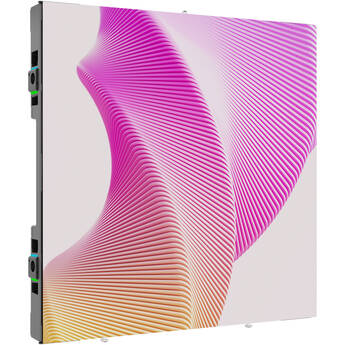
PIXREAL HIRO Pro Series 1.56mm Pixel Pitch LED Panel
- 19.7 x 19.7" Panel
- Supports HDR, 1/10 Scan Ratio
- 170° Viewing Angle
- 10,000:1 Contrast, 16-Bit Grayscale
LG MAGNIT LBAF Studio Series P1.56 MicroLED Cabinet with WebOS (26.6 x 23.6")
- For Virtual Production and ICVF
- 1.56mm Pixel Pitch, 1500 cd/m² Bright
- 26.6 x 23.6" MicroLED, 384 x 432
- 7680 Hz Refresh Rate, WebOS Compatible
LG MAGNIT LBAG Studio Series P1.56 MicroLED Cabinet with HELIOS Processor (26.6 x 23.6")
- For Virtual Production and ICVF
- 1.56mm Pixel Pitch, 1500 cd/m² Bright
- 26.6 x 23.6" MicroLED, 384 x 432
- 7680 Hz Refresh Rate, HELIOS Processor
How Do I Pick an LED Panel?
Selecting the proper LED panel is one of the most important decisions when building a virtual production studio. When shopping for a proper LED panel, keep the following requirements and considerations in mind:
- Brightness: Different parts of the LED volume require different brightness levels. For example:
- Background Walls: Between 1,200 and 1,500 nits to provide realistic imagery while minimizing unwanted reflections and camera artifacts.
- Ceiling Panels: 5,000 nits or greater to produce sufficient illumination for image-based lighting and realistic highlights.
- LED Floors: Brightness requirements vary depending on the production, but panels must also be durable enough to function as safe standing surfaces for performers and equipment.
- Pixel Pitch: A pixel pitch of P3 (3.0 mm) or smaller is generally recommended. Smaller pixel pitches create sharper images and significantly reduce the visibility of individual LEDs when cameras are positioned close to the wall.
- Refresh Rate: Choose panels with a minimum refresh rate of 240 Hz. Higher refresh rates help minimize flicker, rolling shutter artifacts, and moiré patterns when filming with professional cameras.
- Viewing Angle: A viewing angle of at least ±80° horizontally and vertically (160° total) ensures consistent brightness and color accuracy from multiple camera positions throughout the studio.
- Anti-Reflection Treatment: LED panels should feature an anti-reflective surface treatment to reduce glare from studio lighting and improve overall image quality.
What Are Background Plates?
In virtual production, a background plate (or backplate) is a high-quality image or video of a real environment that serves as the background behind the actors or physical set. Instead of building an entire location digitally in real time, filmmakers use backplates to represent distant scenery or static environments. Backplates are commonly displayed on an LED wall or composited behind actors during post-production.
What Is GhostFrame?
GhostFrame is a virtual production display technology that allows multiple independent images to be shown on the same LED volume simultaneously—even though the human eye sees only one. By synchronizing the LED wall with the camera's shutter, GhostFrame displays different image "slices" on alternating LED refresh cycles. The camera records only the image intended for that camera, while the audience and crew continue to see a separate reference image.