Virtual Production & XR
LED Volume Solutions

Virtual Production Components
MOCAP Cameras & Accessories
Virtual Production Accessories
What Is Virtual Production?
Virtual production is a modern filmmaking and content creation workflow that combines real-time computer graphics, LED display technology, camera tracking, and game engine software to create immersive digital environments during production rather than in post-production.
Unlike traditional digital signage video walls, which are primarily designed to display advertisements, presentations, or informational content, virtual production LED walls become an active part of the filmmaking process.
Rather than simply displaying video, LED volumes generate photorealistic environments that respond in real time to camera movement, perspective, and lighting. The result is an interactive backdrop that appears natural on camera and eliminates much of the need for green screens and extensive post-production compositing.¿
What Are the Main Benefits of Virtual Production?
Virtual production transforms nearly every stage of the production process by combining pre-production, production, and visual effects into a more collaborative, real-time workflow. Key benefits of virtual production include:
- Streamlined Workflow: Virtual production allows directors and production teams to capture finished-looking shots on set using LED backgrounds, reducing the amount of editing and compositing required after filming.
- Increased Production Value: LED volumes allow productions to create expansive digital environments and cinematic visuals that would otherwise be too expensive, dangerous, or impossible to film.
- Photorealistic Visual Effects: Modern rendering engines generate realistic lighting, shadows, reflections, and environmental effects that blend naturally with physical sets and actors. This greatly improves realism compared to traditional chroma key production.
- Better Performances from Actors: Virtual production replaces empty green backdrops with realistic scenery, allowing actors to see their surroundings during filming. This provides stronger visual references, improves immersion, and often leads to more authentic performances.
- Real-Time Scene Changes: Virtual production allows entire environments to be changed instantly—from a sunrise on a tropical beach to a futuristic spaceship or mountain landscape—without moving the camera or rebuilding physical sets.
What Is On-Set Virtual Production?
On-Set Virtual Production (OSVP) is a filmmaking method in which actors and physical sets are placed in front of massive LED walls. These screens display photorealistic, real-time 3D environments that automatically adjust to the camera's perspective, capturing the final composite image directly on set without needing green screens.
What Are In-Camera Visual Effects?
In-Camera Visual Effects (ICVFX) is a filmmaking technique that captures interactive visual effects live on set. It replaces traditional green screens with large LED walls that display photorealistic, real-time 3D environments. As the physical camera moves, the virtual perspective shifts instantly to create realistic depth and perspective (parallax).
What Are xR, AR, MR, and VR?
Several immersive technologies work alongside virtual production, each serving different purposes.
- Extended Reality (xR): Extended reality (xR) is the umbrella term for immersive technologies that blend physical and digital environments. In virtual production, xR often refers to combining real performers with virtual environments displayed on LED walls or composited in real time.
- Augmented Reality (AR): Augmented reality (AR) overlays digital graphics onto the real world. Broadcast television commonly uses AR to display virtual graphics, statistics, weather maps, or studio elements that appear to exist within the physical set.
- Mixed Reality (MR): Mixed reality (MR) allows digital objects and physical environments to interact with one another. Virtual objects can respond to camera movement, lighting, and even physical obstacles, creating highly believable interactions between real and digital elements.
- Virtual Reality (VR): Virtual reality (VR) places users inside a completely computer-generated environment using VR headsets. Although primarily used for gaming and simulation, VR also plays an important role in virtual production by allowing directors, designers, and production teams to scout digital sets before filming begins.
Together, these technologies form the broader immersive ecosystem that supports modern virtual production workflows.
Which Virtual Production Components Do I Need?
A successful virtual production system consists of several specialized hardware and software components working together, including:
- Rendering Software: Rendering software creates the real-time 3D environments displayed on the LED volume. It generates lighting, textures, animations, weather, and visual effects while responding instantly to camera movement.
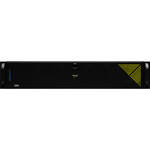
- Media Server: The media server acts as the central processing hub that manages rendered content and distributes synchronized video signals to the LED walls. It ensures low latency and frame-accurate playback while maintaining synchronization between rendering software, camera tracking, and LED displays.
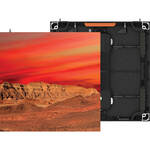
- LED Volume: The LED volume forms the virtual environment surrounding the actors. It typically consists of a curved LED wall, ceiling panels, and sometimes an LED floor that collectively display immersive backgrounds with accurate perspective and lighting.
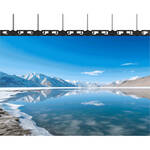
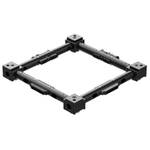
- Mounting Accessories: Structural mounting systems securely support LED panels while allowing precise alignment. Curved walls, ceilings, corners, and custom shapes all rely on purpose-built mounting hardware to maintain structural integrity and seamless image quality.
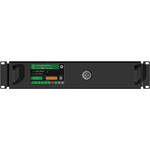
- Controller: The LED controller receives video signals from the media server and manages image processing across thousands of LED modules. It controls brightness, color calibration, synchronization, and overall image quality throughout the volume.
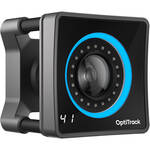
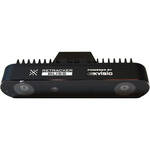
- Camera & Lens Tracking: Tracking systems continuously monitor the position, rotation, and lens characteristics of the production camera. As the camera moves, the rendered background updates in real time to maintain accurate perspective and parallax, creating the illusion that the digital environment exists physically behind the actors.
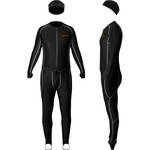
- Motion Capture (MOCAP): Motion capture systems (MOCAP) record body movements and facial expressions, allowing digital characters and animations to mirror live performances. MOCAP is commonly used for virtual characters, digital doubles, and real-time animation.
- Image-Based Lighting: Image-based lighting (IBL) uses the virtual environment itself as a lighting source. The LED walls emit realistic environmental light onto actors and props, creating natural color matching and reflections.