Video Chat with a Photography Expert - Live

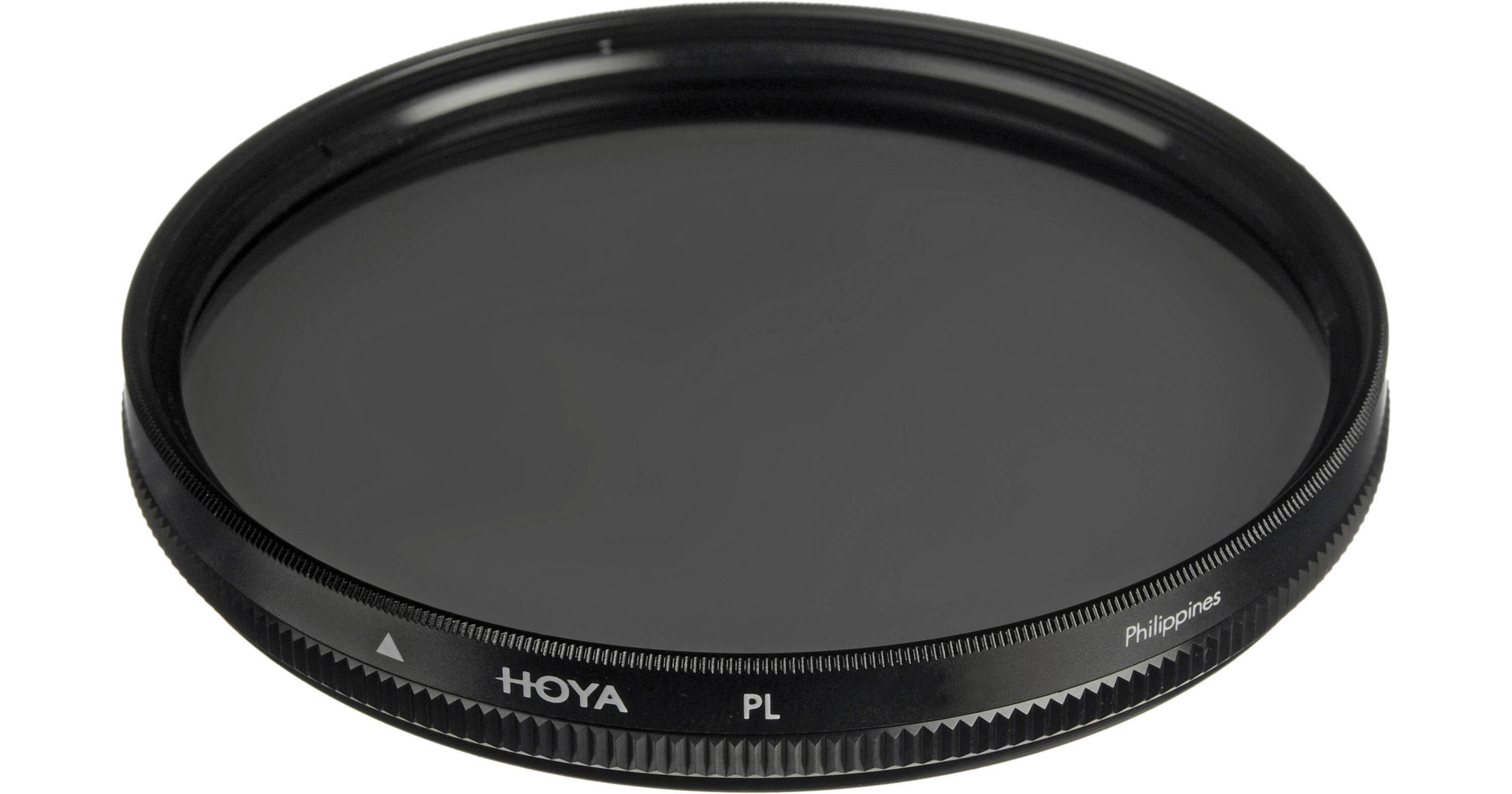
Hoya 58mm Linear Polarizer Filter

BH #HOP58 • MFR #B-58PL-GB
Print
Hoya 58mm Linear Polarizer Filter
Key Features
  • Helps to Eliminate Reflections and Glare
  • Reduces Haze and Blue Cast in Landscapes
  • Greater Color and Tonal Saturation
  • 3 to 4x Filter Factor, +1.6 to 2 Stops
Helping to reduce reflections and glare, the 58mm Linear Polarizer Filter from Hoya filters out light that has become polarized due to reflection from a non-metallic surface. By filtering this light, a noticeable increase in the saturation of skies and foliage is possible, as well as the ability to produce clearer imagery when photographing in hazy conditions. The filter is constructed from optical glass and is mounted within a durable, lightweight aluminum ring that has a hard anodized finish to guard against wear.
More Details
In Stock
No Store Display
Free Shipping for this Item
Protect Your Gear
Add a protection plan from $3.99
Ask an Expert
800-606-6969

Hoya Linear Polarizer Overview

Helping to reduce reflections and glare, the 58mm Linear Polarizer Filter from Hoya filters out light that has become polarized due to reflection from a non-metallic surface. By filtering this light, a noticeable increase in the saturation of skies and foliage is possible, as well as the ability to produce clearer imagery when photographing in hazy conditions. The filter is constructed from optical glass and is mounted within a durable, lightweight aluminum ring that has a hard anodized finish to guard against wear.

A linear polarizer differs from a circular polarizer in that it does not support the use of a camera's autofocus or auto exposure functions; it is best suited for use with manual cameras, such as view cameras, that are not dependent on internal mechanisms to determine focus or metering settings.

Helps to reduce reflections and glare by filtering out light that has become polarized due to reflection from a non-metallic surface.
Polarizing filters arrange, and filter, directionally polarized light perpendicularly to the reflected light, allowing for the absorption of much of the light.
Clears up haze in distant landscapes and provides more saturated, vivid colors.
Strongest effect when used at a 90° angle from the sun.
Optical glass construction maintains image clarity.
Aluminum filter ring is both lightweight and durable and features a hard anodized finish to guard against scratching and wear.
UPC: 024066580207

Hoya Linear Polarizer Specs

Filter Type
Linear Polarizer
Exposure Reduction
1.6 to 2-Stop
Size
58 mm Rear Filter Thread
Front Accessory Thread / Bayonet
58 mm
Coating
No
Filter Material
Glass
Ring Material
Aluminum
Packaging Info
Package Weight
0.105 lb
Box Dimensions (LxWxH)
3.5 x 2.85 x 0.6"

Hoya Linear Polarizer Reviews

Disappointed

By Eric
Rated 2 out of 5
Date: 2023-04-14

I observed very little actual polarization with this filter. I returned it for a better filter.

Great filter

By Justin
Rated 5 out of 5
Date: 2021-11-16

Great filter for the price, seems to work perfectly!

See any errors on this page?

What is the percent/strength of polarization? ...

What is the percent/strength of polarization? e.g. When two of these are 90 degrees apart, how much light still comes through?
Asked by: glen
The Hoya 46mm Linear Polarizer Filter is a linear filter that's most effective at 90 degrees and has a 1.6-2 stop reduction in light.
Answered by: Kenneth C
Date published: 2025-11-09

What does turning the filter do? How can the ...

What does turning the filter do? How can the effects be seen if it is used on a twin-lens camera?
Asked by: Ronald
Spinning the front of the Hoya 43mm Linear Polarizer Filter effects the level and angle of polarization. The only way to see the effect is to look through the lens that the filter is used on.
Answered by: Yaakov
Date published: 2022-07-24

How linear is the polarization? e.g. does it ...

How linear is the polarization? e.g. does it demonstrate variable shading when rotated against a circular polarizer?
Asked by: glen
The Hoya 46mm Linear Polarizer Filter is a linear polarizing filter; the angle of light being polarized would vary as the filter is rotated. Keep in mind linear polarizers are designed to be used with manual cameras, as they do not allow a camera's autofocus or auto exposure features to function.
Answered by: Kenneth C
Date published: 2025-11-09

Will this filter have a negative impact on ...

Will this filter have a negative impact on autofocus in a mirrorless camera like the R5?
Asked by: Michael
Linear polarizers usually have autofocus issues with DSLRs not mirrorless, so you shouldn't have a problem with the R5.
Answered by: Daniel C
Date published: 2024-03-14

question

Can I screw on and attach a metal hood to this polarizer?
Asked by: Anonymous
The, the front of this filter is threaded and can accept any other 49mm sized hood or filter.
Answered by: Yos O.
Date published: 2018-08-27

question

Is this filter multicoated?
Asked by: Anonymous
This filter comes with Hoya's standard coating.
Answered by: Heather S.
Date published: 2018-08-27

question

Does this circular polarizing filter have antireflective coatings?
Asked by: Anonymous
It's not a circular polarizer but a linear one. As such, it might affect the auto focus and metering of your camera if it's a DSLR and perhaps also mirrorless.
Answered by: Antony
Date published: 2025-12-10

question

Does this remove refelxes in car glasses?//noelcom
Asked by: Anonymous
Yes it will, but it may not be the correct filter if you are using a DSLR camera.How to select the correct Polarizing FilterTwo kinds of polarizing filters are the PL (Linear Polarizing) andPL-CIR (Circular Polarizing) filters which have the same effect ofreducing glare, however, there are differences in the way each worksin combination with your specific camera so it is important toresearch and choose the correct version of filter for your camera.Many of today's cameras use semi-silvered mirrors or prisms to splitthe light (a.k.a. beam) entering the viewfinder in order tocalculate exposure and focusing distance. PL filters can sometimesinteract with these light controlling devices to give unpredictableexposure or focusing. If your camera, whether auto or manual, isequipped with this kind of device, we recommend using a PL-CIR filter.Both types of filters allow you not only to remove unwantedreflections from non-metallic surfaces such as water, glass etc., butalso filter out atmospheric haze enabling colors to become moresaturated and appear clearer with a much sharper contrast.These effects will prove to be invaluable to photographers at anylevel of interest.
Answered by: Glenn N. Slik Expert
Date published: 2018-08-27
  • y_2026, m_6, d_1, h_13CST
  • bvseo_bulk, prod_bvqa, vn_bulk_3.0.46
  • cp_1, bvpage1
  • co_hasquestionsanswers, tq_14
  • loc_en_US, sid_23442, prod, sort_[SortEntry(order=HAS_STAFF_ANSWERS, direction=DESCENDING)]
  • clientName_bhphotovideo
Whatever You Need, We've Got It