Ask Our Experts800-606-6969
Hello, Log InAccount & Orders
Key Features
- Mould-Made Textured Cotton Paper
- Basis Weight: 310 gsm
- Thickness: 24.4 mil
- Opacity: 99%
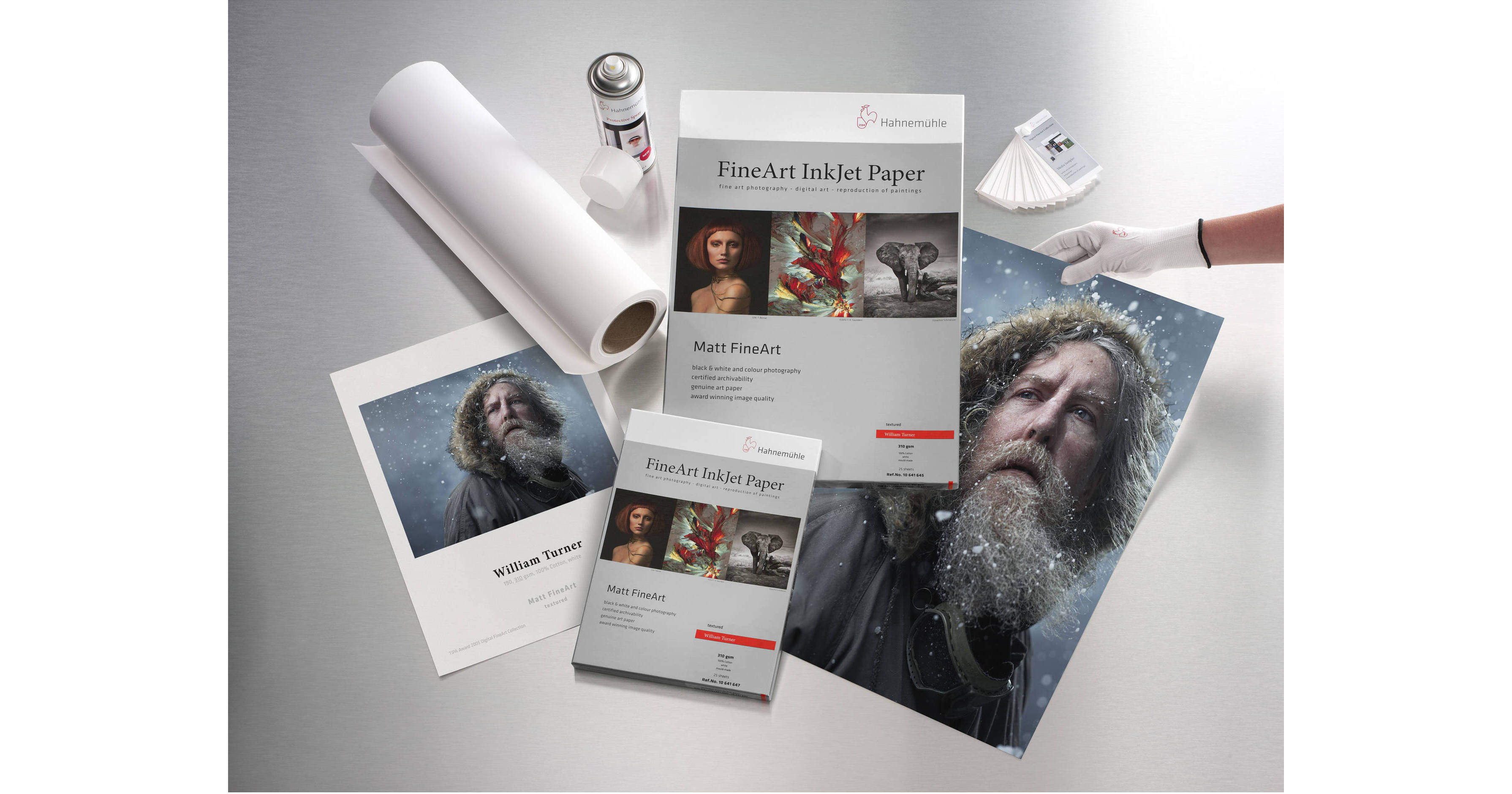
This 36" x 39' roll of William Turner 310 Matte FineArt Paper from Hahnemuhle features a 310 gsm paper that was designed for archival purposes. It is mould-made from cotton rag to produce a textured matte finish. This gives it a heavy weight, which combines with a 24.4 mil thickness for a professional look and feel. Also, the paper features an 88.5% whiteness and an opacity of 99% for a classic white finish. For archival purposes no optical brighteners were used in this paper. It is acid-free and calcium carbonate buffered to avoid negative effects from the environment. Additionally, William Turner paper is instant drying and water-resistant. It comes on a 3" core.
More DetailsSpecial Order
Expected availability: 2-4 Weeks
See any errors on this page?
question
How many pieces of paper in the box? or how many posters could you print?
This box contains one roll of paper, which is 24 inches wide by 39 feet long. The number of posters you can print with this item depends on the size of the posters you plan to create.
Date published: 2018-08-27
question
A question regarding the excellent review (Kevin) of Hahnemuhle WT 310 Matte: The review mentions a clay stabilizer being compromised due to the texture of the paper. Does that clay originate in the printer head and become dislodged and then create the clog? If so, which printer is referred to?
The clay isn't in the printer head; it's in the paper. ALL inkjet-specific papers have a clay stabilizer as it is vitally important to how the paper works: The clay stabilizer provides a consistently receptive surface to receive the ink droplets so that tones and colours are consistent across the paper. The stabilizer also has the function of dramatically reducing the amount of ink required to create a saturated image.To those who don't understand this concept, two points:1. Print on regular art papers, like watercolour. It will work, but the print quality will be very poor, colour and density will be awful, even with double the amount of ink compared to inkjet-specific papers.2. Use a knife to scrape the printable surface of any inkjet-specific paper. It will produce a fine white powder, or chips that can be broken up to form a powder (depending on how much binder is in use). This is why most papers, including this one, are single-sided -- because the stabilizer is only applied to one side of the paper. Others like Moab Entrada have the stabilizer applied to both surfaces.All such papers have a lignin-free substrate to make them archival, but you are not printing on the substrate; your ink never reaches it. Again, this is trivial to demonstrate by making a print, then gently scraping the stabilizer away to reveal the paper substrate beneath.-- Kevin
Date published: 2018-08-28