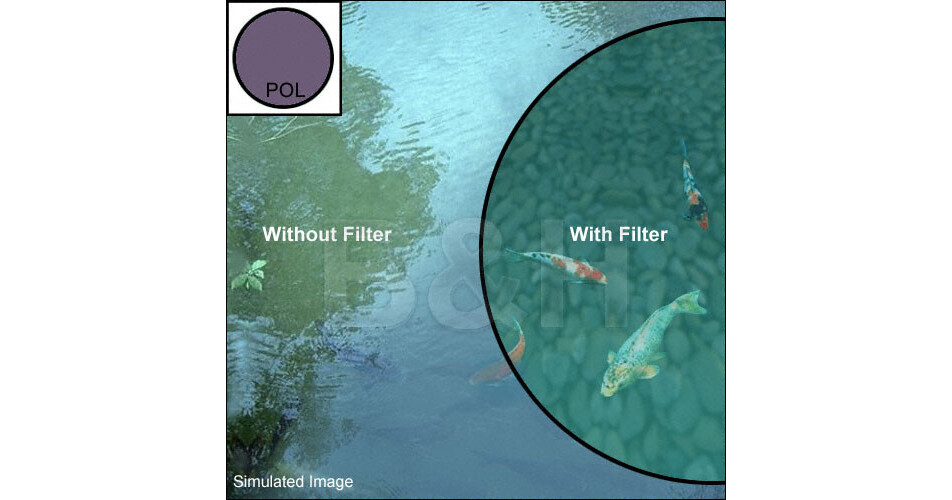
The 52mm Circular Polarizing Filter from Nikon is used to make a blue sky bluer or enhance cloud formations. A polarizing filter can also remove unwanted reflections from non-metallic surfaces such as water or glass and also saturate colors providing better contrast. For the nature or outdoor shooter, a polarizer is almost a necessity since it is the only reliable way to increase the saturation of a sky.
The front ring rotates with the polarization visible in the viewfinder or on your LCD screen. When shooting on a bright day, this means you can control the "blueness" of the sky as well as having control of how distinct you want the cloud formations. For the outdoor shooter, this filter is a must since it is the only way to make a blue sky bluer. In addition, when shooting into water or glass, you can minimize or eliminate the reflections often associated with landscape or scenic photography. Therefore, if you're shooting a store window or inside a museum into a showcase, glass obstructions will no longer be a problem. A polarizer tends to have its maximum effect when used at right angle to the sun. A polarizing filter, along with a UV filter should be a part of everyone's gear.
In order to help prevent vignetting, the accessory thread on the front of Nikon polarizers is larger (60mm). Nikon's optional lens hood for their 52mm polarizer, HN-12, is available for use with lenses 35mm or longer. It should be noted that the HN-12 will not fit on the updated Nikon Circular Polarizing Filter II.