Search results for: audio buying guide choosing audio editing software
About 29 filtered results
by Steven Esposito · Posted
When you’re shopping for a laptop capable of video editing, there are several variables to consider. Whether you're a professional video editor or just getting started, a machine that can provide the kind of performance you need is essential. Video editing itself is extremely resource intensive and having a laptop with serious processing power will make your workflow much smoother and save you hours in the long run. The goal of this guide is to help you get a better idea of what specs will matter the most when you’re choosing a laptop for

by Freddy Gerngross · Posted
MIDI (Musical Instrument Digital Interface) is a programming language that connects a wide variety of electronic musical instruments, computers, and related devices for playing, editing, and recording music. When we record with MIDI, we capture the performance of how an instrument was played, not the audio waveforms produced by the instrument. This has many benefits because we can add notes, edit velocities, correct the performance, or change the sound of the instrument altogether.

by Gabby Bloch · Posted
As a podcaster, life becomes a lot easier when you have the right equipment. If you’re currently stuck with a simple audio interface or portable recorder, you’ll probably benefit from upgrading your setup to a multitasking mixer that can serve every function you may need as your podcast grows and your creative ideas expand. Since content creation has become such a big thing, it’s challenging to sort through all the available products to find which

by Freddy Gerngross · Posted
In the postmodern era of music production, most musicians, producers, and engineers rely on a computer running a robust Digital Audio Workstation (DAW) like Pro Tools or Ableton to be the studio centerpiece. But despite their power and convenience, sometimes creating in this environment can turn into a series of mouse clicks that eat away at the joy and magic of music production. There are times when ditching the DAW and going old school with a physical piece of hardware can unlock new potential, forcing you to develop alternative techniques

by Trevor Collins · Posted
Looking at the computer market these days, you might think it’s a bad time to buy a music production laptop. AI-induced RAM shortages have caused computer costs to skyrocket. But with AI going nowhere fast and no sign of this trend slowing down, now may actually be the best time to get in while the getting is good. After all, prices may only go up from here! And with great advances in software and hardware over the last few years, you have some impressive choices available to bring your music production setup into the 2020s. So, let’s go over
by Freddy Gerngross · Posted
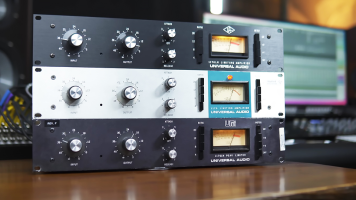
Among the many tools audio engineers use to sculpt and shape raw audio into a final work, most would say that compressors are in the top two most ubiquitous and useful. In concept, compressors are simple tools: they make the loud parts of sound quieter and the quiet parts louder, reducing dynamic range so that everything can be heard more clearly. They were first developed out of necessity, designed to solve critical technical problems in the early days of AM radio broadcasts—loud signals would distort, and quiet signals would be lost behind

by Steven Esposito · Posted
If you’re starting a video podcast or looking to get into live streaming, you’ve come to the right place. I have experience with both, so I speak from personal experience when I say you’ll need a capable computer to do either. What kind of computer exactly? Thankfully, the answer is simple.
For the time being, I can’t suggest building your own PC just for this. The prices of memory (or RAM) have skyrocketed due to the demands of AI infrastructure. In many cases, the price of memory has even surpassed some pre-built systems I’ve seen. The good

by Freddy Gerngross · Posted
Choosing a Digital Audio Workstation, or DAW, is a major decision. For beginners, it will define their learning curve, workflow, and operating knowledge—for professionals, compatibility, functionality, and familiarity is key. In this guide, we will give some detailed overviews of the most popular DAWs in the audio industry, what their strengths and weaknesses are, and some of their unique features.
If you’re in a rush, here’s a quick rundown of the best DAWs for a variety of common purposes:
If you’re a songwriter/producer: Ableton, Logic,

by Freddy Gerngross · Posted
Modern digital audio workstations usually come with some solid stock plug-ins and virtual instruments—many music software companies pride themselves in offering every tool necessary for professional audio production. In theory, a proper DAW could give you everything you need but in practice, you’ll quickly find that many third-party tools are industry standard necessities, offering the power and flexibility professionals need to compete in the market. In this guide, we’ll go over the best way to purchase and acquire audio software and some of

by Steven Esposito · Posted
2025 has been a great year for creative tech! From devices like handy pocket cameras to all-in-one solutions for your creative endeavors, there is something for everyone! Whether you are a YouTuber, live streamer, or even a designer of sorts, there is plenty here to help take your creativity to the next level. So, let’s take a look at some of the coolest and most useful devices of the year!
Insta360 X4 360-Degree 8K Camera
Sporting a stylish and compact rugged design, the

by Eric Calvi · Posted
In the not-so-distant past, achieving professional-level sound required either a fully equipped analog studio or an expensive digital audio workstation. However, thanks to the ingenuity of brands like Universal Audio, Audient, and Apogee, professional-quality sound is now attainable via powerful yet portable audio interfaces. The perfect companions at home in the studio or on the go, these devices can certainly help you achieve polished and impactful audio without straining your computer's CPU.
Audient EVO 4
Deceptively small and astonishingly

by Steven Esposito · Posted
Editing an audio podcast doesn’t require much, especially when you are searching for a display. After all, it’s just audio that is being blasted into the eardrums of your listeners. But a video podcast is a whole other

by Gabby Bloch · Posted
With so many content creators taking their podcasts on the road, it’s become easy to put together a portable audio podcasting setup on virtually any budget. We’ll briefly explore the type of equipment you need for on-the-go podcasting and help you discover how simple mobile podcasting can be.
A portable podcast setup can be incredibly straightforward. Here’s what you’ll need:
Portable podcast recorder
Batteries
Microphone(s)
XLR Cable(s)
Headphones
Laptop or tablet
DAW software
Let’s break these items down to see just how

by Trevor Collins · Posted
These days it often seems like everyone has a podcast. With so much competition and so many options for podcasting-centric equipment, it can be daunting to dive in headfirst without knowing the ropes. That’s where B&H comes in, with another all-encompassing guide to set you up for success and help you get your content off the ground as painlessly as possible. Let’s begin.
Why Make a Podcast?
The first topic couldn’t be simpler: Why even start a podcast? The answer is simple−because it’s the best way to get your content to the masses.

by Trevor Collins · Posted
There's no denying that as of 2025, Avid's venerable DAW program Pro Tools remains the de facto industry standard for professional audio productions. Increasingly, it has also become a popular choice for amateurs and small projects as well. With a wide range of project sizes, types, and channel counts being needed by engineers and producers big and small, it can be hard to determine which version of Pro Tools will best serve your needs.
Avid Pro Tools Artist, Studio, and Ultimate editions
That's where B&H comes in. In this article we