Voigtlander

There are many ingredients in the recipe that make a good photographic portrait—foreground, background, setting, pose, expression, color, lighting, and so on—but one element that can be as important to the result as the portrait sitter is the lens used to capture the portrait and help create the art.
Technically, any lens can be used to take a portrait with your camera, and there are traditional focal lengths for “portrait lenses” like 85mm and 105mm, but I asked my fellow B&H photographers, as well as our B&H Creative partners and

Are optical designers designing (and re-designing) lenses today to create better bokeh at the expense of optical characteristics such as diffraction spikes (popularly known as star effects/sunstars/starbursts)? Is the trend toward creating “better” bokeh sending the lens-made diffraction spike the way of pay phones, SLR cameras, manual transmissions, and the internal combustion engine?
The photography world, especially on the Internet, is full of debates. Canon vs. Nikon.
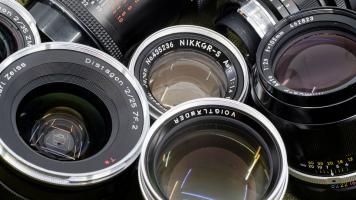
How “good” are vintage lenses when used on modern digital cameras? In a word, vintage lenses are “fine,” though I would have to immediately follow that statement by adding, “It depends,” because there are always exceptions to the rules, though even in these cases, the lens in question often works fine albeit with a technical or optical shortcoming of sorts.
Original photographs © Allan Weitz 2020
When adapting older-generation film camera lenses to DSLRs and mirrorless cameras, most perform well in terms of sharpness, color fidelity, color

0 Plays ·Posted
This is a wonderful conversation for fans of mirrorless cameras, of classic lens design, of the venerable M-mount, and, really, of photography. The joy that our host Allan Weitz exudes while discussing a few of his current favorite lenses is as contagious as it is educational. And I feel that this episode provides a bolt of creative curiosity that might infuse my own photography.
For this week’s episode of the B&H Photography Podcast, we asked Weitz to draw up a list of 10

Image sharpness is an important part of the equation when purchasing a new lens. Who among us has purchased a lens without first inquiring about, among other things, how sharp the lens is? Anybody?
Don't get me wrong. Lens sharpness is an important piece of criteria when it comes to purchasing a new lens and that's because, just like you, I only want sharp lenses regardless of whether the lens is a pricier OEM lens or a lower-priced, third-party lens. If the lens isn't sharp, "Feh—I don't want it."
Photographs ã Allan Weitz 2020
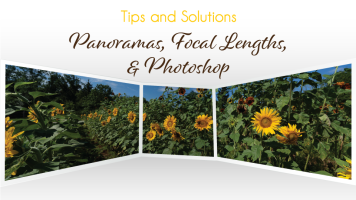
Panoramas are visually interesting, and that’s why Panorama modes can be found on many consumer cameras. Simply set the camera to Panorama mode, frame your shot, and follow the panning instructions in your viewfinder. Move slowly, evenly, and keep your camera level with the horizon. If your camera is on a tripod, so much the better. Do it right and you get a terrific panoramic image of up to 360 degrees, depending on how you set your camera.
I have long been a fan of panorama imaging, you can imagine my surprise when I realized my

Life under lockdown is challenging on many levels. The need to express oneself through art, crafts, writing, or other creative outlets—though not nearly as critical as a means of survival compared to food and shelter—is part of our genetic makeup. Our creative efforts help to define who we are, how we think, and how we see the world around us. In times such as these, having the ability to express oneself through one’s craft can act as a coping mechanism for getting through yet another day.
Photography has been a personal coping mechanism, as

In this week’s edition of FAQ, the topic is a wide-angle lenses. When describing the focal lengths of lenses, there are three main groups: normal, wide-angle, and telephoto.
What is a wide-angle lens?
By way of comparison, normal lenses approximate the perspective and special relationships between elements within the viewing area the way our eyes do. In other words, normal lenses represent the world much like the way we see it.
Wide-angle lenses capture a wider view of the scene before the camera, but because they squeeze more of the scene

by Nate Luebbe ·Posted
Astrophotography is a nearly inevitable trajectory for any serious landscape photographer. It’s not surprising, really: spend enough evenings perched on a hillside documenting sunsets and you eventually get curious about what comes next. The world doesn’t disappear when the sky goes dark, and neither does the potential for striking photos. While, of course, the most basic equipment necessities are obvious (a stable tripod, for instance), choosing the correct lens

Nowadays, making a proper exposure with your digital camera is simple and straightforward: set your camera to A, S, or P and let the camera do the work. It’ll work most of the time and, in those instances where it doesn’t, you might pull out an external meter for a bit more precision. In all of these cases, you always have the rear LCD to double-check your shots if you’re unsure and, for the fanatical, you can even use a live-exposure histogram while shooting. When you’re using film, however, the luxury of being able to check your exposure by

If you’re into analog film cameras, by extension you’re also into light meters. This is because while most modern cameras contain excellent TTL metering systems, if you use film cameras made prior to the 1970s and ’80s chances are: A. the camera has a meter but it doesn’t work anymore; B. the meter works but it’s no longer accurate; C. they stopped making batteries for your meter when Jimmy Carter was President; or D. the camera never had a light meter in the first place. If you resonate with any of the above and your film camera has an
Everyone loves a nice 24-70mm or a simple 50mm lens, but nothing generates instant intrigue and interest more than a unique focal length or lens design you’ve never seen before. Whether it’s an ultra-wide-angle lens, impressively fast design, or it just has some kind of distinct trait that separates it from the norm, unique lenses are a sure way to add some character to your imagery. Despite 2019 being a foundation-building year for many manufacturers, with many lens releases focusing on core sets of standard primes and zooms, here’s a look at
Lens development for mirrorless cameras has been in full force throughout 2019, with more lenses from more manufacturers being released than ever before. With many new companies focusing on building new full-frame camera systems, along with the introduction of a few new lens-mount types, brands are chugging along at adding everything from the necessary staples to any well-rounded lens system to even beginning to add some more niche and exotic glass for those special circumstances. Here’s a look at some of the mirrorless lens highlights from

Many experienced photographers think of fast moderate telephoto lenses, as “portrait lenses” because so many professional portrait photographers rely on them. Lenses in the 85-105mm focal length range with maximum apertures between f/1.4 and f/2.8 can capture frame-filling headshots and head-and-shoulders portraits at moderate shooting distances, thus minimizing apparent perspective distortion—the dreaded “big-nose effect”—in close-ups. And they deliver very shallow depth of field at their widest apertures, creating compelling pictorial
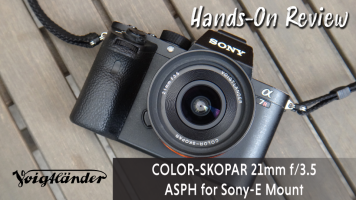
One of the first lenses I purchased after switching from DSLRs to mirrorless cameras was a Voigtländer COLOR-SKOPAR 21mm f/4 P, a manual-focus Leica M-mount lens that, dollar-for-dollar, is one of the smallest, lightest, and sharpest "pancake" ultra wide-angle lenses for full-frame cameras. The lens isn’t terribly fast, it’s prone to vignetting, and when used on digital cameras under 36MP, it’s also prone to color smearing.