Search results for: lighting tips solutions introduction to video lighting
About 11 filtered results
by Steven Gladstone · Posted
Whether you’re a student or a seasoned veteran, selecting the right camera can make your head spin with questions. Does sensor size matter? What’s the difference between 4:2:0 and 4:2:2? Do I really need a camera that can record 8K? What about raw? We’ll explain the key components that help a camera produce cinematic images, and in doing so, hopefully help you make that all-important decision.
Evaluate Your Needs and Your Budget
Before considering certain cameras, you must know your needs and your budget. And be realistic. If you are a student

by Mathew Malwitz · Posted
The most engaging portraits seem to have direct eye contact between subject and viewer, as if the camera were simply a window through which we’re looking. But is it that simple? So much goes into making a good portrait, can success simply come down to eye contact between subject and camera and is it even necessary to concentrate on the eyes for a portrait? There are certainly wonderful portraits that do not focus exclusively on the eyes that illustrate character with other aspects of the body, from posture to hands, but as an introduction to

by Cory Rice · Posted
Mastering studio lighting can feel like a Herculean feat when you’re just getting started. Like any aspect of photography, it requires patience, practice, and plenty of mistakes before it comes naturally. In an effort to shorten your learning curve, we’ve rounded up 10 common issues that beginners encounter and how to fix them.
Technical Issues
Lighting setups can be as simple or complicated as your heart desires—or your shot requires. However, before you can begin to think about how to use your lights creatively, you need to understand how

by Jennifer Hahn · Posted
If you’ve gotten this far without having to use Zoom, Teams, Facebook, Skype, or another video conferencing platform, you are one of the few these days. But if you have been using the popular video conferencing platform (or one of them) for meetings, performances, or education, how good do you feel about your presentation? Are you happy with your look online, or do you feel the webcam is not representing how you really want to present yourself? Can the other participants hear you clearly? Let’s go over a few ways you can improve the look and

by Jennifer Hahn · Posted
In times of transition, such as adding an extension to your business, creating a personal brand, or, especially now, mandatory social distancing during a pandemic, it becomes necessary to connect with friends, clients, or an audience in different ways. Livestreaming video seems fairly easy at its most basic if you're talking to your Mom or a friend on your smartphone, but when, for example, a yoga teacher needs to suddenly transition their classes online or a house of worship needs to reach their congregation, a higher-quality approach may be

by Shawn C. Steiner · Posted
At its most basic, tethered shooting involves connecting your camera to your computer as you shoot. You’ve likely seen it in some behind-the-scenes video for a professional studio shoot, or you just have a friend who swears it’s the best thing since sliced bread. Tethering is a shooting technique that can benefit many a photographer’s workflow significantly, though upon first hearing of it, the idea of tethering can be something that first requires a bit of education. Hopefully, this introduction will help get you started.
Why should you

by Steven Gladstone · Posted
Green screen compositing today is ridiculously easy compared to days gone by. Years ago, when shooting and finishing on motion picture film, one had to shoot the subject against a green screen, then create film mattes, and combine it all using an optical printer. Generation loss, contrast shifts, and registration problems were the bane of the filmmaker. This doesn’t even begin to encompass all the other problems, such as matte lines, elements that drift out of alignment, transparency issues, and garbage mattes. The introduction of high-

by Jill Waterman · Posted
For many photographers, image making regularly involves a small screen as the initial (if not the only) platform for framing and viewing pictures, and often as the primary distribution outlet. This brings with it the rather weighty challenge of composing for a quick and easy read.
Added to this is the fact that many capture devices now contain not just a camera, but apps with image-processing software, a means of immediately viewing the images on your own small screen, as well as a direct distribution method via sharing sites with millions of

3,783 Views· Posted
In this episode of B&H Prospectives, we take a look at the vision and workflow of professional food photographer and director Andrew Scrivani. The video begins with an introduction to Scrivani's background and the events that led to his working in the food-photography world. From here, Scrivani talks about some of the technical aspects of his work, including lighting styles and his sources of inspiration, as well as his learning process and how he overcomes challenges, from shooting to post production.
b
Producer and

by josh brown · Posted
If you are a video editor or are looking to get into video editing, I have both good news and bad news. I’ll start with the good news. Never before have video editors had such an extensive set of color-correction and color-grading tools available at their fingertips. Over the last decade, the makers of non-linear editing software have strengthened the color-grading abilities of their software to the point where they now rival dedicated color-grading software in control and ability. Perhaps as a response to this competition, the developers of
by Steven Gladstone · Posted
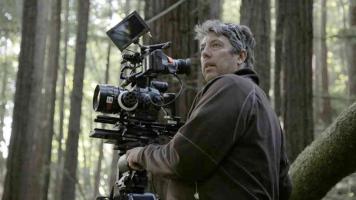
Shane Hurlbut, A.S.C., is a Director of Photography who views the world differently than most cinematographers. After 16 years of shooting feature films traditionally, using cinema cameras and film stock, he was one of the first filmmakers to break ground and use the DSLR to make movies. The "inciting incident"—to borrow a screenwriting term—in his digital-filmmaking career was the introduction of the Canon 5D Mark II, which he took to immediately. According to Hurlbut, after many people insisted that you couldn’t put images from a still