Latest
9 months ago
0
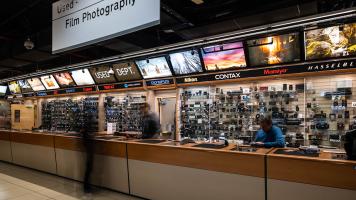
Did you know there is a virtually separate camera store that lives inside the B&H Photo SuperStore, in New York City? The B&H Used Department can be found at the top of the staircase leading to the second floor of B&H Photo’s expansive showrooms or online! There you can sell your used gear, or…

2 years ago
Our lives are marked by firsts: First love, first car, first marriage, first kid, first heartbreak, and first camera (hopefully, not in that order). For many generations of photographers, that first “real camera” was the Pentax K1000.
Photographs © Todd Vorenkamp…

6 years ago
My first autofocus camera, and what turned out to be my last film camera, was a Nikon N90 35mm single lens reflex (1992–2001). I needed to replace one of my Nikon F3 bodies and I got tired of waiting forever for the long-rumored Nikon F5 film camera to become available. (Sound familiar?)
The F3’s replacement camera, the Nikon F4, was readily available but the F4’s autofocus and metering systems…
6 years ago
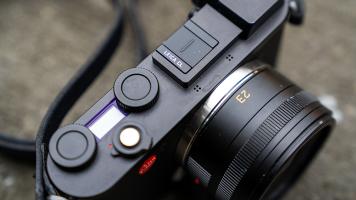
Leica has been a prestigious brand for decades. That prestige brought high price tags and eminently covetable gear. This is why last year’s launch of the CL Mirrorless Camera was such an important release for this company, and one that should be very appealing to a wider range of…

6 years ago
First created in the early 1940s, the Kodak Medalist is a medium-format rangefinder that captures eight 6 x 9 cm exposures using 620 film. Weighing slightly more than 3 pounds, its rugged and durable tank-like build made it an attractive option for the US and British armed forces, and it saw extensive use during World War II. This version was the Medalist I and, in 1947, an improved version, the…
6 years ago
Where do I begin with the Nikon F4? Is my love of this camera rooted in the fact that four is my favorite number? Is it because one of my favorite jet warplanes as a child was the McDonnel Douglas F-4 Phantom II? Or, is the fact that I just love the look of Giorgetto Giugiaro’s Italdesign bodywork? Is it because when I started out in photography with my…

6 years ago
For as long as I can remember, the heavy chunk of black Bakelite and chrome nicknamed “The Brick,” was a staple on a shelf in my parents’ living room. Officially known as the Argus C3, this solid pointy-edged rangefinder is said to be one of the most popular cameras in history, selling about 2 million units during its extraordinary 27-year production run, from 1939 to 1966.
While this camera…
6 years ago
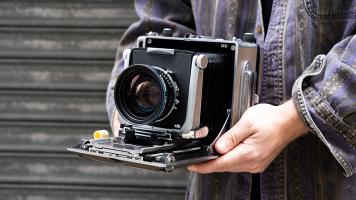
My Linhof Super Technika V is probably the camera I can least justify owning, but it’s probably also my most cherished camera. For me, it represents the type of camera I dreamt of owning, but thought I probably never would. The reason for this? It’s a luxurious camera. Akin to something like a Leica of large format, Linhof is a premium brand known for making the best of the best, having strong…
6 years ago
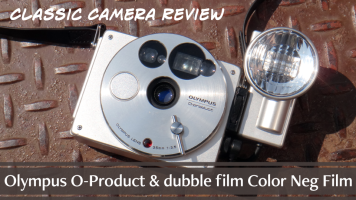
The Olympus O-Product is a perfect real-world example of the phrase ‘You can’t tell a book by its cover.” Designed and produced in 1988 by industrial designer Naoki Sakai of Water Design to commemorate the 70th anniversary of Olympus cameras, under its skin the all-aluminum, retro-styled Olympus O-Product was in fact a plain Jane Olympus Infinity Junior point-and-shoot camera. Produced in a…
6 years ago
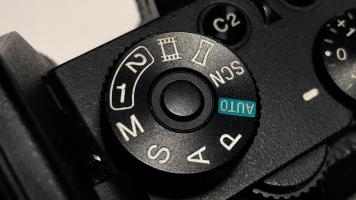
One of the reasons people have been rediscovering, or in some cases, first discovering the art and craft of film photography has to do with the analog experience that goes hand-in-hand with it. Few people will dispute the imaging abilities of modern digital cameras, nor can one poo-poo the imaging abilities of the latest smartphones. What is missing for many photography enthusiasts is the hands-…
6 years ago
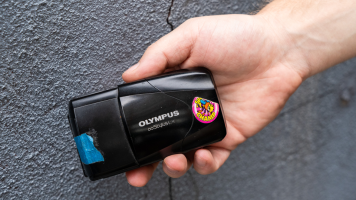
Printed on the back of the camera is “ULTRA COMPACT 35mm CAMERA,” which is an apt descriptor of the Olympus Stylus Epic. However, this certainly isn’t a fully fleshed-out description of what this camera is, what it can do, or how well-received this camera has been since it was introduced in 1997. Known outside of North America as the μ[mju:]-II (or just “mju-II”), the Stylus Epic could be…

6 years ago
William Henry Fox Talbot was no artist. While on his honeymoon in Italy, the English inventor famously attempted sketches with the aid of a camera lucida, a drawing device used by travelers to record landscape views. His confession of failure has become legendary in histories of photography:
One of the first days of the month of October 1833, I was amusing myself on the lovely shores of the Lake…

6 years ago
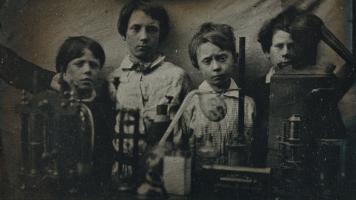
The earliest photographers faced a dilemma spurred by the near-simultaneous invention of two very different kinds of photographs: daguerreotypes and salted paper prints. Daguerreotypes were cherished for their extraordinary detail and beauty but lacked the ability to be easily reproduced. Alternatively, many copies could be made from a single paper negative but the resulting prints lacked the…
6 years ago
Not since the 19th century has the tintype enjoyed the level of popularity to which it has risen today. Safer to create than the daguerreotype and more impressive to hold than paper prints, the tintype—and close relative, ambrotype—offer an attractive middle ground for photographers wanting to create unique photographic objects steeped in the medium’s history.
Ambrotypes are extensions of the wet…

6 years ago
In the grayscale days of early photography, the cyanotype was a splash of electric blue. Today, this alternative process continues to attract the curious and experimental, seduced by its simple development and distinct aesthetic. The origin of the cyanotype dates to the formative years of photography and one of the medium’s most important—if underappreciated—contributors, Sir John Herschel.…
