Black and White Photography

Leica announces its latest camera for lovers and enthusiasts of black-and-white photography, the Q3 Monochrom Digital Camera. The new camera continues the Q-series' reputation for outstanding build, use, and image quality in the compact, fixed-lens camera space and will appeal to street, travel, and photojournalistic shooters dedicated to the art of light and shadow.
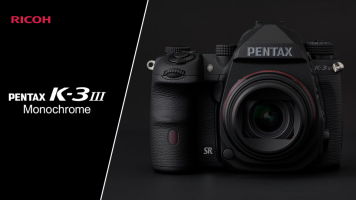
Ricoh upended the camera world this week with the announcement of its groundbreaking PENTAX K-3 III Monochrome camera. The color array (anti-aliasing filter) is stripped from the camera's custom 25.73-megapixel APS-C sensor, making it exclusively capable of taking black-and-white photos.
PENTAX K-3 III Monochrome
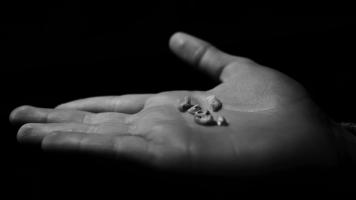
For an upcoming segment on the B&H Photography Podcast, I was given a Leica Q2 Monochrom Digital Camera to sample for a few weeks. Since Macro Week at B&H is upon us and the Q2 has a sublime and simple macro mode, I produced a short series of

A photographer’s gift is to record his or her encounters with the world in pictures. If that photographer meets with success, pictures from their archive are published in magazines and books, exhibited in museums and galleries, licensed for commercial use, and sold as prints. With careful planning, these images have a life that endures well beyond that of the artist, through the continuing efforts of a legacy keeper.
Such is the relationship between the trailblazing work of 20th-Century photographer Ruth Orkin and the ongoing endeavors

by Allan Weitz ·Posted
Speaking as a photographer who learned the craft of black-and-white photography using a 4 x 5" field camera and Tri-X film, I know a good black-and-white photograph when I see one. After spending an afternoon wandering about New York’s Chelsea Market and the elevated High Line with the new Leica M10 Monochrom, I can tell you straight up that the M10 Monochrom takes incredibly good black-and-white photographs. And you can bank

It’s 2026, and we no longer have to pretend that film is dead; film is very much alive, with a robust number of film stocks available to try out, ranging from the classics to new and creative films from up-and-coming, smaller brands.
Here’s an overview of the current black and white films available right now.
Kodak
It’s hard not to start with mother Kodak in an article like this, and with all the history—the ups and

Some of the most cherished memories of my photographic education revolve around spending long hours in the darkroom, making prints into the wee hours of the night. While not as commonplace as it once was, if you’re fortunate enough to have a traditional black-and-white darkroom at your school, be sure to make use of it while you still can. Regardless of whether you’re taking an intro black-and-white class or an intensive printing class, one of the keys to becoming adept at black-and-white printing is, quite literally, to print! And print a lot

Like a painter mastering realism before advancing to abstraction, photographers benefit greatly from learning to shoot film before moving to digital.
Stark black-and-white images can swiftly and brutally reveal a weak composition. And shooting with film teaches photographers to be thoughtful about what subjects are worth one of their precious 36 frames. Beginning with black-and-white film helps creates a visually articulate and well-rounded shooter. Which is why many universities have stuck to the practice, despite our entrenchment in a

For as long as I can remember, the heavy chunk of black Bakelite and chrome nicknamed “The Brick,” was a staple on a shelf in my parents’ living room. Officially known as the Argus C3, this solid pointy-edged rangefinder is said to be one of the most popular cameras in history, selling about 2 million units during its extraordinary 27-year production run, from 1939 to 1966.
While this camera belonged to my father, I have little memory of him using it, and even less of a sense for when and how he acquired it, or which images were made with the
0 Plays ·Posted
Structure and limitation is the key to the artistic process. This is the idea that opens our conversation with photographer and publisher Brooks Jensen. In addition to his work as a fine-art photographer, Jensen is well recognized as the publisher of LensWork, the beautiful print magazine (and website) about photographs (not cameras!). We speak with him about LensWork’s “Seeing in Sixes” competition, in which photographers submit a series of just

What to do with all the pictures? This is one of the thorniest questions facing an active image maker with a sizable, and probably still growing, collection of photographs and/or motion footage, plus other contributing materials that add context to a life behind the lens. In an ideal world, as pictures accumulate, a collection evolves into an archive; yet many photographers lack awareness of this concept until far too late in life. Another daunting hurdle to this process is the discipline for organizing a lifetime of visual output.
Anyone who

by Allan Weitz ·Posted
In the 78 years that Kodak Tri-X has been in existence, there have been finer-grained or faster films available, as well as films with more exposure latitude, better contrast, and even better tonality—but none of them have the signature look and the history of Tri-X.
Tri-X was originally released in 1940 as a 4 x 5" sheet film, followed by 35mm and 120 roll film versions, in 1954. It wasn’t long before the name Tri-X became synonymous with black-and-white

As a film photographer, I rarely get to experience the joy and excitement of new products being released to the market. I’ve made my peace with this and have learned to work within a milieu of cameras and materials that have been on the shelves for decades. However, when Bergger recently released Pancro 400, I eagerly anticipated the chance to try a truly new film for one of the few times in my life.
Besides just being a new film, Bergger

Structure and limitation is the key to the artistic process. This is the idea that opens our conversation with photographer and publisher Brooks Jensen. In addition to his work as a fine-art photographer, Jensen is well recognized as the publisher of LensWork, the beautiful print magazine (and website) about photographs (not cameras!). We speak with him about LensWork’s “Seeing in Sixes” competition, in which photographers submit a series of just
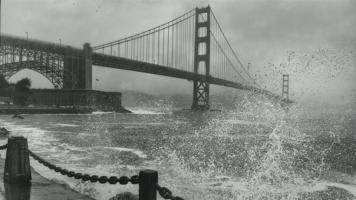
In this B&H Event Space video, noted photographer and author Harold Davis walks you through the creation of black-and-white images in a digital world. For much of photographic history, practitioners were limited to creating images in black-and-white. But digital cameras now allow you the option of choosing color or black-and-white for your images on a frame-by-frame basis; in fact, this choice is often best made in post-production. From pre-visualizing black-and-white in a color world, to finding subjects that work well monochromatically,