Search results for: photography buying guide how to use softboxes
About 13 filtered results
by Rebecca Melville · Posted
An on-camera flash is an indispensable accessory for many photographers. While it provides light to supplement dark conditions, an on-camera flash also allows you to achieve more balanced exposures in daylight conditions, permits freezing of fast-moving subjects, and can even be used to control other flash light sources. With so much to offer, an on-camera flash can become an integral part of your workflow, but where do you start? We are going to give you the on-camera flash rundown with everything you need to know to make the most of this

by Shawn C. Steiner · Posted
After you pick up your first speedlight, strobe, or LED panel, the best investment you can make is in some modifiers. These are tools that shape and alter the intensity of our light source. Modifiers come in all shapes and sizes based on the type of light you plan to use them on, which can make it difficult to pick one out if you are new to photography. Since each modifier comes with its own distinct look and ideal use, here is a

by Mathew Malwitz · Posted
One of the most effective ways to improve your portraiture is by controlling the light, and one of the most effective ways to control your light is to move it. Seems like a simple enough concept, but it can be daunting at first, especially if you're using a speedlight or an on-camera flash. Despite its misleading name, an on-camera flash can, very easily, be used off the camera. The "on-camera" part simply refers to its form factor

by Cory Rice · Posted
Whether you are shooting a fashion editorial, a wedding reception, or anything in between, on- and off-camera lighting can make a huge difference outdoors. Natural light is wonderful, but there are scenarios in which you simply cannot run the risk of an unexpected cloud or rapidly setting sun ruining your shot. This article introduces the gear and accessories necessary to be prepared outdoors always, no matter what

by Cory Rice · Posted
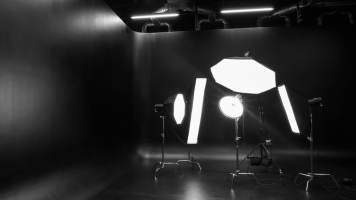
Subject and style may vary, but consistency is a quality shared by all successful photo studios. When working indoors, that begins with lighting. Strobes remain the bread and butter of many still photography studios. Unlike natural light, which can be finicky and unpredictable; on-camera flashes, which are not typically designed for studio use; or continuous lights, which can become costly as output increases; strobes are
by Cory Rice · Posted
One of the leading trends in digital cameras over the past few years has been the development of advanced video capabilities in mirrorless and DSLR cameras. Features that could once only be found in costly cinema cameras now come standard in still cameras targeted toward hybrid photo-video content creators. Accompanying the interest in cameras able to create high-quality stills and videos has come a demand for lights that can be used for both purposes.
While on-camera flashes and strobes have long been the standard for photographers, the short

by Todd Vorenkamp · Posted
Hey, the holidays are here! Is it the the 11th hour yet? Are you like me (and many others), who cannot figure out what photography-related gifts and stocking stuffers to get for all but your closest friends, family members, favorite shutterbugs, and romantic partners? Well, here are a few ideas—including many that will fit in your favorite person’s stocking—for those with the dreaded gift-giving block. These aren’t just my ideas, some of my colleagues at B&H told me what was on their last-minute wish lists, as well!
1. Keep Those Hands

by tom kirkman · Posted
A softbox is an enclosure designed to fit around an artificial light source, such as a flash tube or halogen lamp. Its reflective interior intensifies the light output and projects it through its only means of escape—the front diffusion screen. This creates a quality of light long appreciated by photographers and videographers, which resembles the softer light one might find streaming through a window. It also creates square or rectangular highlights in the reflective surfaces of your subjects. The "soft" name stuck because of the quality of

by tom kirkman · Posted
The cameras in phones keep getting better and better, while the image quality in reduced-format cameras has shown superior quality in natural light. And they all have flashes, right? Then one day it hits you—usually after buying a DSLR and a flash—“I want more light,” and “I want it when I need it, not just on nice days, but maybe in the dark and rain.” Basically, you want to create light to more accurately express your perception of the subject or for cataloging or ecommerce, for example. Of the five kits below, four of them can be used by

by Jill Waterman · Posted
As they say, a company is only as great as the people within it. The product experts at B&H exemplify this adage daily, in the personal attention they offer every customer interaction, as well as their depth of knowledge and passion for practical solutions.
“Many people don’t realize, it’s not just knowing the tech that’s important; the sales reps behind the counter get customer feedback about the items that serve people best,” explains B&H Sony Specialist Yisroel Ybgi. “So, their recommendations are not only based on what it says in a

by Richard Scali · Posted
The word “photography” literally means “to draw with light” and is a simple way of expressing how essential light is to our craft. At times, however, natural light can be a scarce commodity and thus, it falls upon the photographer to create it. Fast-forwarding through the days of flash powder and disposable bulbs, we arrive at the modern day, an exciting time for “strobists,” when a plethora of compact options exists for creating and shaping light. Below, we’ll review some of the classic, essential, and innovative accessories for the
by Daniel Wagner_1 · Posted
Always shooting with an on-camera flash is like always shooting with the sun behind your back. While this is a good way to illuminate a subject and capture an image, it may not be the best way to capture your imagination creatively. Positioning your flash off-camera, using an on-camera flash for fill with a second flash, or shooting with three or more Speedlites at the same time, is a great way to add a new level of expression and control to your photography. And, thanks to the integration of radio transmission on Canon’s latest Speedlites,

by Shawn C. Steiner · Posted
An on-camera flash, also known brand-wise as a “speedlight” or “speedlite,” is an indispensible accessory for many photographers; it provides additional light when conditions become too dark to handhold your camera comfortably, allows you to achieve more balanced exposures in daylight, permits freezing of fast-moving subjects, and can also be used to control or trigger other flash light sources. Additionally, a flash can be used as a highly effective creative tool to establish an aesthetic that elevates your imagery when lighting conditions