Search results for: photography buying guide what is a lens hood
About 10 filtered results
by M. Brett Smith · Posted
While cameras and lenses create the base of any photographic kit, there are a few photo accessories available without which many photographers say they cannot live. The term “photographic accessories” covers a wide swath of what you’ll find at the B&H SuperStore and online, but it includes tripods, camera bags and cases, memory cards, batteries, filters, flashes, and more. In the world of digital photography, the computer and its accessories are
by Todd Vorenkamp · Posted
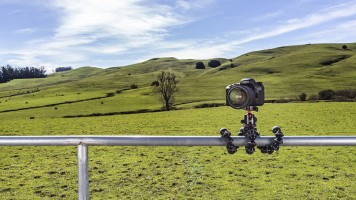
When the phrase “camera support” is mentioned, most of us think of the tried-and-trusty tripod, and for good reason—the tripod is the single best way to steady your camera for long shutter-speed exposures, group photos including the photographer, or just for minimizing camera movement to maximize image sharpness.
However, the tripod has definite shortcomings, and it is not always practical or permitted to bring a tripod with you to every location. Because of this, creative inventors in the world have developed alternatives to the three-legged
by Bjorn Petersen · Posted
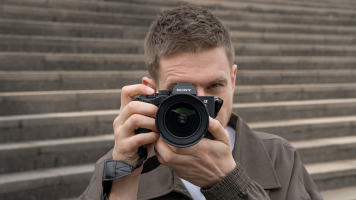
During a solid year of camera and lens development, Sony had a productive 2021 that saw a great deal of attention given to the prime lens. With six primes and one zoom being released over the past 12 months, Sony made a concerted effort to release some tempting, but humble, compact prime lenses along with some more high-end and fast G Master lenses. The brand has clearly reached a level of maturity at which it is filling in the gaps with more specialized and unique lenses, as well as updating some of the classic lenses with faster design and

by Bjorn Petersen · Posted
Echoing the attention currently given to mirrorless cameras, lens releases in 2020 also primarily went the mirrorless way. With mirrorless camera systems becoming more mature, tiered, and solidified among various brands, lens development is also reaching a point where nearly all manufacturers have a well-rounded lineup. This year saw a number of foundation releases, as well as a handful of exciting and special optics that dominated headlines when announced. Let’s take a look a look at the top 10 mirrorless lenses of 2020.
10. Venus Optics

by John Harris · Posted
What defines an ultra-telephoto lens? Of course, it’s the “ultra” (or at times “super”) prefix that we are concerned with when talking about these lenses, which enable photographers to get a close-up view of something from which we normally remain very distant.
These lenses are used primarily for photographing wildlife, sports, journalism, and perhaps paparazzi or “stake-out” photography. If most readers are not going on a stake-out or stalking stars, let’s say a clear majority of ultra-telephoto lens users are photographing sporting events,

by Allan Weitz · Posted
Wide-angle lenses often add depth and drama to landscapes, architectural photographs, still-life, and other genres of photography. When employed judiciously, these lenses make a great addition to the kits of sports, adventure, and wildlife photographers, and are also an important option for portraitists who wish to include an environmental context. For the casual photographer, they are indispensable when shooting groups, such as friends gathered around a table. The wide-angle view can often provide a very short focus distance, allowing the

by Allan Weitz · Posted
Rokinon continues to keep itself busy with an ever-expanding range of ever-improving photo and cinema lenses. The company has introduced what will most likely evolve into a well-rounded line of autofocus lenses. The following is a roundup of some of the latest lens offerings from Rokinon, all of which are designed to capture impressively sharp image files at a lower price than their OEM counterparts.
Rokinon AF Lenses
The widest of Rokinon’s new autofocus lenses is the

by Allan Weitz · Posted
As a working photographer, the center of the universe is your camera bag and its contents. Your cameras and lenses are the tools of your trade. As you may have noted, both are mentioned in plural because just as you wouldn’t jump out of an airplane without a backup parachute, you shouldn’t attempt to photograph an emotionally spiked, non-repeatable event armed with only one camera. The same applies to lenses, too. The many aspects that comprise shooting weddings—portraits, the ceremony, dimly lit environs, tight, crowded quarters and bright

by Elizabeth Groeschen · Posted
For many photographers, carrying multiple lenses quickly becomes more of a requirement than an elective. And as most already know, with additional lenses come additional lens accessories and the inevitable question of which is worth the investment and space it will take up in your camera bag. While some accessories like caps and hoods often come in the box with a new lens, other protective gear like cases, wraps, and bands are typically sold separately. These protective items get lost quickly out in the field or in loose pockets, and are

by Daniel Wagner_1 · Posted
What makes a Rolleiflex TLR so special? Many things. To start, TLR stands for twin lens reflex. “Twin” because there are two lenses. And reflex means that the photographer looks through the lens to view the reflected image of an object or scene on the focusing screen. Photographers also look through SLRs, or single lens reflex cameras. One of the differences between the two is that the SLR is held at eye level, and the TLR is held at chest level while the photographer looks through a “waist-level” finder. Another difference is that most SLRs