Search results for: photography buying guide what is infrared photography
About 17 filtered results
by Luke Rollins · Posted
It’s 2026, and we no longer have to pretend that film is dead; film is very much alive, with a robust number of film stocks available to try out, ranging from the classics to new and creative films from up-and-coming, smaller brands.
Here’s an overview of the current black and white films available right now.
Kodak
It’s hard not to start with mother Kodak in an article like this, and with all the history—the ups and

by Rebecca Melville · Posted
An on-camera flash is an indispensable accessory for many photographers. While it provides light to supplement dark conditions, an on-camera flash also allows you to achieve more balanced exposures in daylight conditions, permits freezing of fast-moving subjects, and can even be used to control other flash light sources. With so much to offer, an on-camera flash can become an integral part of your workflow, but where do you start? We are going to give you the on-camera flash rundown with everything you need to know to make the most of this

by Rebecca Melville · Posted
If you ask most consumer-camera owners why they keep a filter on their lens, a majority will most likely reply, “For protection.” While filters do protect the surface of your lens against dust, moisture, and the occasional thumb print, the primary function of lens filters is really to improve the image quality of the pictures you take. There are many kinds of filters with obvious and lesser-known benefits, so if you’re looking for a lens

by Bjorn Petersen · Posted
In an age where darkrooms are scarce, yet film photography is seeing a resurgence in popularity, a scanner can be your best option for converting film originals to usable digital files for printing, sharing, and archiving. Whether you are an active film photographer or just have an archive of negatives and slides from the past, a film scanner is a useful, dedicated tool that will breathe new life into your film originals.
Ranging from the most basic models for simply producing a web-shareable image, to the top-of-the-line versions for

by Allan Weitz · Posted
Macro photographs enable you to capture in-your-face close-ups of flowers, bugs, peeling paint, and—depending on your personal aesthetics—anything encrusted in rust. The following are 10 gift ideas designed to help you with tight close-ups of objects, rusty or otherwise.
1. Macro Lenses
Macro lenses are specifically designed to capture sharp close-up photographs. Available in
by Bjorn Petersen · Posted
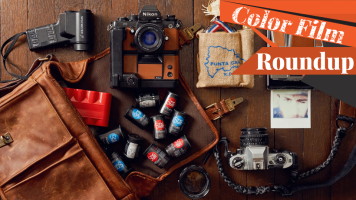
Recently, I wrote the Black-and-White Film Roundup, and started the article with the claim that “despite film being ‘dead,’ there’s still a surprising number of different and unique films to choose from in 2020.” The same holds true for color films, both negative and reversal types, with many contemporary classics still readily available, along with a surprising number of new films recently arriving on the scene.
Let’s take a look at the

by Morgan Lyle · Posted
You don’t have to be a hunter to have fun with a trail camera. Monitoring your property with one (or a few) of these handy little gadgets is a fascinating hobby for birders, wildlife enthusiasts, kids, or just folk who enjoy being surprised at what goes on in their backyard after dark. Also known as a trap, game, or wildlife camera, a trail camera is equipped with a passive infrared motion detector that triggers the shutter when an animal (or trespasser) walks into

by John Harris · Posted
When you think of photography accessories, of what do you think? Cameras? Of course, they’re not. Lenses? No, too integral. Tripods? I feel they are their own item, not an accessory. Flashes? I say yes, because what good is a flash without a camera, but Nikon lists flashes as their own category, not an accessory. Can we all just agree that straps and caps are accessories and if not, how do you define an accessory?
Speedlights
For the sake of this article, let’s start with flashes, a.k.a. speedlights. The top of the line from Nikon is the

by Jill Waterman · Posted
Great customer service reigns supreme at B&H as our knowledgeable product specialists help you navigate a vast sea of available options to pick the right gear for your needs. Their product knowledge and passion for practical solutions shine through in every interaction, whether it’s via online chat, by phone, or in person, at our midtown Manhattan store. We recently asked some of our photo, video, lighting, mobile, and surveillance experts for top product suggestions. Here are a few of their favorites.
Above Photograph: Portraits of B

by Jill Waterman · Posted
Here’s a hot tip: In addition to photo, video, and audio gear, as well as other tech products, B&H carries thousands of books and tutorials covering the fields of photography, video, audio and computers, plus inspirational titles to get your creative juices flowing. For all you bibliophiles out there, we’ve compiled this shortlist of must-have publications spanning photography basics, photo careers, marketing and promotion, business practices, teaching photography, lighting technique, specialty photo subjects, creative inspiration,
by Steven Gladstone · Posted
If you have a young filmmaker in your life and you are looking for some way to connect with them, then this is the article for you. From big to small, inexpensive to “it’s more than I paid for my first new car!” this article will briefly touch upon practical and fun gear for young filmmakers, beginning and experienced.
While you may be concerned that gear-buying is a very personal decision (and that is a valid concern), if the young filmmaker is starting from scratch, no worries—and if they already have gear, then there will be

by Daniel Wagner_1 · Posted
Photographers who demand the best from their cameras will appreciate these 10 useful filters for the digital age.
One of the most important and most used filters is the filter that’s always on your lens—the ubiquitous UV-IR Cut Filter. This filter blocks IR and UV radiation and results in photos with improved color separation and accuracy. Brands such as Heliopan and B+W are favored for their optical clarity, front and rear coatings, and brass filter rings
by Allan Weitz · Posted
The “Green Movement” has influenced manufacturers in the photographic community for quite some time. Lead and arsenic, a pair of heavy metals that contribute to the “character” and performance of optical glass, have been collectively called industrial poisons for decades. Beginning in the late 1990s, lead and arsenic were slowly phased out of formulas for lens elements and replaced by environmentally friendlier formulas that maintain the “look and feel” of the formulas they replaced.
The Green Movement has also had an impact on many of the

by Richard Scali · Posted
The word “photography” literally means “to draw with light” and is a simple way of expressing how essential light is to our craft. At times, however, natural light can be a scarce commodity and thus, it falls upon the photographer to create it. Fast-forwarding through the days of flash powder and disposable bulbs, we arrive at the modern day, an exciting time for “strobists,” when a plethora of compact options exists for creating and shaping light. Below, we’ll review some of the classic, essential, and innovative accessories for the
by Eric Reichbaum · Posted
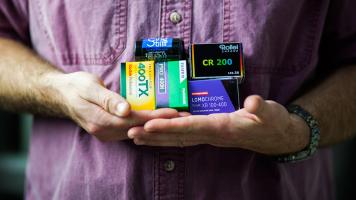
Maybe you’re an amateur digital photographer, or a young professional photographer who got into photography after darkrooms were removed from your school’s classroom, and you’re interested in shooting film but you don’t know where to begin. This guide will help you navigate your way through the multitude of options out there. While there aren’t nearly as many types or sizes of film as there were in the past, there are still enough to make choosing your film a daunting task.
Let’s take a look at your choices and, hopefully, help you narrow the