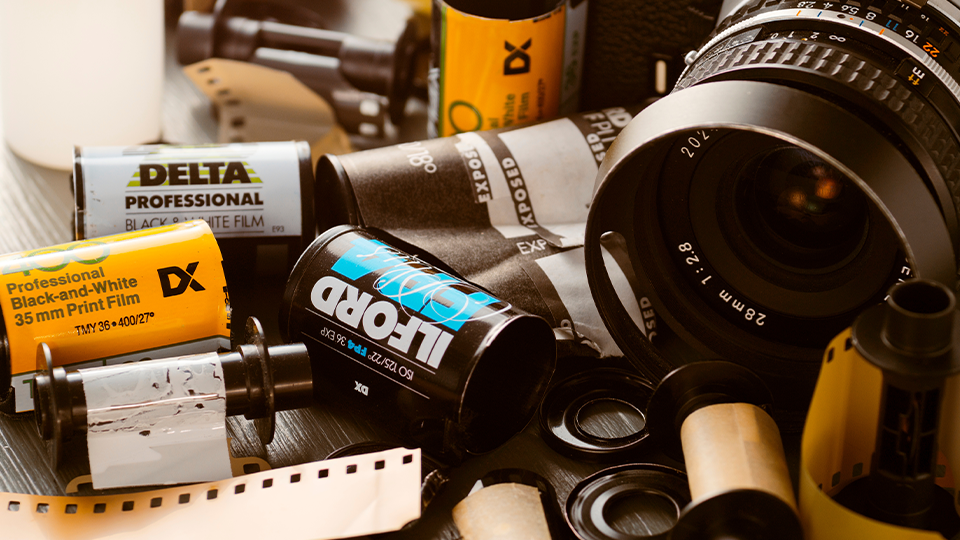
It’s 2026, and we no longer have to pretend that film is dead; film is very much alive, with a robust number of film stocks available to try out, ranging from the classics to new and creative films from up-and-coming, smaller brands.
Here’s an overview of the current black and white films available right now.
Kodak
It’s hard not to start with mother Kodak in an article like this, and with all the history—the ups and downs—Kodak is still one of the true household names in all of photography. Kodak has spent much of the last year bringing its films back under the Eastman Kodak umbrella, rebranding some films and reintroducing others. For the purposes of this list, the important rebrand is the T-Max line, whose films are now known as Ektapan.

- Tri-X 400 is still the most famous black-and-white film, and still one of the most popular films for veterans and novices. It gives the classic gritty black-and-white look that you’re probably thinking of when you look at some of the most heralded photos from history. Even if it’s not your film of choice, everyone should respect and be familiar with Tri-X 400.
- Ektapan 100 and Ektapan 400 (formerly T-Max 100 and T-Max 400) give what I would describe as a more contemporary look than Tri-X. Whereas Tri-X is grainy, Ektapan is smooth; it uses a T-GRAIN (tabular) emulsion for a finer grain structure and cleaner appearance. The tighter grain also makes it especially well-suited for scanning.
- Ektapan P3200 (formerly T-Max P3200), is the fastest film in Kodak’s stable and is ideal for working in low-light situations. As a T-GRAIN film, it has a relatively fine grain structure, but it’s still a 3200-speed film at heart and will provide the classic “salt and pepper look” of high-speed black-and-white films.
- Tri-X 320, unfortunately only available in sheet film sizes, is another classic film that offers surprisingly very different results from it’s similarly named sibling. Tri-X 320, or TXP, has a lower-contrast profile than the 400-speed version, along with a smoother grain structure and unique highlight rendering, making it suitable for portraiture and studio applications.
Ilford
The other heavyweight of the film world, Ilford also has a rich history of film manufacturing and was actually founded nine years before Kodak. The company is known for its strong dedication to the craft and still produces a full line of films, darkroom papers, and chemistry to supply all aspects of a black-and-white workflow. Here are its current films:

- Pan F Plus is Ilford’s slowest film, and one of the slowest available from any manufacturer. As such, it gives a distinctly smooth appearance with almost no perceivable grain and a broad tonal range.
- FP4 Plus is a traditional medium-speed film offering fine grain, normal contrast, and a wide exposure latitude; it’s a simple film giving predictable and consistent results.
- HP5 Plus is a versatile film with a wide exposure latitude, making it suitable for use in varying lighting conditions and for push/pull development. It’s one of classic films available and, like Tri-X, a film that everyone should use at least once in their life.
- Delta 100 and Delta 400 are Ilford’s tabular grain, or core-shell crystal technology films, that yield finer grain results than the equivalent FP4 and HP5 films. Their smooth grain structure is ideal for scanning and both films support over- and underexposure to achieve different contrast profiles.
- Delta 3200, like the other Delta films, has core-shell crystal technology to provide a relatively fine grain structure that makes this high-speed a film a bit more versatile than traditional emulsion equivalents. It responds well to under- and overexposure, making it suitable for daylight or nighttime use.
- SFX 200, XP2 Super, and Ortho Plus are the final three films in the lineup, and each is a specialized, unique option. SFX 200 has extended red sensitivity, which can be used to achieve some infrared effects when paired with a dark red filter; XP2 Super is the sole remaining chromogenic B&W film, meaning it can be conveniently processed in C-41 chemistry; and Ortho Plus is, well, an orthochromatic film, which means it’s only sensitivity to blue and green light and is typically used for copy and technical applications.
Kentmere
Also manufactured by HARMAN Technology (makers of Ilford brand film), Kentmere is positioned as a more affordable alternative while retaining the consistency and straightforward processing characteristics expected from a major film manufacturer.
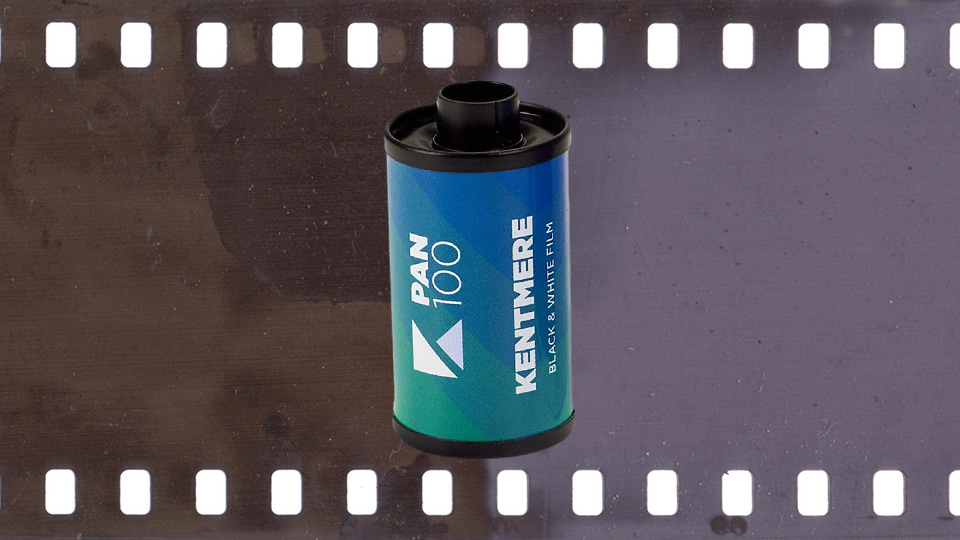
- Pan 100 is a traditional fine-grained panchromatic film with medium contrast and a broad tonal range. Its combination of low cost, predictable processing, and fine grain makes it especially well-suited to students and photographers learning to develop their own film.
- Pan 200 occupies the middle ground in the lineup, balancing finer grain than Pan 400 with greater flexibility in lower light than Pan 100. Introduced in 2025, it rounds out the Kentmere range with an especially versatile everyday speed.
- Pan 400 is the fastest and most flexible of the three, with a traditional grain structure, wide exposure latitude, and good response to push processing. It’s an affordable alternative to films such as HP5 Plus and Tri-X for everyday shooting.
FUJIFILM
Fujifilm’s current black-and-white lineup consists of a single film, but it’s a distinctive one:
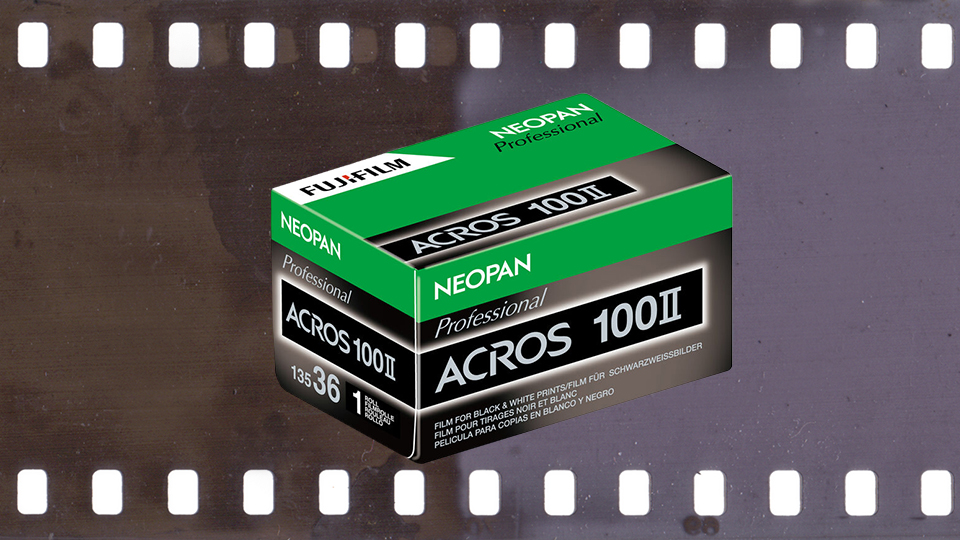
- Neopan 100 Acros II is an orthopanchromatic, fine-grained ISO 100 film especially notable for its sharpness, smooth tonality, and excellent reciprocity characteristics during long exposures. Available in 35mm and 120 formats, it’s particularly well-suited to landscape, architectural, night, and other tripod-based photography.
Rollei
Even though the Rollei name is best known for classic TLR cameras, in recent years the name has been used in conjunction with a film-manufacturing effort to produce a wide variety of different black-and-white options. Ranging from traditional, high silver content emulsions to more contemporary fine grain options, here’s a look at what Rollei has to offer:
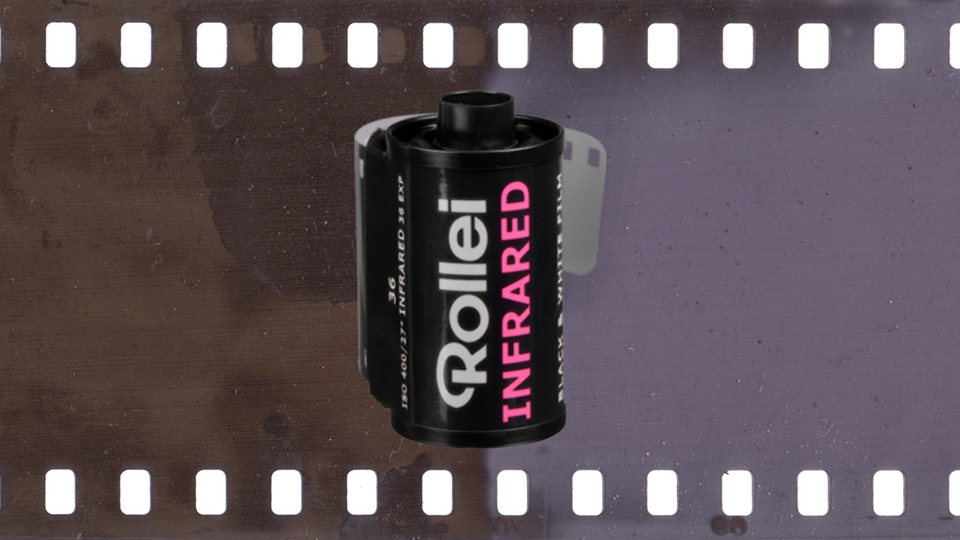
- Infrared 400 is one of Rollei’s most popular films, likely because it is the sole remaining true infrared film available. There are other films with extended red sensitivity, but Infrared 400 has true IR sensitivity up to 820nm, and produces the distinct halation effects associated with IR photography.
- Retro 80S and Retro 400S are a pair of distinct films with extended red sensitivity, which is used to slightly reduce haze or fog, as well as smooth blemishes when used for portraiture. They have classic silver-rich emulsions with moderate grain and are coated on a clear polyester base to suit scanning needs.
- RPX 25, RPX100, and RPX 400 films comprehensively cover slow to fast speeds with a similar look and feel. The special thing about these films is their lack of quirkiness; they are simple, straightforward films with fine grain, a transparent film base, and flexible latitude to suit working in a variety of lighting conditions.
- Superpan 200 is another extended red sensitivity film, up to 750 nm, that is designed to reduce the effects of haze and fog when shooting outdoors. It’s based on Agfa’s AVI PAN aerial film, giving it more of a technical film appearance with high contrast and a moderate grain structure.
- Ortho 25 Plus is an orthochromatic film (blue and green sensitive) that is typically used for technical and scientific applications, but can be used for pictorial situations for creative effect. As a slow film, it has a very fine grain structure with high sharpness and resolution. Also unique, this film can be used in conjunction with reversal processing methods to produce black-and-white transparencies.
Lomography
Best known for its toy cameras, plastic lenses, reintroduction of classic Soviet cameras, and a very distinct overall aesthetic, Lomography also produces its fair share of films. While mainly concentrated in a bevy of unique color options, there are also four black-and-white options:

- Earl Grey 100 and Lady Grey 400 comprise a pair of traditional black-and-white films, both with similarly smooth grain structures and broad tonal ranges. They are simple and timeless films, perfect for experimenting with or for just having on hand to capture any kind of subject.
- Potsdam Kino 100 and Berlin Kino 400 are two distinct films “inspired by the New German Cinema.” These black-and-white films are characterized by their silver-rich emulsions that lend a classic, almost historic look to them. The 100-speed film shows less grain with higher contrast, while the 400-speed film has moderate grain with a lower contrast profile; both are suitable for daylight shooting and have a wide tonal range.
Adox
Definitely a specialist film manufacturer, Adox has some of the more curious and unique options available, including reversal films, high silver content films, and extended red sensitivity options:
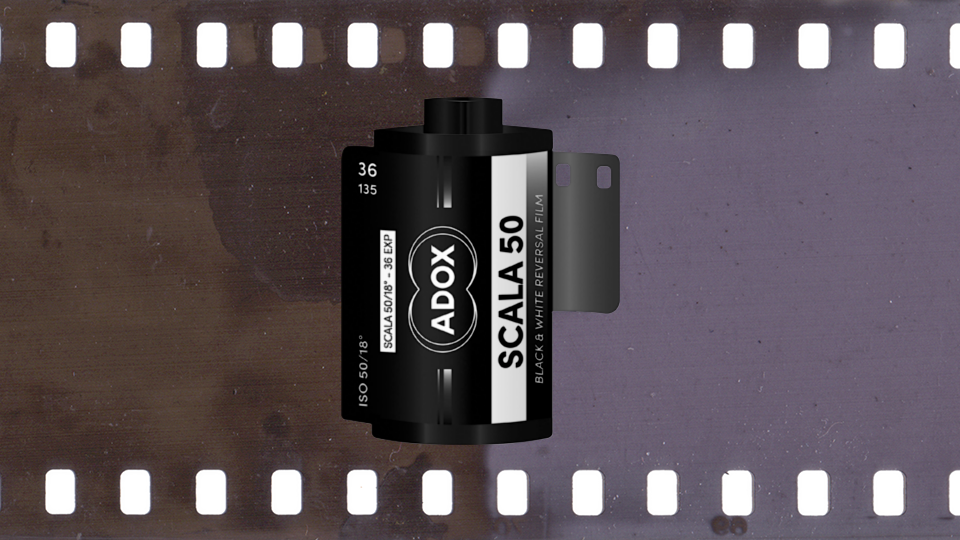
- SCALA 50, like the classic Agfa Scala, is a reversal film meant for making rich black-and-white transparencies. The increased silver content lends a deep tonal range with a high Dmax and, alternatively, it can be shot as a negative film with a slower exposure index for more conventional processing.
- HR-50 has an extended red sensitivity, or what Adox refers to as a super panchromatic spectral sensitivity, for reducing haze while shooting and achieving unique IR-like effects. It’s also a slower technical film that yields high sharpness with very little grain.
Foma
Another historic manufacturer keeping current with a useful array of black-and-white films, Foma has more than a century of film manufacturing history to its name. From Czechia, Foma’s films offer a distinct Eastern European aesthetic with their silver-rich emulsions that produce a wide dynamic range. The current offerings include:
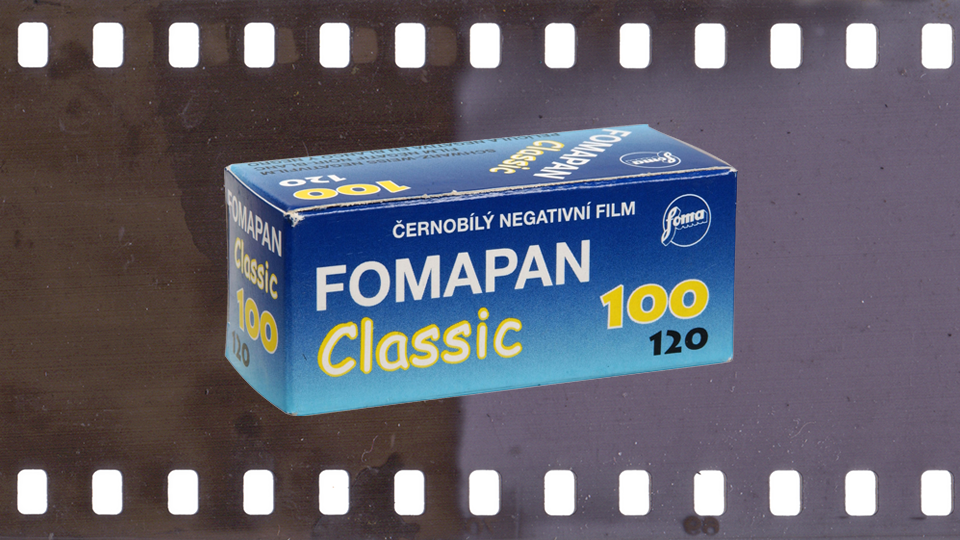
- 100 Classic, 200 Creative, and 400 Action, three panchromatic films offering different combinations of speed versus graininess. All are relatively fine grained, but have a traditional appearance with a wide exposure latitude.
- Fomapan R100 is a reversal black-and-white film intended for making slides with a broad dynamic range and a realistic transference of colors to grayscale. A dedicated processing kit is available for developing the film and producing vivid transparencies.
- RETROPAN 320 soft is a unique panchromatic negative film with notably low and manageable contrast, making it easier for traditional printing in a darkroom. It also has a distinctively high grain structure, which makes it more appealing for large format photographers and larger film formats in general; especially in 8 x 10" for contact-printing applications.
- Foma Ortho 400 is the company’s orthochromatic film and the only one on this list with no anti-halation layer. Well-suited for landscapes due to its spectral sensitivity to green light, the film’s sharpness and fine grain also lend it to overtly stylized portrait photography.
Additional Films
- Arista EDU Ultra 100, EDU Ultra 200, and EDU Ultra 400 are traditional films that, as their names would suggest, are perfect for students and other educational purposes. They are flexible, versatile films that respond well to push processing and offer high consistency and a fine grain profile.
- Bergger Pancro 400 is a distinctive film originally introduced in sheet film sizes only, and then ported over to the more common roll film sizes. It has a “dual emulsion” design that gives fine grain results and high resolution, and offers a truly distinct tonal response with medium contrast.
- CatLABS X Film 80 MK II and X Film 320 Pro are silver-rich films that produce a very traditional look with a broad tonal range, medium contrast, and moderate grain. They are also designed to be flexible in terms of speed, for adjusting contrast response using different exposure-and-development combinations.
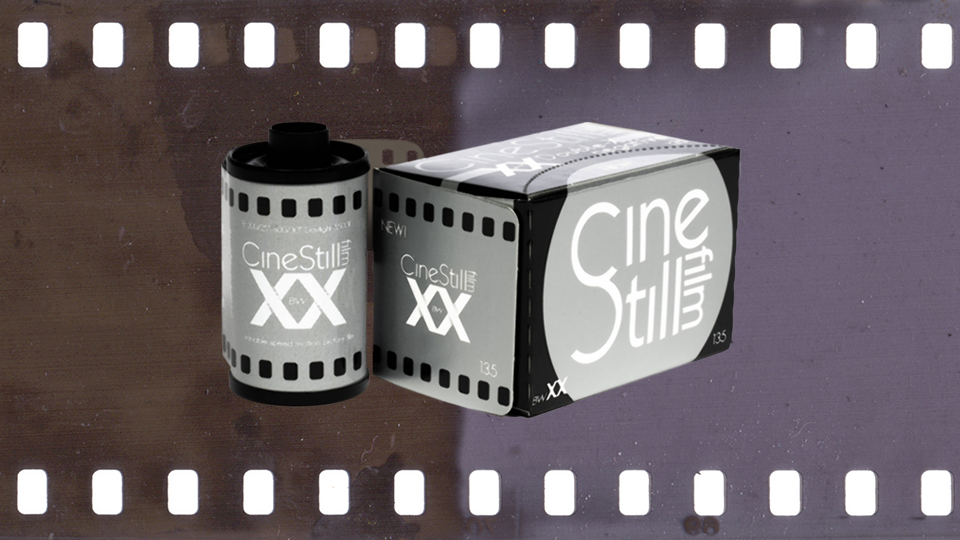
- Cinestill BwXX Double-X is, like its color films, a cut-and-re-spooled movie film for still photography use. Making use of the unique traits of cine film, this classic film has subtle tonality, low contrast, and high sharpness, making it suitable for difficult lighting conditions and for controlling extreme highlights.
Beyond these major lines, B&H also carries a rotating selection of boutique, specialty, and repurposed films from smaller brands. These can be worthwhile for photographers looking for a particularly unusual rendering or format, but availability tends to be more variable than the established films above.
Film’s new lease on life means that you can buy for your specific look and character. Traditional-grain films tend to emphasize classic tonality, while tabular-grain films prioritize sharpness and finer grain. Slower films offer finer detail, while faster stocks give up smoothness in favor of low-light flexibility. For more interesting effects, specialized looks, or unique workflows, consider orthochromatic, infrared-sensitive, or reversal films. With all the emergent variety, there’s no better time than now to experiment with what black & white film photography has to offer.
