Search results for: photography history evolution digital photography
About 12 filtered results
Posted
“If you look very intensely and slowly things will happen that you never dreamed of before.” This Aaron Siskind quote neatly sums up the deeply contemplative discussion we had with landscape photographers John Paul Caponigro and Joel Simpson in this week’s podcast.

Posted
What is the role of landscape photography in a post-industrial world?
In today’s podcast, we consider some possibilities in a chat with Jade Doskow, current photographer in residence for Staten Island’s Freshkills Park, and Cal Flyn author of the book Islands of Abandonment.
Above image: © Jade Doskow
While our two guests work in different disciplines, which leads to divergent approaches to the pictures they make, their shared purpose tells similar stories.
by Christopher Witt · Posted
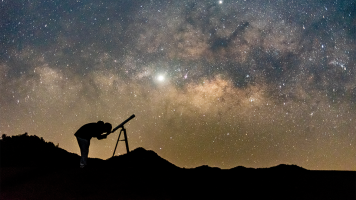
Humans’ fascination with the stars is as old as our ability to think and ask questions. For millennia we, as a species, were limited to observing the heavens with just our eyes. Of course, back then we were able to see more because light pollution didn’t exist, but making detailed observations was impossible. The invention of the microscope led to the development of the telescope, which allowed people to finally start exploring the larger universe. As technological advances were made and telescopes got bigger and better, their reach and the

Posted
Today we chat with Reid Callanan, founder and director of the Santa Fe Photographic Workshops and renowned photo educator Craig Stevens, formerly of Maine Media Workshops and Savannah College of Art & Design, about photography mentors, lifelong learning, and the role photo workshops play in cultivating community.
Above image: Double portrait of Reid Callanan and Craig Stevens, © Joyce Tenneson
Craig and Reid share plenty of insight, not just on the requisite trust that’s required in a successful mentor and student relationship, but other

Posted
Where will you be on April 8, 2024? If you don’t already know, you’d better figure it out fast, particularly if you’ve got an interest in observing—and ideally photographing—the awe-inspiring phenomenon of a total solar eclipse.
To get you up to speed on essential eclipse details, tune in to our chat with science writer Rebecca Boyle and Gabriel Biderman from B&H’s Road Marketing team. Boyle shares tidbits about Earth’s silvery sister, gleaned from research for her book Our Moon, while Biderman discusses preparations (and practice!) for

Posted
How did a space-age invention become ubiquitous in today’s digital imaging landscape? Learn all about it here in our latest podcast, featuring pioneers of photography and digital imaging.
In 1993, noted physicist and engineer Eric Fossum led the invention of the CMOS active-pixel image sensor as part of his work for NASA’s Jet Propulsion Laboratory (JPL). Then, as part of JPL’s mandate to seek commercial and consumer applications for emerging technologies, he was active in the transfer of the CMOS sensor’s “camera-on-a-chip” technology to

Posted
This episode of the B&H Photography Podcast was originally released on November 10, 2017. We revisit it today in honor of Hip-Hop’s 50th anniversary, and the holiday of Thanksgiving.
With great thanks to Vikki Tobak and the Contact High Project, we welcome three photographers to our studio who are responsible for some of the most iconic images from the history of hip-hop. Janette Beckman, Eric

by John Harris · Posted
I grew up playing sports and, from the posters in my childhood bedroom to countless team photos to the work I did covering boxing, sports photography has always been a part of my life. On the B&H Photography Podcast, when we can speak about the subject, it’s joyous and easy, like I’ve reverted to a native language. Over the years, we have been fortunate to welcome a handful of sports photography legends, we have discussed sports portraiture, tennis photography, surf and skate

by Jill Waterman · Posted
In Part 1 of our chat with Stacey Owen, founder of the creative agency Pepper, she describes evolving her own photo business to build an all-women team dedicated to helping other creative entrepreneurs maximize their strategy and hone their process. We continue our conversation below by pivoting to how Owen and her Pepper team spun the isolation and

by John Harris · Posted
I received my Canon T50 as a birthday present from a parent who knew little about photography. But what I surely didn’t know at sixteen was that this camera would mark the beginning of my photography career and also the beginning of the end for Canon’s FD mount.
A sentence like that could only float by on a pillow of sentimental hindsight, but it is true that my first photo exhibit was of images taken with the T50 and, also fact, that in 1987 Canon introduced the “Electro-Focus” EF mount and EOS system, which was soon to make the FD
by Todd Vorenkamp · Posted
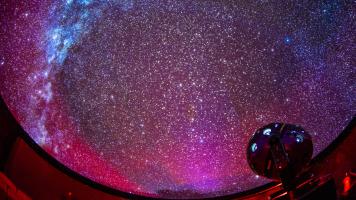
Prepare yourself for the ultimate adventure through time and space, from the comfort of a reclining seat inside a domed theater. Planetarium shows never fail to deliver awe and wonder to people of all ages and backgrounds. At the center of many planetarium theaters is a projector. While a lot of these awe-inspiring shows are now digital, there are few machines in the world that are as beautiful, quirky, complex, and awe-inspiring as the optical-mechanical planetarium (OM) projector. The OM planetarium has all the motorized intricacies and

by Josh Taylor · Posted
How does a rangefinder camera work? What were the landmarks in rangefinder camera design? How have they influenced photography over the years? What are their pluses and minuses compared to SLRs? What do they do best, and why?
In the late 19th Century, there were two dominant camera types:
1. View cameras that required you to compose the shot upside-down and in reverse on a ground glass, and focus by moving the lens back and forth until the subject looked sharp. You then inserted a plate or sheet film holder in the exact same image plane,