Search results for: photography tips solutions how to light for skin tones
About 19 filtered results
by John Harris · Posted
It would be foolish to claim that there is only one way to take a portrait, but there are some accepted norms and basic camera settings that you should understand if portraiture is to become your area of photographic interest. Remember though, as you walk down your creative path, that a portrait is more than a headshot, more than a beautiful photo of your subject; it is an opportunity to get to know someone, to have a visual conversation with a person, and to use your photographic skills to pass that understanding of the person on to the

by Todd Vorenkamp · Posted
Taking a look at any modern mirrorless or DSLR camera, you’ll notice a slew of controls, buttons, and dials. Atop nearly all cameras sits a large dial labeled with many letters and icons. This is our mode dial. It is how we control the level of power we give to our camera or take for ourselves.
One of the wonderful things that modern electronic digital and film cameras give you is many high-tech options for your image making. One of the horrible things that modern electronic digital and film cameras give you is many high-tech options for your

by Mathew Malwitz · Posted
Back in the good old days, during the infancy of autofocus, you had two options when it came to autofocus: On or Off. Now, with advancements in technology, many cameras, even simple point-and-shoot cameras, have a dizzying array of high-tech autofocus modes to choose from. Honestly, they can be intimidating to even to the most experienced shooters.
Before we dive in, be forewarned: almost every manufacturer has proprietary autofocus technology, nomenclature, and features. Even more confusing, the interface to access these modes can often

by Mathew Malwitz · Posted
One of the most effective ways to improve your portraiture is by controlling the light, and one of the most effective ways to control your light is to move it. Seems like a simple enough concept, but it can be daunting at first, especially if you're using a speedlight or an on-camera flash. Despite its misleading name, an on-camera flash can, very easily, be used off the camera. The "on-camera" part simply refers to its form factor

by Mathew Malwitz · Posted
Portraiture: It’s one of the most popular and prevalent forms of photography. Although it may seem simple on paper, it comes with its own unique obstacles. Of course, you’ll want to be familiar with your gear. This is essential to all working photographers, but it allows you to focus your efforts on the genre-specific challenges you’ll face.
When photographing people, you’ll find that some folks are photogenic, while others are not. Your job as a photographer is to break down the barriers set by your clients and to put them in the most

by Luke Rollins · Posted
Color negative and color transparency films have distinctive ways of rendering specific colors, and may have a warm (reddish), cool (bluish), or neutral color balance, as well as different color contrast characteristics. Thanks to the resurgence in film’s popularity in recent years, analog shooters have an astonishing number of choices, from major manufacturers like Kodak, Ilford, and Fujifilm, to smaller suppliers like Foma, Rollei, Agfa, Lomography, Kentmere, and Arista.
Obviously, we can’t include comprehensive info and hands-on impressions

Posted
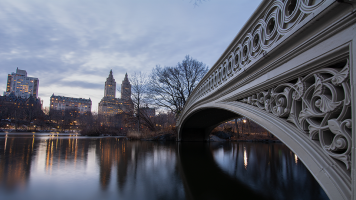
ShottiNYC shares five tips on how to light Black skin tones accurately in your portrait photographs, and also discusses some of the common mistakes many photographers make.
What are your tips for rendering different skin tones accurately? Tell us in the Comments section.
by Jason Tables · Posted
Traditionally considered strictly a portrait retouching technique, frequency separation allows you to change the texture of a particular area of an image, while maintaining the color and brightness levels of that area, and vice versa. It’s often used by fashion retouchers to achieve those perfectly smooth skin tones that are free of marks and blemishes; however, it can sometimes be overused, resulting in an unnatural look. Because of this propensity to overdo it with frequency separation, it is one of those photography techniques that has been

by Cory Rice · Posted
Photographing groups can be a humbling experience for even the most seasoned photographer. The trick is to create an image that succeeds on an individual and collective level. Depending on the number of people involved, this can entail quite a bit of planning and more than a little bit of luck. Below are a few tips for photographers bold enough to tackle the group portrait.
Choosing the right location is important for any portrait.
Think Big Picture First
Who are you photographing and what are you trying to communicate with your image?

by Jason T. · Posted
I recently wrote an article about metering for landscape photography, in which I discussed some of the general guidelines I use for shooting high-contrast scenes. Among other things, I noted how it's better to underexpose a high-contrast landscape scene than to overexpose it, due to the fact that our cameras are so good at recovering shadows, and so bad at recovering highlights. But what if the dynamic range in the scene is too

by Todd Vorenkamp · Posted
FUJIFILM continues to lead the digital photography world with its unique and beautiful film simulations that give FUJIFILM X series APS-C interchangeable lens, X series fixed lens, and

by Cory Rice · Posted
Mastering studio lighting can feel like a Herculean feat when you’re just getting started. Like any aspect of photography, it requires patience, practice, and plenty of mistakes before it comes naturally. In an effort to shorten your learning curve, we’ve rounded up 10 common issues that beginners encounter and how to fix them.
Technical Issues
Lighting setups can be as simple or complicated as your heart desires—or your shot requires. However, before you can begin to think about how to use your lights creatively, you need to understand how

by Steven Gladstone · Posted
If you look on the B&H website under Lighting, you will notice the category Continuous lighting, which is separate from strobe or flash lighting, which is most commonly used with still photography. Continuous here refers to lighting units that are not strobe units, and these are mostly used in film and video, as well as theater. Once, this type of lighting was

by tom kirkman · Posted
After posing for a few gigabytes of formals in a hall, you can sense the wedding party’s palpable relief when, weather permitting, it’s time to take it outside. If you’re lucky enough to have nicely landscaped grounds, it’s a great opportunity to stop fighting with the tungsten light sources inside and take advantage of that flash-friendly sunlight.
Whether you’re just starting out as a wedding photographer or a friend asked you to shoot his or her wedding or you’re a seasoned professional, you’ll need some kind of help to maximize your
by Allan Weitz · Posted
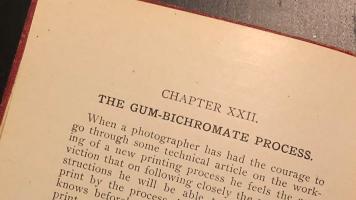
Some years ago, I stumbled upon a book called The Photographic Instruction Book, by Townsend T Stith © 1903. The book was filled with all sorts of advice on how to take successful photographs using the tools and technologies of the day. Surprisingly, many of the Mr. Stith’s suggestions, including advising against taking pictures from moving bicycles, hold true today.
I especially enjoyed reading the instructions for what we nowadays call “alternative processes,” including cyanotypes and gum bichromate prints, aka gum prints.