Search results for: photography tips solutions how to use lens adapters
About 18 filtered results
by Todd Vorenkamp · Posted
There is nothing that can replace the extreme close-up view of a rare bird in the wild. Binoculars can get you close but, if you want to look the bird in the eye or confirm that identification for your life list, you need a spotting scope. Spotting scopes pack incredible magnification in a generally simple and lightweight package that is

by Todd Vorenkamp · Posted
When the moon passes directly between Earth and the sun, those on Earth are treated to one of nature’s greatest spectacles—a total solar eclipse. It is a phenomenon that almost every observer would like to capture in a photograph.
Due to the rarity of the event, the short duration in which to capture it, and the dynamic nature of the subject, it is one of those photographic opportunities that requires the proper gear, setup, planning, and practice.
Eclipse and solar
by Todd Vorenkamp · Posted
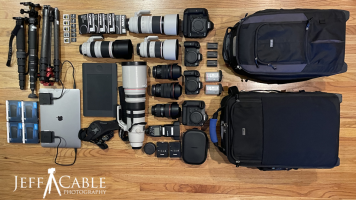
This post is all about the gear I am bringing with me to the Games in Tokyo. As always, my goal is to share with you all what it is like to be at the Games. In the past I focused mainly on the photography, but this time around I plan on giving you the photographic view, but also the behind-the-scenes view from these very different Games.
As I stated before, this is the first Games where I need to bring everything with me, since Canon is not allowed to lend products to photographers (due to COVID protocol) unless it is a dire emergency. And yes

by Todd Vorenkamp · Posted
Imagine seeing an incredibly rare bird at a great distance through a spotting scope. Those birding next to you cannot see the same bird. You need to prove to them, and to your own life list, that you have spotted this rare species. It is way too far away for your camera to capture. What can you do? This is a job for… digiscoping!
Digiscoping with a spotting scope, telescope
by Todd Vorenkamp · Posted
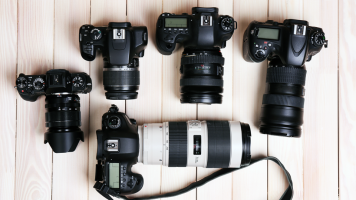
In the ever-changing digital world, it is often financially difficult to keep pace with the technology and constantly acquire the latest and greatest gear. Many of us save up our hard-earned cash to get the latest camera, only to see it be replaced weeks or months after we acquired our new toy. That can be disheartening, of course, but here are a few tips on how you can breathe new life into your aging digital camera.
I was going to conclude with a few thoughts, but let’s begin with them instead…
Remember/learn/know that an older digital

by Todd Vorenkamp · Posted
We cannot be certain, but it is a fair bet that the folks who invented the modern digital cameras, be they DSLR or mirrorless, did not envision that they would be attached to large format view cameras. Can you do it? Yes. Does it work? Yes… I guess. Is it practical and easy? Nope. Should you do it? Maybe. Is it fun? Yes!
I will admit, I’ve never shot large format film. I have friends who shoot large format and it always looked super cool watching them adjust focus on a view camera and compose the scene from an inverted image on a beautiful
by Allan Weitz · Posted
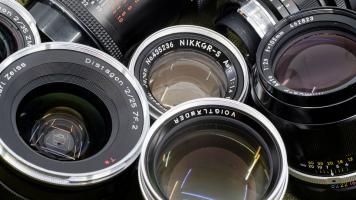
How “good” are vintage lenses when used on modern digital cameras? In a word, vintage lenses are “fine,” though I would have to immediately follow that statement by adding, “It depends,” because there are always exceptions to the rules, though even in these cases, the lens in question often works fine albeit with a technical or optical shortcoming of sorts.
Original photographs © Allan Weitz 2020
When adapting older-generation film camera lenses to DSLRs and mirrorless cameras, most perform well in terms of sharpness, color fidelity, color
by Allan Weitz · Posted
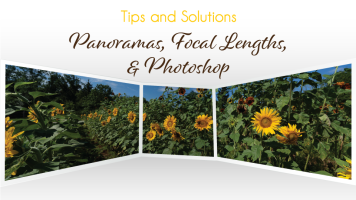
Panoramas are visually interesting, and that’s why Panorama modes can be found on many consumer cameras. Simply set the camera to Panorama mode, frame your shot, and follow the panning instructions in your viewfinder. Move slowly, evenly, and keep your camera level with the horizon. If your camera is on a tripod, so much the better. Do it right and you get a terrific panoramic image of up to 360 degrees, depending on how you set your camera.
I have long been a fan of panorama imaging, you can imagine my surprise when I realized my

by Allan Weitz · Posted
If you ask the average photographer what the difference between a macro lens and a “regular” lens is, they will tell you macro lenses enable you to get closer to your subject than regular, or conventional, lenses. While this is true, the ability to focus close is only part of the story. The other part of the story has to do with an optical characteristic called “curvature of field,” of which there are two types—flat-field and curved-field.
All Photographs © Allan Weitz 2020
Most consumer lenses are curved-field lenses, and as you might have

Posted
In early July 2020, Canon announced a pair of EOS R-series cameras that should prove to be true game changers in the world of mirrorless cameras. The new cameras are the Canon EOS R5 and R6. Both are full-frame cameras—the R5 features a 45MP sensor, the R6 features a 20MP sensor—and have amazing stills and video. The following is everything else you need to know about these exciting new cameras.
Also, at the top of this page is a replay of our Live Q&A with Canon Technical Expert Rudy Winston. You'll find some questions have an

by Todd Vorenkamp · Posted
I don't know what it is like in your home, but the person I live with only temporarily tolerates my photographic filth. I have issues with putting my camera bag away in a closet—that seems sacrilegious—so it stays out most of the time, but when lenses, lens hoods, tripods, lens caps, memory cards, nodal rails, macro rails, dust blowers, and adapters end up strewn across the place, there is the potential for Marie Kondo-like interventions. Maybe you are a minimalist shooter with everything camera-related you own in one small shoulder bag. But

by Josh Taylor · Posted
One of the hottest trends in photography today is creating images that look like they could have been shot 50 or 100 years ago. In pursuit of that elusive vintage look, serious enthusiasts and pros are mounting vintage lenses on their DSLRs and mirrorless cameras, Lensbaby and Lomography (among others) are offering lenses inspired

by Todd Vorenkamp · Posted
The Sun, our source of light and warmth, is a notoriously poor photographic target, due to its extreme brightness and constant emissions of damaging ultraviolet and infrared radiation. However, with the right equipment, the sun can be a challenging and rewarding photographic subject.
The sun, like the moon, is above the horizon and in our skies half of the time. However, unlike the moon, when the sun is above the horizon, it is always visible (unless it is cloudy). The moon progresses through different phases as it orbits our planet, from new

by Allan Weitz · Posted
As a working photographer, the center of the universe is your camera bag and its contents. Your cameras and lenses are the tools of your trade. As you may have noted, both are mentioned in plural because just as you wouldn’t jump out of an airplane without a backup parachute, you shouldn’t attempt to photograph an emotionally spiked, non-repeatable event armed with only one camera. The same applies to lenses, too. The many aspects that comprise shooting weddings—portraits, the ceremony, dimly lit environs, tight, crowded quarters and bright

by Allan Weitz · Posted
I picked up my first camera in September, 1966. In the five decades since then, I’ve come to understand a number of truisms about the art and craft of picture taking.
The following are 50 tips I’ve compiled, based on my professional and personal experiences shooting with film and digital cameras, ranging from 8mm Minox spy cameras to 20 x 24" studio salon cameras.
My list is broken down into two sections: Basic and Advanced. Some of these tips are obvious, others less so, but they all hold true as guides for better picture-taking habits.
Basic