Search results for: photography tips solutions understanding digital camera sensors
About 19 filtered results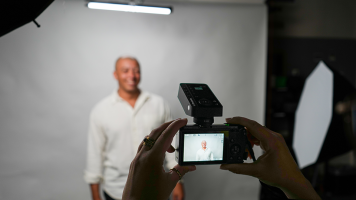
by Luke Rollins · Posted
At first glance, studio photography and the compact camera may seem strange bedfellows. The type of work associated with the studio—still life, product photography, portraiture, macro photography—usually wants cameras with larger sensors and interchangeable lenses, especially in professional applications. Compact, point-and-shoot cameras, for their part, have their natural home in everyday, travel, nightlife, and street applications, where their discretion and size become virtues.
It might seem almost cruel to introduce the compact to the

by Mathew Malwitz · Posted
At one point or another, you’re bound to hear someone say that you need to shoot in a RAW file format. There are advantages to this decision, from additional detail to better control over the look of our final image. But what exactly is a RAW file and what does it do for our photographs? In this guide, we aim to give you a better understanding of the RAW file and how to use it to our advantage.
What Is a RAW File?
RAW files, sometimes referred to as digital negatives, are the raw data recorded by your camera’s imaging sensor. This data is

by Mathew Malwitz · Posted
If you’ve been around photography for any length of time, you’ve probably heard of ISO. ISO is one of the three settings that determine our exposure in photography. These settings are collectively referred to as the exposure triangle. ISO is unique in this equation, and in this guide, we’re going to explore why.
ISO can be referred to in two ways. It’s most commonly spoken as an abbreviation, but it is also sometimes referred to as a word pronounced as eye-so. General consensus is that you call it whichever you like. After all, it’s not what

by Mathew Malwitz · Posted
Photography is by definition, the capture of light on a light sensitive surface. That surface could be glass, tin, film, or a digital imaging sensor like those found in most modern cameras. The amount of light that reaches our light-sensitive surface is what we can define as exposure.
A good exposure will look accurate to life or the photographer's creative vision. It will maximize an images quality and

by Mathew Malwitz · Posted
As you begin to research cameras, you’ll likely hear some technical jargon about sensors. While it’s easy to ignore some elements of any devices, there’s no way to work around sensors. But what is a sensor and what does it do? In this guide, we’re diving into the often confusing world of imaging sensors. By time we’re done, you’ll have a better understanding of the most significant component in our digital camera.
About Sensors
What Is an Imaging Sensor?
At the heart of our digital cameras sits an imaging sensor, which serves as the digital

by Todd Vorenkamp · Posted
A lens’s hyperfocal distance—a mathematical combination of lens focal length, aperture or f-stop, and focus distance—is a tool that photographers can use to maximize their depth of field for capturing nearby foregrounds and distant backgrounds in acceptable sharpness.
While you can always dial up your lens’s sharpest aperture (sweet spot), many landscape photographers want as

by John Harris · Posted
After our introductory lesson to creating narrative and telling personal stories with smartphone cameras, I asked my kids to advance their skill set by telling visual stories using a more advanced, more versatile camera. In this case, they’re using my Sony Alpha a6500 mirrorless

by Jennifer Hahn · Posted
ISO can be a sticky subject when it comes to video. It is used in photography when you have a great amount of control over your aperture, shutter, and exposure, and when you understand the lighting of your environment. But when used in video, if used too often, it can be more of an enemy than a friend to your footage. The most controversial setting is auto ISO, causing you to lose control over your ISO setting—and it can have mixed results. However, there are times when auto ISO can be your friend.
What ISO Is and What It Is Not
Technically,

by Todd Vorenkamp · Posted
ISO, which stands for International Organization of Standards, is a measure of the sensitivity of film or a digital sensor to light.
This article is part of a multi-part series about photographic Exposure.
1. Introduction: The Exposure Triangle
2. Aperture
3.

by Dawn Wayand · Posted
Your camera is an extension of you in your studio. What you shoot with can be just as important as how you shoot. Choosing the right gear to help you perform better during a photo shoot is worth careful consideration. In this article, I will discuss cameras, but go more into depth on lenses, light meters, and care kits for your gear to help give you a better understanding of each and what features to look for when purchasing each component.
Robert Olsen;Model: Kristin Rutty
Digital Cameras
There are a few different types of digital

by Cory Rice · Posted
Over the past few years, pixel-shift image capture has transformed from a luxury reserved for deep-pocketed specialists to an increasingly common feature on new, resolution-oriented cameras. Today, in addition to Hasselblad’s behemoth Hasselblad H6D-400c, Olympus, Pentax, Sony, and Panasonic offer versions of the technology at much more accessible prices.
While it is advertised under several names (High Resolution Mode,

by Allan Weitz · Posted
Sometimes, the phrases, acronyms and strings of numbers or number-letter combinations used to identify photographic hardware or techniques can be daunting to the uninitiated neophyte photographer.
We've prepared a list of the basic terms. Have we left any out that you think should be added? Please let us know!
0-9 | A | B | C | D | E | F | G | H | I |

by Todd Vorenkamp · Posted
Welcome to the wonderful world of photography and the Learn Photography Portal on B&H Explora. If you just picked up your first camera, or are thinking about getting a camera, or, even if you are a seasoned pro, we hope that you enjoy your educational journey through this course while you enjoy the experience of a photographic journey through life.
photography noun pho·tog·ra·phy \fə-ˈtä-grə-fē\: the art, process, or job of taking pictures with a

by Todd Vorenkamp · Posted
There is a great deal of confusion surrounding crop factor, and it is particularly difficult to explain, but let’s give it a try, shall we?
Before we dive in, let me dispel two vicious rumors related to crop factor that are circulating through the photography (Internet) world today:
Crop factor does NOT affect a lens’s focal length.
Crop factor does NOT affect a lens’s aperture.
Before you scroll to the bottom of the screen to leave a comment to the contrary, let me explain why I am stating these facts…

by Todd Vorenkamp · Posted
The primary measurement of a lens is its focal length. The focal length of a lens, expressed in millimeters, is the distance from the lens’s optical center (or nodal point) to the image plane in the camera (often illustrated by a "Φ" on the top plate of a camera body) when the lens is focused at infinity. The image plane in the camera is where you will find your digital sensor or film plate. If you are an optical engineer, this is important