Search results for: video buying guide how to create a home video studio
About 9 filtered results
by Cory Rice · Posted
The trick with any home studio is in creating a space that can be used to create images that do not betray the fact that you shot them in your living room, in your pajamas, using your pet dog as an assistant. Luckily, creating a home studio can be done fairly easily without breaking the bank. This article will help get you up and running.
Planning Your Studio
Before making any purchases, it is important to sit down first and answer some basic questions about what you want your studio to accomplish. First, what type of photographs do you plan

by Sam Mallery · Posted
Voice-overs are an essential ingredient in the creation of dynamic media. They can be an unseen character in a story, or just a friendly voice persuading you to buy pet food. Voice-overs are found in every form of media, from news reporting to experimental filmmaking. Even photo slideshows can benefit from a well-executed voice-over.
Creating a voice-over isn't difficult to do, and the basic hardware required is fairly inexpensive. However, the quality of your voice-overs will only be as good as the methods you use to capture and control the

by Todd Vorenkamp · Posted
Often, we need to add extra light to a scene to ensure we have enough light to create an image, freeze movement, or simply enhance the scene for the sake of the photograph. The primary way photographers do this is by using a flash.
The electronic flash has been around since 1931 and, today, there are several variations—all with different potential uses for the photographer. Here, we will take a quick look at the types, compare them, and discuss the benefits of each type.
Terminology Basics
Before we dive into flash types, let’s get familiar

by Ronald Francis · Posted
The Luxli Timpani is gaining a great deal of popularity, and the reason is simple: everyone in professional video production needs a bicolor 1x1 panel, and the Timpani offers bicolor, RGB color, gels, effects, and remote app control, all in one, and at a price that’s a steal. Simple. The first batch sold out in about a week. 1x1 panels are the most commonly used lights in video production because they’re the easiest to match to

by Jill Waterman · Posted
Here’s a hot tip: In addition to photo, video, and audio gear, as well as other tech products, B&H carries thousands of books and tutorials covering the fields of photography, video, audio and computers, plus inspirational titles to get your creative juices flowing. For all you bibliophiles out there, we’ve compiled this shortlist of must-have publications spanning photography basics, photo careers, marketing and promotion, business practices, teaching photography, lighting technique, specialty photo subjects, creative inspiration,

by Allan Weitz · Posted
As a working photographer, the center of the universe is your camera bag and its contents. Your cameras and lenses are the tools of your trade. As you may have noted, both are mentioned in plural because just as you wouldn’t jump out of an airplane without a backup parachute, you shouldn’t attempt to photograph an emotionally spiked, non-repeatable event armed with only one camera. The same applies to lenses, too. The many aspects that comprise shooting weddings—portraits, the ceremony, dimly lit environs, tight, crowded quarters and bright

by Daniel Bockrath · Posted
With each year, the variety and quality of wired and wireless headphones improves for a wide range of consumer and professional applications. Apple’s removal of the 3.5mm headphone jack in the iPhone 7, as well as the recent release of the company’s Airpods, would seem to indicate that the trend is toward wireless, though there remain plenty of situations in which a wired set of headphones is preferred. Here are a few points
by jaime traba · Posted
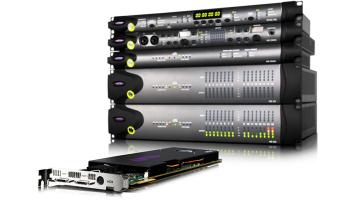
Walk into the typical professional recording studio, and chances are very likely you are going to see Avid’s Pro Tools running as the DAW of choice, even among increasingly stiff competition from other software and recording systems. While many are familiar with Pro Tools from home and project studios, thanks to the host-based versions of Pro Tools (meaning they require no external hardware outside of an audio interface), most studios running Pro Tools are using a Pro Tools HD system. Since no DAW provides an inherent “sound” (the audio being
by jaime traba · Posted
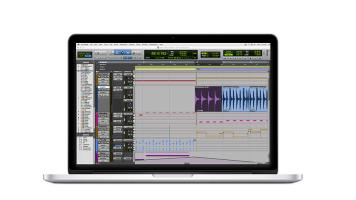
Earlier this year, Avid announced version 12 of its industry-standard Pro Tools DAW (digital audio workstation). What made a bigger splash and caused more heated discussion on the pro audio message boards was not any one functional feature of the update, but rather the fact that Avid was adopting an optional subscription-payment model, in addition to being able to purchase a license for the software outright, giving the option of yearly or monthly access. So why does