Search results for: video buying guide benefits of camera stabilization systems
About 9 filtered results
by Mathew Malwitz · Posted
When you’re venturing into public spaces for street photography, a compact camera is a must-have. Sure, a lightweight camera is easier to carry around, but an unobtrusive shooter is also the key to getting those perfectly spontaneous shots. You’re going to want to go small and pocketable, with accessible settings to adjust easily while you’re on the move. Let’s explore some solid options for your everyday carry bag as a street photographer.
FUJIFILM X100VI
Reminiscent of classic street photo film cameras, the FUJIFILM

by Bjorn Petersen · Posted
With medium format shedding many of its niche associations and becoming a more viable and mainstream format, now might just be the time to begin incorporating this larger format into your working repertoire. When film was still king among working photographers, medium format cameras, particularly 645, was seen as an ideal balance between image quality, weight, speed, and number of frames per roll. Once the shift to digital occurred, weight and speed became the primary differentiators in which cameras and systems were being considered for the

by Todd Vorenkamp · Posted
Capturing amazingly sharp photos of birds in the wild is the goal of many birders. There are different ways to do this, but the most organic is using extremely long telephoto lenses for digital or film SLR cameras or mirrorless interchangeable lens cameras. Not only useful for photography, modern digital cameras also can record

by Allan Weitz · Posted
Single-digit temperatures are not fun. Snow days are, however, a great time to capture the fun of winter. The usual problems arise when you start traveling out into the wet and chilly world of winter—not all cameras are perfectly equipped to be operated either in these extreme conditions or with gloves. Here you’ll find a collection of solid systems that will survive a blizzard.
Olympus OM-D E-M1X
Surprising us with this pro-oriented release, the
by Bjorn Petersen · Posted
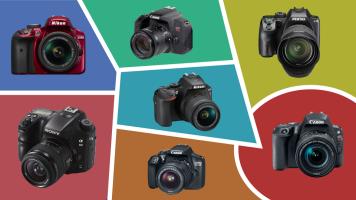
Although visually understood as “the type of camera the pros use,” DSLRs comprise a wide-ranging genre of cameras with numerous options available for all skill levels. Offering significantly more control while photographing than nearly any compact point-and-shoot camera available, DSLRs are a tried-and-true technology that blends intuitiveness and familiarity with the most current and up-to-date designs available in the world of camera design. In specific regard to the models mentioned here, this is a current lineup of DSLRs that strive to be

by Jill Waterman · Posted
As they say, a company is only as great as the people within it. The product experts at B&H exemplify this adage daily, in the personal attention they offer every customer interaction, as well as their depth of knowledge and passion for practical solutions.
“Many people don’t realize, it’s not just knowing the tech that’s important; the sales reps behind the counter get customer feedback about the items that serve people best,” explains B&H Sony Specialist Yisroel Ybgi. “So, their recommendations are not only based on what it says in a
by Christopher Witt · Posted
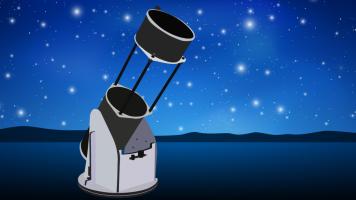
When you’re ready to take your astrophotography to new dimensions, you’re likely going to need optical tubes and mounts specifically designed for what you want to accomplish. While other brands, such as Celestron, are household names in the industry, there is a lesser-known brand that specializes in purpose-built gear for astronomers and imagers who require precision equipment: Sky-Watcher.
Mounts
Star Adventurer
Since Sky Watcher is primarily geared toward astrophotographers, it should come as no surprise that the company offers a photo

by Peter Ward_1 · Posted
What are they and who uses them? Some call them drones, some apply the label “quadcopters” as a blanket term—though they can have any number of rotors or even be planes—the FAA calls them “unmanned aerial systems” (UAS). I prefer to call them “unmanned aerial vehicles” (UAVs), a neutral term broad enough to safely include pretty much the whole gamut, from Hubsan nano drones up to commercial and military aircraft weighing hundreds of pounds and basically the size of small manned planes.

by Allan Weitz · Posted
What is a lens?
Superficially, a lens is little more than a cylinder containing optical elements that shift about as you focus by turning a ring around the cylinder. But even in its most basic form, a camera lens is far more complex than it might appear.
A lens is more than the sum of its parts. When you attach a lens to a camera, your choice of lens is very much like a painter's choice of brush. For finer details, the painter will choose a narrow, pointier brush. For cloud-free skies, a broader brush would be a wiser choice. Wide-angle lenses