Search results for: video tips solutions camera sensor size explained
About 8 filtered results
by Zack Young · Posted
Once you’re familiar with the basic concepts behind high-volume photography, the next logical step is to figure out what gear you need to purchase. That’s when the panic might hit. Suddenly you’re flooded with decisions about cameras, lenses, strobes, backdrops, barcode scanners, and more, each category including tons of different options at every

by Zack Young · Posted
Enter the Sony BURANO 8K Digital Motion Picture Camera, Sony's newest jack-of-all-trades cinema camera that aims to combine the best features from the company's CineAlta, FX, and Alpha lines. Part of its versatility comes from the array of recording formats and resolutions it can capture, as well as a physical camera body that can accommodate a range of accessory options. So, what recording modes should you be using and how

Posted
Cropped or full frame? Not sure which type of camera to get? Matt Matkin is here to help explain the differences between the sensor sizes. In this B&H video, he shares results from each evaluation to help you make an informed decision.
0:00 - Introduction
0:15 - Sensor Size and Crop Factor
2:56 - Pros and Cons
4:14 - Budget
5:00 - Final Thoughts
Are you team crop or team full-frame? Let us know your allegiance in the Comments section, below.
by Shawn C. Steiner · Posted
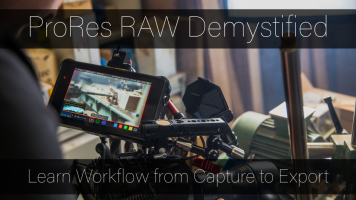
ProRes RAW. Is it ProRes? Is it raw? What is ProRes even? How do I get it? Why do I want it? What do I do with it once I have it? Okay, okay! We heard you. ProRes RAW is an exciting and relatively new video format, but it brings with it an almost endless number of questions. I will start off by saying that it is well worth the effort since raw video can offer increased dynamic range and detail than standard formats. Also, you do have to be sure that every stage in your process supports ProRes RAW. If you follow along here, we will help get you

by Bjorn Petersen · Posted
Macro photography is a specialized genre that has wide appeal. Despite its familiarity to most as just being “close-up shooting,” there are a variety of terms and tools that come up in the macro photography field that don’t seem to affect other broader, more general shooting methods. Let’s take a look at some of the specialized nomenclature and tools of the macro trade.
1. Macro
Starting with the obvious one first, macro photography is loosely defined as close-up photography done at scales of life-size or greater. We’ll get into this more in

by Allan Weitz · Posted
Sometimes, the phrases, acronyms and strings of numbers or number-letter combinations used to identify photographic hardware or techniques can be daunting to the uninitiated neophyte photographer.
We've prepared a list of the basic terms. Have we left any out that you think should be added? Please let us know!
0-9 | A | B | C | D | E | F | G | H | I |

by BH Online Videos · Posted
In this FocusEd video, we discuss the sometimes confusing aspects and nature of crop factor. This is not about how many bushels of corn an acre of rich soil in Iowa will yield—this is about how your combination of optics and sensor size affects the angle of view of your lens. When you have a camera with a sensor smaller than a full-frame sensor or 35mm film, it effectively changes the focal length of your lens, and therefore, your angle of view. This video explains how to apply the crop factor to figure out the 35mm equivalent of your lenses

by Bjorn Petersen · Posted
When the term “dynamic range” is mentioned, many people will quickly think of HDR, or “High Dynamic Range.” With this term, and technique, so popular in the world of photography, it is rarely ever considered what dynamic range actually is, let alone why you would want it to be “high.” In short, dynamic range describes the measurement between maximum and minimum values. While not specific to photography, in this article on dynamic range in photography we can interpret dynamic range as the measurement between the whitest whites and the blackest