Analog Mixers


Allen & Heath MixWizard4 12:2 - Professional Mixing Console
- 8 x Line Inputs with XLR/TRS Jacks
- Built-In FX with 20 Presets
- 6 x Aux Sends
- 16 x Direct Outputs
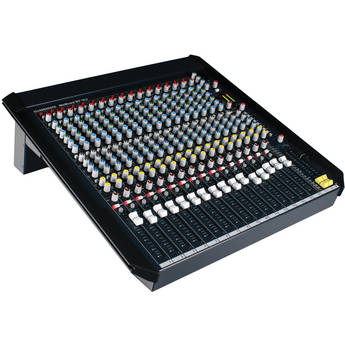
Allen & Heath MixWizard4 16:2 - Professional Mixing Console
- 16 x Line Inputs with XLR/TRS Jacks
- Built-In FX with 20 Presets
- 6 x Aux Sends
- 16 x Direct Outputs
Allen & Heath MixWizard WZ4 14:4:2 Desk/Rack Mountable Mixer
- 10 Mic/Line Inputs
- Balanced XLR/TRS Jacks
- 100mm Faders
- Tri-Color, 12-Segment Bargraph Metering
Ashly MX508 Stereo Microphone Mixer
- 8 Stereo Channels
- Rack Mountable
- 8 XLR & TRS Inputs
- 8 Send/Return Insets
Arrakis Systems H10-Lite 10-Channel with 2 Stereo Outputs Console
- For Radio, Broadcast Studios, Production
- Seven Stereo Inputs, 15 Total
- 10 Robust Faders
- RCA, RJ45, and XLR Inputs
Allen & Heath ZED-420 20-Channel 4-Bus Analog Mixer with USB Connection
- 16 Mono and 2 Stereo Channels
- 16 x XLR Mic Inputs with Phantom Power
- 16 x 1/4" Line Inputs
- 4-Band EQ per Channel
Allen & Heath ZED-428 28-Channel 4-Bus Analog Mixer with USB Connection
- 24 Mono and 2 Stereo Channels
- 24 x XLR Mic Inputs with Phantom Power
- 24 x 1/4" Line Inputs
- 4-Band EQ per Channel
Arrakis Systems H10-LED 10-Channel with 2 Stereo Outputs Console
- For Radio, Broadcast Studios, Production
- Seven Stereo Inputs, 15 Total
- 10 Robust Faders
- RCA, RJ45, and XLR Inputs
Allen & Heath ZED-436 36-Channel 4-Bus Analog Mixer with USB Connection
- 32 Mono and 2 Stereo Channels
- 32 x XLR Mic Inputs with Phantom Power
- 32 x 1/4" Line Inputs
- 4-Band EQ per Channel
Sonifex S0v2 9-Channel Analog Radio Broadcast Mixer
- Compact, Fixed-Format Broadcast Console
- For On-Air School/Community Radio Use
- 9 Multifunction Channels
- 4 Mono Balanced / Stereo Unbalanced Ins
Sonifex S1 10-Channel Digital/Analog Radio Broadcast Mixer
- Compact, Fixed-Format Broadcast Console
- For On-Air School/Community Radio Use
- 10 Multifunction Channels
- AES, Optical, and S/PDIF Digital I/O
Trident Audio Series 68 Analog Recording Console with LED Meter Bridge (16 Channels)
- Professional Split/Inline Console
- DB25 Inputs and Outputs
- Master and Main Outputs on XLR Pairs
- 3-Band Trident EQ
Trident Audio Series 68 Analog Recording Console with LED Meter Bridge (24 Channels)
- Professional Split/Inline Console
- DB25 Inputs and Outputs
- Master and Main Outputs on XLR Pairs
- 3-Band Trident EQ
Audient ASP4816-SE Small Format In-Line Analog Recording Console (Standard Edition)
- 16 Audient Mic Preamps
- In-Line Architecture (2 Inputs per Chan)
- 40 Faders, 48 Inputs at Mix
- 16 Record Buses + 8 Subgroups
Solid State Logic XL-Desk Mixing Console with Empty 500 Series Slots
All About Audio Mixers & Analog Recording Mixers
Analog mixers belong to a category of devices known as audio mixers. Whether you plan on recording in a studio or performing live, these mixers improve your sound, in addition to other benefits.
What Does an Analog Mixer Do?
An analog mixer takes in signals from different sources, blends and processes them, and then sends it out to devices such as speakers. They're essential for live performances, broadcasting, and recording, as they balance the levels of different audio inputs to ensure high-quality sound. A unique feature is the ability to provide natural texture to the audio, thanks to a process called "summing," in which analog components combine signals from all channels.
Analog Mixers vs. Digital Mixers
While the function of analog and digital mixers is the same, there are a few differences to be aware of before purchasing. Analog consoles are very similar in design, making them easy to operate and switch between. The visual feedback offered by analog boards also makes it easier to troubleshoot various challenges that may arise regarding sound flow. Other reasons to choose analog may be due to their generally lower price points, as well as being customizable when it comes to switching out components.
Choosing an Analog Mixer
An important factor to consider when purchasing any kind of mixer is whether you plan on using it for live audio or studio purposes. Analog recording mixers output to multitrack recorders and other locations, so they are often larger and have more inputs and routing options. Recording mixers also offer a simple signal flow thanks to hardwired inputs that take the guesswork out of channel processing. On the other hand, live sound mixers are more compact since they don't output to as many places. There are also analog utility mixers that work well for traveling or recording fewer sound sources. These mini mixers only offer a handful of inputs, but their small size makes them portable, lightweight, and convenient for small live shows and casual recording.
Check out the selection of analog mixer accessories, consoles, and more at B&H Photo and Video.