All LED Lights

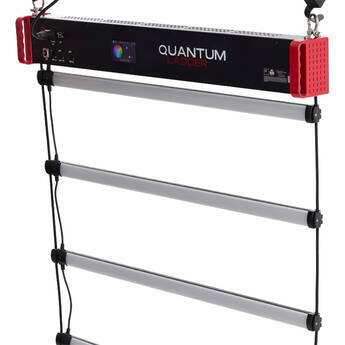
Cineo Lighting Quantum Ladder RGB LED Light
- For Studio, Film & TV Production
- Output: 35,441 Lux at 3.3' (5600K)
- 2000-10,000K CCT; Full RGB Color Control
- 4 x 14' Dimensions
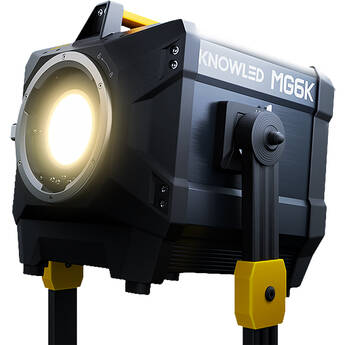
Godox KNOWLED MG6K Bi-Color LED Monolight
- For Studio & Film/TV Production
- Output: 1,025,000 Lux at 3.3' (5600K)
- 2800-10,000K CCT; Bi-Color Mode
- Powered via AC Cable & Power Controller
Cineo Lighting LB800 Upgraded 2x4 800W Softlight with Landscape Yoke
- Touchscreen Control
- Wired Network, Wi-Fi, CRMX, DMX, RDM
- 10 Independent Color Zones
- Variable CCT 2500-10,000K
Godox KNOWLED MG6K Bi-Color LED Monolight Kit
- For Studio & Film/TV Production
- Output: 1,025,000 Lux at 3.3' (5600K)
- 2800-10,000K CCT; Bi-Color Mode
- Powered via AC Cable & Power Controller
Quasar Science Ossium Frame with Twelve Rainbow 2 (2')
- Solid Frame with Built-In Ossium Rail
- Twelve 2' Rainbow 2 Tubes
- 1750-10000K Color Temperature
- Tunable Light & High RGB Saturation
Litegear Auroris X RGB LED Light (Travel Kit)
- Light Head with Bag & Tarp Textile
- Output: 33,363 Lux at 3.3 (5600K)
- 2000-11,000K CCT; RGB Color Control
- 10 x 10' Panel; AC Power
SUMOLIGHT SKY Bar RGB LED Linear Bars (6.5', 8-Pack)
- For Studio & Film/TV Production
- Output: 2360 Lux at 3.3'
- 3450-15,500K CCT; RGBWW Mode
- 1.85 x 78.7" Bar; AC Operation
Litepanels Gemini 2x1 Hard RGB LED Light Panel (Dual Panel Array, UK Power Cord)
- For Studio & Film/TV Production
- Total Output: 46,000 Lux at 3.3' (5600K)
- 2700 to 10,000K; CCT/RGB Control
- 25 x 25" Array; AC/DC Operation
Litepanels Gemini 2x1 Hard RGB LED Light Panel (Dual Panel Array, EU Power Cord)
- For Studio & Film/TV Production
- Total Output: 46,000 Lux at 3.3' (5600K)
- 2700 to 10,000K; CCT/RGB Control
- 25 x 25" Array; AC/DC Operation
K 5600 Lighting Slice 300 x 4 LED Kit
- 4 x Slice 4 x 1' Panels
- 1 x 1200W LED Ballast, 1 x Splitter Box
- 1 x Extension Cable: 25'
- 4 x 4 Yoke/Rack Assembly
DeSisti F20 LED Tungsten Fresnel (Manual Operation)
Nanlux Evoke 5000B LED Bi-Color Monolight (Flight Kit)
- For Studio & Film/TV Production
- Output: 555,250 Lux at 3.3' (5600K)
- 2700-6500K CCT; Bi-Color Mode
- 100-240V AC Power
Quasar Science Ossium Frame with 6 Double Rainbow Lights (4')
- 1750-10,000K Color Temp, Dims 0-100%
- Six 4' Double Rainbow Lights
- Power Adapter/Splitter with Switch
- 120 Individually Addressable Pixels
Litepanels Gemini 2x1 Hard RGB LED Light Panel (Dual Panel Array, US Power Cord)
- For Studio & Film/TV Production
- Total Output: 46,000 Lux at 3.3' (5600K)
- 2700 to 10,000K; CCT/RGB Control
- 25 x 25" Array; AC/DC Operation
Astera QuikBeam 16-Light Kit with Road Case
- 16 Light Fixtures with Hard-Sided Case
- Includes Charging, Batteries, and Cables
- Output: 2285 Lux at 3.3'
- 3200-6500K Color Temperature
ETC fos/4 Large Daylight HDR LED Light Panel
- For Television Studios & Film Sets
- Output: 21,100 Lux at 3.3' (5600K)
- 1900-10,450K CCT
- 24 x 24" Panel; AC Power Only
ETC fos/4 Large Lustr X8 LED Light Panel
- For Television Studios & Film Sets
- Output: 19,217 Lux at 3.3' (5600K)
- 1900-10,450K CCT
- 24 x 24" Panel; AC Power Only
Profoto L600C & L600D Mono-LED Light (3-Light Ultimate Video Kit)
- For High-Volume Video Productions
- Two L600C RGB & Single L600D Daylight
- Wide Range of Modifiers
- 2000-15,000K CCT; RGBWWW (L600C)
ProLights EclPanel TWCXL RGB LED Light Panel
- For Large-Scale Film & TV Productions
- Power: 2442 Lux at 16', 109° Beam Angle
- 1800 to 20,000K CCT
- RGBW Mode for Full Color Control
Profoto ProPanel 3x2 RGB LED Light Panel
- For Studio & Film/TV Production
- 2000W Fixture with 4-Zone Pixel Mapping
- 2000-15,000K CCT; RGBWW Color Control
- 44 x 26" Panel; AC Power
Mole-Richardson 1600W Tener LED (Daylight)
- Color Temperature 5600K
- Comparable Output to 2500W HMI Solarspot
- 14" Borosilicate Glass Fresnel Lens
- CRI 90, Flicker Free
ARRI SkyPanel X22 Modular LED Panel
- For Studio & Film/TV Production
- Modular Design, Native Soft & Hard Light
- 33,205 Lux at 3.3', CRI 99, TLCI 93
- Dual 2x1 Panels Operate as Single LED
Cineo Lighting Reflex R10 LED Light with Yoke
- For Film and TV Productions
- Output: 90,000 Lumens at 5600K
- Beam Angle: 15-50° Digital Focus
- Color Temperature: 2700 to 10,000K CCT
Quasar Science Ossium Frame with Twelve Rainbow 2 (4')
- Solid Frame with Built-In Ossium Rail
- Twelve 4' Rainbow 2 Tubes
- 1750-10000K Color Temperature
- Tunable Light & High RGB Saturation
Astera QuikBeam 16-Light Kit with NetBox and Road Case
- 16 Light Fixtures with Hard-Sided Case
- Includes Four NetBox Switches for PoE++
- Includes Charging, Batteries & Cables
- Output: 2285 Lux at 3.3'
All About LED Lights
LED lights can be your best choice for lighting your studio. They're inexpensive, don't put out the amount of heat that other studio lights do, and come in a variety of configurations. Their illumination is similar to natural light, and has the versatile color balance. When tungsten lights or fluorescent lights don't fit the situation or the budget, consider LEDs.
What Are LED Lights?
Light-emitting diodes are semiconductors that convert electricity to light. Although you might think of this type of light as new technology, an engineer at General Electric invented the first one in 1962. The original lights were red, followed by yellow, green, and blue. White lights debuted in the 1990s. While colored lights had been used only in things such as clocks and traffic lights, white LEDs gained widespread use in photography and video.
Why Use LEDs for Photos?
LEDs can provide continuous light, as opposed to the off-and-on flashes of strobe lighting. For photography and videography, choose continuous light when you need to mimic certain types of illumination sources, or you need to see the result of composition before shooting an image. LEDs convert 90 percent of their energy into light. This makes them not only a cost-effective choice, but environmentally friendly as well. Like the tungsten light kits that are still popular in videography, LEDs come grouped with accessories in LED lighting kits. If you need convenience, some kits are built around battery LED lights.
LEDs offer a choice of styles. You can use a small panel on a light stand to highlight a face in a portrait, while larger LED panel lights would provide soft light for a full body image. Single LED lights are too small to light a photo, but used as accents, they could add interest to a picture.
How to Use LED Photography Lights
Energy-efficient LEDs are cooler than traditional studio lights. You can place them close to a subject without causing discomfort. You can also use them in spaces that are too small to be safe for lights that run hot. These characteristics make LEDs useful for portrait photography. For drama in your portrait, put a light on either side of your subject. This results in an all-over highlight. If your design calls for only one highlight, place a light on just one side. Use colored LEDs to alter the mood in your photograph. Since LEDs are continuous light, you can move around as you compose a shot, or use a remote camera control. If you're a videographer, this constant light is suitable for action shots.
LED lighting provides a convenient and cost-efficient light source for photography and videography. Whether you need just one item or a complete kit, you can find great options at B&H Photo Video.