Refractor Telescopes

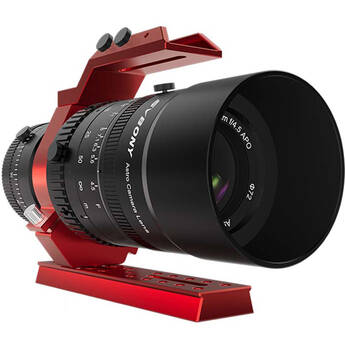
SVBONY SV555 54mm f/4.5 APO Astrophotography Lens/Telescope
- Designed for Astrophotography
- 44mm Image Circle Full-Frame Lens
- f/4.5 to f/22, Focal Length 243mm
- Petzval Lens with 5 Elements, 2 ED
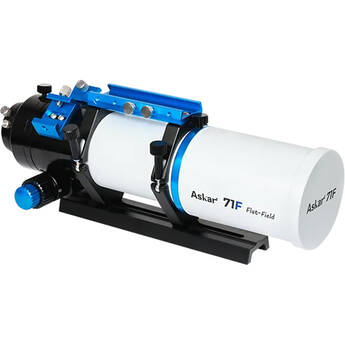
Askar 71F 71mm f/6.9 Quad APO Refractor Telescope
- 71mm Apochromatic OTA
- 490mm Focal Length, f/6.9 Focal Ratio
- Air-Spaced Quad APO with 1 ED Element
- Eliminates Need for Field Flattener
Explore Scientific FirstLight 80mm f/8 Refractor GoTo EQ Telescope
- 80mm Refractor OTA
- 640mm Focal Length, f/8 Focal Ratio
- Motorized Computer-Controlled EQ Mount
- Integrated WiFi for Wireless Control
Explore Scientific 80mm Refractor and Sidara Pro Goto Mount with Sky Assist
Explore Scientific ED80 80mm f/6 Essential Series Air-Spaced Triplet Refractor Telescope
- 80mm Aperture
- 480mm Focal Length, f/6 Focal Ratio
- HOYA Extra-Low Dispersion (ED) Glass
- Apochromatic Triplet Lens System
Explore Scientific AR127 127mm f/6.5 Achromatic Refractor Telescope (OTA)
- 826mm Focal Length
- 8x50 Finderscope
- Mounting Cradle Ring with Handle
- OTA Only - Mount and Tripod Required
Sky-Watcher Evostar 80EDX APO Doublet Refractor (OTA only)
- 80mm Apochromatic Doublet Refractor
- 600mm Focal Length, f/7.5 Focal Ratio
- FPL-53 Extra-Low Dispersion Glass
- Proprietary MHC Multicoated Optics
Askar SQA55 55mm Quint Petzval Telescope / Camera Lens (OTA Only)
- 264mm Focal Length, f/4.8 Focal Ratio
- 5-Element Lens with SD & ED Elements
- Dual Focus Rings & 360° Rotator
- Variable Aperture f/4.8-f/22
Explore Scientific ED80 Essential Series Refractor Telescope and 0.8x Focal Reducer Bundle
- 480mm Focal Length, f/6 Focal Ratio OTA
- Apochromatic Triplet Lens System
- HOYA FCD1 ED Glass
- Field Flattener with T Ring for Camera
Explore Scientific ED80 Essential Series Refractor Telescope and Field Flattener Bundle
- 480mm Focal Length, f/6 Focal Ratio OTA
- Apochromatic Triplet Lens System
- HOYA Extra-Low Dispersion (ED) Glass
- Field Flattener with T Ring for Camera
Explore Scientific 102mm Refractor and Sidara Pro Goto Mount with Sky Assist
Celestron Omni XLT 120mm f/8.3 EQ Refractor Telescope
- 120mm Achromatic Refractor OTA
- 1000mm Focal Length, f/8.3 Focal Ratio
- StarBright XLT Multicoated Optics
- 2" Focuser with 1.25" Reducer Adapter
Tele Vue 60 2.4"/60mm Refractor Telescope Optical Tube Assembly
William Optics Cat 51 WIFD 51mm f/4.9 Apochromatic Refractor Telescope (OTA Only, Space Gray)
- 250mm Focal Length, f/4.9 Focal Ratio
- Center-Balanced Internal Focus Design
- For Full-Frame, APS-C, Micro 4/3 Cameras
- 1x Coarse, 10x Fine Focusers
Sky-Watcher Evostar 100EDX APO Doublet Refractor (OTA only)
- 100mm Apochromatic Doublet Refractor
- 700mm Focal Length, f/7 Focal Ratio
- FPL-53 Extra-Low Dispersion Glass
- Proprietary MHC Multicoated Optics
Askar FRA400C 72mm Quintuplet Refractor Telescope (OTA Only)
- 400mm Focal Length, f/5.6 Focal Ratio
- 5-Element Lens Design with 2 ED Elements
- Helical Internal Focus
- Adjustable f/5.6-f/22 Photo Aperture
ZWO FF65mm Astronomical Telescope
- 65mm Apochromatic Refractor OTA
- 416mm Focal Length, f/6.4 Focal Ratio
- Air-Spaced Quint APO with 2 ED Elements
- Eliminates Need for Field Flattener
Sky-Watcher EvoStar 80mm f/7.5 Doublet APO Refractor (OTA only)
- 80mm Apochromatic Refractor
- 600mm Focal Length, f/7.5 Focal Ratio
- Proprietary MHC Multi-Coated Optics
- Schott BK7 and FPL-53 ED Glass
Askar 65PHQ Quintuplet APO Telescope (OTA Only)
- 65mm Apochromatic Refractor OTA
- 416mm Focal Length, f/6.4 Focal Ratio
- Air-Spaced Quint APO with 2 ED Elements
- Eliminates Need for Field Flattener
Explore Scientific 127mm Refractor and Sidara Plus Alt-Az Mount with Sky Assist
Explore Scientific 102mm f/7 Essential Apochromatic ED Triplet Refractor Telescope (OTA Only)
- 102mm Aperture
- 714mm Focal Length, f/7 Focal Ratio
- Extra-Low Dispersion (ED) Glass
- Proprietary EMD Enhanced Multicoatings
Starfield ED 80mm f/7 Doublet APO Refractor OTA
- 80mm Apochromatic Refractor
- 560mm Focal Length, f/7 Focal Ratio
- Extra-Low Dispersion Glass
- 2-Speed, 2" Rack & Pinion Focuser
Askar 91F Quad APO Refractor Telescope
- 91mm Apochromatic OTA
- 609mm Focal Length, f/6.7 Focal Ratio
- Air-Spaced Quad APO with ED Element
- Eliminates Need for Field Flattener
Starfield Gear Series 60mm Quad f/5 Astrograph OTA
- 300mm Focal Length, f/5 Focal Ratio
- 2-Element Lens with FPL-53 APO
- 2-Element Corrector
- 44mm Full-Frame Imaging Circle
Explore Scientific 80mm f/6 Air-Spaced Triplet Apochromat Refractor Telescope (OTA)
- Hoya FCD100 ED Optics
- 2.5" Hexagonal Focuser
- Can Be Mounted on Larger Scope
Sky-Watcher EvoStar 100mm f/9 Doublet APO Refractor (OTA only)
- 100mm Apochromatic Refractor
- 900mm Focal Length, f/9 Focal Ratio
- Proprietary MHC Multi-Coated Optics
- Schott BK7 and FPL-53 ED Glass
Starfield ED 102mm f/7 Doublet APO Refractor (OTA)
- 102mm Apochromatic Refractor
- 714mm Focal Length, f/7 Focal Ratio
- ED Ohara FPL53 and Lanthanum Elements
- 2-Speed, 2.5" Rack & Pinion Focuser
Askar 103mm Apochromatic ED Triplet Refractor Telescope (OTA Only)
- 700mm Focal Length, f/6.8 Focal Ratio
- Apochromatic Triplet Lens System
- Extra-Low Dispersion Glass Element
- 2-Piece Design for Reducer or Binoviewer
Choosing the Best Refractor Telescope
A refractor telescope has a glass lens at the front that bends light as it passes through. The best refractor telescopes use a long-range focal length to minimize the chance of chromatic aberration. Achromatic telescopes are more prone to discoloration than apochromatic telescopes because the red and blue wavelengths are not in line with the green ones.
Difference Between Apochromatic and Achromatic Telescopes
Achromatic refractors bend light at slightly different angles as it passes through a glass lens. Color wavelengths in achromatic telescopes don’t all align due to the angles, which creates an opportunity for discoloration (chromatic aberration). The green wavelengths extend past the red and blue ones and focus on a different area at the back of the telescope. Achromatic telescopes are more suitable for star gazing as less light is present, so there’s a limited chance of discoloration taking place. Lenses created with three to four glass elements are apochromatic, and an apochromatic refractor produces high-resolution images with minimal chance of discoloration. Using solar telescopes with apochromatic lenses produces detailed views of the sun, and attachments like webcams for computerized telescopes provide high-resolution results for safe viewing.
Refractor and Reflector Telescopes
Some Vivitar refractor telescopes come with options for terrestrial and astrological viewing, microscope kits, and sun shields. With catadioptric (Cassegrain) telescopes, you can view true-to-life images day or night. Catadioptric telescopes come in two main types, Schmidt-Cassegrain and Maksutov. Most Celestron refractor telescopes come in both Catadioptic types, in 90mm options to give you a superior viewing experience. Maksutov telescopes are easier to set up and transport because they are lightweight, making them popular with hikers and campers. Telescopes that use reflector (Newtonian) lenses are an optimal choice if you enjoy star gazing or watching meteor showers. While reflector telescopes are bulkier than refractor telescopes, they provide you with a similar viewing experience in the right conditions.
Choosing Accessories for Your Telescope
Purchase additional telescope eyepieces to increase your telescope’s magnification ability, and choose from low or medium power eyepieces. Select an eyepiece with exit pupils no larger than 6mm for optimum results. Eyepieces are one of the most important parts of a telescope; using high-quality eyepieces will increase your telescope’s range and capability. Use adapters and remotes, get additional tubes and lenses, or pick mounting accessories to enhance your viewing experience. When it comes time to store your telescope, use a durable hard case to protect glass lenses and tubes from damage.
B&H Photo and Video carries Vivitar, Celestron, and Bushnell refractor telescopes for superior viewing with a low risk of color distortion. Browse through kits made to view specific planets, and find adjustable tripods and carrying bags to build the ultimate telescope system.