UPS Power Backup


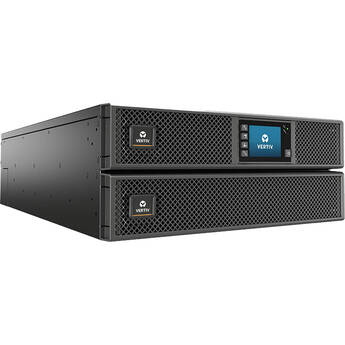
VERTIV Liebert GXT5-8KMVRT6UXLN 208V Online Double Conversion Rack/Tower UPS
- Output: 8000VA / 8000W
- Input: 176-280 VAC at 40-70 Hz
- Hard-Wire Terminal Inputs
- Hard-Wire and Optional POD's Output
CyberPower OL5KRTHDL Smart App Online UPS
- Output: 5000VA / 5000W @ 50/60 Hz
- Input: 120-280 VAC @ 40-70 Hz
- 2 x NEMA L6-20R | 2 x NEMA L6-30R
- Battery & Surge Protected Outlets
CyberPower OL8KRT Smart App Online 8000VA UPS
APC Smart-UPS SRT5KXLT Battery Backup & Surge Protector
- Output: 4500W / 5000 VA
- Input: 208V @ 40-70 Hz
- 2 x NEMA L6-20R Battery Backup Outlets
- 2 x NEMA L6-30R Battery Backup Outlets
APC Smart-UPS Ultra 3000VA Battery Backup
- 3000VA Power & 2880W
- 5 x NEMA 5-20R | 1 x L5-30R Pigtail Cord
- NEMA 5-20P Power Cable
- 120 to 125V Input & Output
APC SRT5KXLTUS On-Line SRT 5kVA/208V Rack/Tower Smart-UPS (TAA-Compliant)
- 208V 50/60 Hz Nominal Input & Output
- 4800W / 5000VA Output Power Capacity
- 2 x NEMA L6-20R Battery Backup Outlets
- 2 x NEMA L6-30R Battery Backup Outlets
APC Smart-UPS Battery Backup & Surge Protector
- Output: 4800W / 5000VA at 50/60 Hz
- Input: 208 to 240V at 40-70 Hz
- 6 x IEC-320 C13 Outlets
- 4 x IEC-320 C19 Outlets
VERTIV Liebert GXT5LI-5KL630RT3UXLN Lithium-Ion Convertible 3U Rack/Tower UPS
- Output: 5000VA / 4900W
- Input: 208 VAC at 40~70 Hz
- Hardwire Output to rPDU Extender or PDU
- External Battery Connector
Minuteman Endurance Lithium Online UPS (3kVA/2700W)
CyberPower OL6KRTHDL Smart App Online UPS
- Output: 6000VA / 6000W @ 50/60 Hz
- Input: 120-280 VAC @ 40-70 Hz
- 2 x NEMA L6-20R | 2 x NEMA L6-30R
- Battery & Surge Protected Outlets
APC SURTD6000RMXLP3U Smart-UPS RT Battery Backup
- Output: 4200W / 6000 VA
- Input: 208V @ 50-60 Hz ±5 Hz
- NEMA L6-30R, L14-30R, and 5-20R
- 1 x NEMA L14-30P Input Connection
APC Smart-UPS SRT On-Line 5kVA Rackmount Battery Backup (TAA)
- 4800W / 5400VA Output Power Capacity
- 208V Nominal Output Voltage
- Double Conversion Online Topology
- Automatic and Manual Internal Bypass
Minuteman Endeavor Rack/Tower Online UPS (3kVA, 4500W)
Minuteman Endurance Lithium Online UPS with SNMP Card (3kVA/2700W)
Tripp Lite Eaton SmartOnline SU6000RT3UTAA Online Double-Conversion UPS
- Battery Backup and Power Protection
- Output: 6000VA / 5400W at 50 / 60 Hz
- Input: 200 to 240 VAC
- 2 x NEMA L6-20R | 2 x NEMA L6-30R
VERTIV Liebert GXT5-6000GVRT3UXLN Lithium-Ion Convertible 3 RU Rack/Tower UPS
- Output: 6000 VA / 6000W
- Input: 200 to 240 VAC at 40 to 70 Hz
- Hardwire Output to rPDU Extender or PDU
- External Battery Connector
CyberPower OL8KRTHD Smart App Online UPS
- Output: 800VA / 8000W @ 50/60 Hz
- Input: 120-280 VAC @ 40-70 Hz
- 4 x NEMA L6-20R | 2 x NEMA L6-30R
- 1 x Battery & Surge Protected Outlet
Lowell Manufacturing UPS9LI-3000 Online UPS
- 3000VA, 2700W
- Lithium-Ion Phosphate Battery
- Pure Sine Wave Output
- Includes Rackmount Kit & Tower Pedestals
APC Smart-UPS SRT 6000VA Rackmount (208V)
- Output: 6000W / 6000VA
- Hardwire Input and Output
- 2 x NEMA L6-20R Outputs
- 3 x NEMA L6-30R Outputs
Minuteman Endeavor Rack/Tower Online UPS (3kVA, 5400W)
Understanding Uninterruptible Power Supplies (UPS) Battery Backup
UPS backups protect computers and prevent loss of data during power outages or brownouts. The principle is simple: Uninterrupted power supplies (UPS) keep the power on for a period, allowing users to safely shut down computer systems. There are various types, each providing a different degree of protection. However, the most crucial decision is selecting a UPS that has enough power to keep your computer system running long enough for it to properly shut down.
Types of UPS Systems
The most common type of UPS is a standby or battery backup system. Under normal conditions, it supplies power from the mains, but automatically switches over to battery backups during power failures. A line interactive UPS is similar, but it also incorporates a special transformer that regulates the output voltage to minimize the effect of power surges and brownouts. While both systems provide a degree of protection against mains disturbances, critical systems often use an online UPS. As the name suggests, this type supplies UPS power all the time. The mains supply charges the UPS battery, which in turn supplies power to the UPS, ensuring there's no possibility of a mains disturbance affecting the power supplied to the load.
Calculating UPS Power Requirements
The first step is to work out how much power you need. Desktop power supplies usually draw the most power, typically between 400 and 650 watts. You may need a technician to open your computer to establish its power supply rating, or alternatively, make a conservative assumption. Other items to consider include monitors, routers, and peripherals. To estimate the required volt-amps, multiply the total wattage by 1.6. A good practice is to choose a UPS that comfortably exceeds this figure. The runtime figures at full and half load give an indication of how long UPS power lasts. Remember that battery capacity, not power rating, is the key factor that determines how long a UPS runs. It's possible to add batteries to some types of UPS units to extend runtime.
Installation of UPS Power Supplies
Smaller UPS systems are freestanding for placement in any convenient location, while larger units are usually rack mounted. Most have several power outlets, and if necessary, you can extend these using power strips. Installation is usually plug and play, and no special tools are necessary. You may need additional AC power and extension cords, especially with a rack-mounted UPS.
Desktop Communication
Most uninterrupted power-supply units have desktop software, allowing you to monitor their status. Additionally, many can automatically shut down your computer in the event of a power failure, which is an important feature for unattended computers. Some types use the computer's serial port, while others connect through a USB port. In some instances, you may need to install a UPS management card in your computer.
Prevent loss of precious data during power failures and brownouts with a UPS backup from B&H Photo and Video.