Reality Capture Scanners
Reality capture scanners for SLAM, 3D gaussian splatting (3DGS), and photogrammetry.

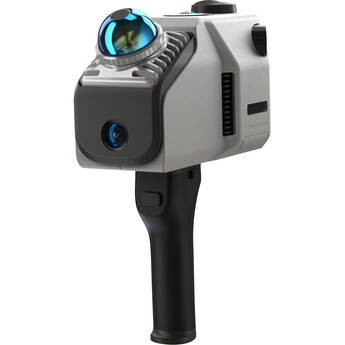
3DMakerPro Eagle Max 3D LiDAR Scanner
- Handheld or Mountable LiDAR 3D Scanning
- 8K Imaging with up to 2cm Accuracy
- 4 x 48MP Cameras
- 200,000 Points per Second Scan Speed
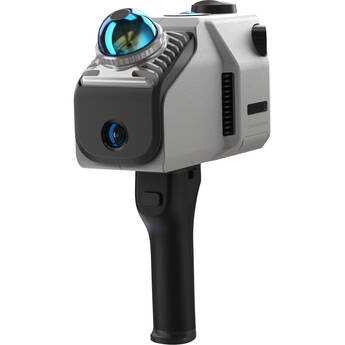
3DMakerPro Eagle 3D LiDAR Scanner
- Handheld or Mountable LiDAR 3D Scanning
- 8K Imaging with up to 2cm Accuracy
- 1 x 48MP Camera
- 200,000 Points per Second Scan Speed
XGrids PortalCam Standard Package
- Spatial Camera for Virtual Production
- 4000 x 3000 Imaging | 1/2" CMOS Sensor
- For Green Screen, Compositing, LED Wall
- 360° 4-Camera Array
3DMakerPro Raven Max RTK 3D LiDAR Scanner
- 4K Imaging with up to 2cm Accuracy
- 2 x 12MP Cameras
- 150,000 Points per Second Scan Speed
- 328' Scan Radius
3DMakerPro Raven Max 3D LiDAR Scanner
- 4K Imaging with up to 2cm Accuracy
- 2 x 12MP Cameras
- 150,000 Points per Second Scan Speed
- 328' Scan Radius
3DMakerPro Hawk 3D LiDAR Scanner
- Handheld or Mountable LiDAR 3D Scanning
- 1.5cm Accuracy
- Dual 13MP Cameras
- 480,000 Points per Second Scan Speed
3DMakerPro Raven 3D LiDAR Scanner
- 4K Imaging with up to 2cm Accuracy
- 1 x 12MP Camera
- 150,000 Points per Second Scan Speed
- 328' Scan Radius
XGrids Lixel L2 Pro Premium Package (16-Channel, 394')
- Real-Time 3D Scanning/Modeling
- AI-Powered LiDAR, Visual, IMU Modules
- Rotating LiDAR, No Postprocessing
- 16-Channel LiDAR, 394' Distance
XGrids Lixel L2 Pro Full Package (16-Channel, 394')
- Real-Time 3D Scanning/Modeling
- AI-Powered LiDAR, Visual, IMU Modules
- Rotating LiDAR, No Postprocessing
- 16-Channel LiDAR, 394' Distance
XGrids Lixel L2 Pro Premium Package (32-Channel, 394')
- Real-Time 3D Scanning/Modeling
- AI-Powered LiDAR, Visual, IMU Modules
- Rotating LiDAR, No Postprocessing
- 32-Channel LiDAR, 394' Distance
XGrids Lixel L2 Pro Premium Package (32-Channel, 984')
- Real-Time 3D Scanning/Modeling
- AI-Powered LiDAR, Visual, IMU Modules
- Rotating LiDAR, No Postprocessing
- 32-Channel LiDAR, 984' Distance
What Are 3D LiDAR Scanners?
LiDAR scanners play a vital role in¿“reality capture”¿workflows by creating highly accurate digital representations of real-world environments. Depending on your production's needs, these scanners can be used for¿SLAM (Simultaneous Localization and Mapping)¿to quickly map large indoor or outdoor locations,¿photogrammetry¿to generate photorealistic textured models from overlapping photographs, or¿Gaussian splatting¿to create highly realistic scene reconstructions with exceptional lighting and view-dependent detail.
What Is Unreal Engine?
Unreal Engine is a real-time 3D creation platform originally developed for video games that has become one of the industry's leading virtual production tools.
In virtual production, Unreal Engine generates photorealistic environments that update instantly as cameras move through the scene. Production teams use it to build digital sets, animate environments, control lighting, create visual effects, and render cinematic-quality graphics at interactive frame rates.
Its ability to produce near-final visuals in real time has fundamentally changed how films, television programs, commercials, and live broadcasts are produced.
What Is Photogrammetry?¿
Photogrammetry is the process of creating accurate 3D digital models from hundreds or thousands of overlapping photographs. The resulting models preserve real-world geometry, textures, and surface details with exceptional accuracy.
Photogrammetry is widely used across numerous industries, including film and television, virtual production, architecture, construction, video game development, geographic mapping, and many more.
Within virtual production, photogrammetry enables filmmakers to recreate real-world locations as highly detailed digital environments that can be explored, modified, and rendered inside real-time engines.
How Is Gaussian Splatting Used in Virtual Production?
Gaussian splatting is an emerging 3D scene reconstruction technique that creates highly realistic digital environments using millions of tiny Gaussian "splats" instead of traditional polygon meshes.
By capturing a real location with multiple photographs or video, Gaussian splatting can reconstruct scenes with exceptional realism while preserving fine details such as vegetation, fabric, transparent materials, and complex lighting.
In virtual production, Gaussian splatting offers several advantages:
- Faster creation of photorealistic environments.
- Highly realistic digital location capture.
- Efficient rendering of complex scenes.
- Improved realism for reflections and lighting.
- Reduced asset creation time compared to traditional 3D modeling.
As rendering technology continues to mature, Gaussian splatting is expected to become an increasingly valuable tool for creating digital sets that are nearly indistinguishable from real-world locations, further expanding the creative possibilities of virtual production.