Ilford

0 Plays ·Posted
In some locales, the period between Christmas and the New Year is known as the "Wild Nights," where mischief reigns in the darkest days of the northern hemisphere. We’re digging into this theme for our last show of 2022 in a chat with photographer and producer of this very podcast, Jill Waterman, who has been documenting New Year’s Eve traditions and exploits around the globe for the past 38 years. We first spoke with Waterman about this project in the two-part show

Since its debut in October 2015, the B&H Photography Podcast has offered weekly conversations with insightful and entertaining guests, on topics most important to the contemporary photographer—from gear and technique to history, science, and art. To commemorate Black History Month, we present to you this compilation of episodes celebrating photographers of color who have appeared on our show.
Photograph "Looking Out" (detail) © Earlie Hudnall Jr., Courtesy PDNB Gallery,
The best New Year’s resolutions are 1) fun, 2) easy to follow, and 3) photographic! A few years ago, I listed an even dozen photographic resolutions that I may or may not have followed successfully. Our B&H Photography Podcast addressed the subject here, and Bjorn Petersen talked about

You’re probably aware that film has been making a comeback in recent years, but let’s be honest with ourselves. Did it ever really go away? Sure, it may have seen a dip in popularity at the dawn of the digital age, but many serious enthusiasts never stopped using it. Just ask the experts here at B&H! In fact, we asked some long-time film shooting experts here, “What’s your favorite film/camera combination and why?” Below, you’ll find their answers
At the beginning of each new year, many of us make resolutions to take on something productive, beneficial, or rewarding for the subsequent 12 months. For photographers, I'd like to propose a multi-faceted resolution for the new year: Try film. Whether this means picking up a film camera for the first time ever, digging back into your past filmic craft, or even just going through some old film you have and bringing it into the digital age, it's a valuable task for any photographer to add a bit of film to their practice. Whether to slow your

0 Plays ·Posted
In the 1970s, under the aegis of the Great Society’s Model Cities Program, photographer Earlie Hudnall, Jr. began to document the predominantly African-American neighborhoods of Houston’s 3rd, 4th, and 5th wards, and for more than forty years he has continued to create an indelible portrait of life in these neighborhoods. To be sure, Hudnall has photographed all around the world, and worked for years as the photographer for Texas Southern University, but it is his images of the

0 Plays ·Posted
One of the remarks that stuck with me from this week’s episode of the B&H Photography Podcast was Alison Rossiter’s casual mention, “I know how to rock a tray.” Rossiter is noted for her cameraless fine art photo prints, often made on expired photographic paper, some sheets dating back one hundred years or more. Her comment was a simple reference to how she guides developing solution over paper in the darkroom, but understanding the time and dedication she has put into her

One of the best things about shooting film is the complete control you have over the process, from film choice and exposure to development and either scanning or printing. We spend a lot of time focusing on the different films you can use and then a lot of time on how to produce your finished images from that film, but there’s general oversight on the development stage. I’m certainly guilty of not paying much attention to developing since it’s become a more automated, mindless process for me in recent years, but every once in a while, I like

Despite photography taking mainly a digital form nowadays, there is still immense value in the tactile side of photography, especially in regard to teaching photography. With education being based more in the home at the moment, it can be the perfect time to introduce someone to photography using the simplest and most basic tools. Pinholes are of the most primitive examples of photography but are also some of the most perfect tools with which to teach the basics of exposure without needing to complicate it using abstract modes, shutter speeds
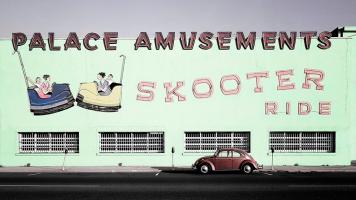
The practice of hand-coloring black-and-white photographs can be traced all the way back to the days of daguerreotypes, which predates Instagram creative filters by about 180-plus years. In a bid to add life to the putty-like tonality of many of the earliest print technologies, photographers would very carefully brush thin layers of color pigments mixed with gum arabic (or quicker-drying mixtures containing alcohol) onto the cheeks, hair, and outerwear of portrait sitters. With the advent of paper print processes and tintypes, the use of

Film is alive and well in 2020, with a handful of new releases for the traditional photographers out there. Ilford is continually expanding its analog catalog, most recently with the launch of Ortho Plus Black-and-White Film, in 35mm and 120 roll sizes. Traditionally a specialized film, this orthochromatic film—meaning it’s
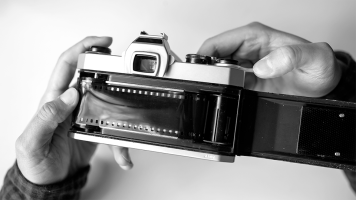
Despite film being “dead,” there’s still a surprising number of different and unique films to choose from in 2025, ranging from the classics from the major manufacturers to some more creative films from up and coming, smaller brands.
Here’s an overview of the current black and white films available right now.
Kodak
It’s hard not to start with mother Kodak in an article like this, with all of the history—the ups and downs—Kodak

Even though printing in the darkroom isn’t nearly as popular as it once was, the popularity of shooting film has been on the rise for the past few years. Rather than printing traditionally, many photographers are turning to scanning as an integral step in their film-based workflow, perhaps before making an inkjet print. This hybrid method is championed by many because it benefits from both schools of photography: you get the distinct filmic look from shooting real film, along with the experience of working with an older camera and lens, but
Some of the most cherished memories of my photographic education revolve around spending long hours in the darkroom, making prints into the wee hours of the night. While not as commonplace as it once was, if you’re fortunate enough to have a traditional black-and-white darkroom at your school, be sure to make use of it while you still can. Regardless of whether you’re taking an intro black-and-white class or an intensive printing class, one of the keys to becoming adept at black-and-white printing is, quite literally, to print! And print a lot

Like a painter mastering realism before advancing to abstraction, photographers benefit greatly from learning to shoot film before moving to digital.
Stark black-and-white images can swiftly and brutally reveal a weak composition. And shooting with film teaches photographers to be thoughtful about what subjects are worth one of their precious 36 frames. Beginning with black-and-white film helps creates a visually articulate and well-rounded shooter. Which is why many universities have stuck to the practice, despite our entrenchment in a