
“Compact and lightweight form factor” wasn’t always just a mirrorless camera marketing slogan. A century ago, it was the necessity that gave birth to the Leica camera, as inventor Oskar Barnack designed his prototype in part to accommodate a debilitating lung ailment. Released in 1925, the popularity of the Leica I camera, particularly among young photographers, helped drive the widespread adoption of the 35mm film format and the compact, lightweight setups it afforded.
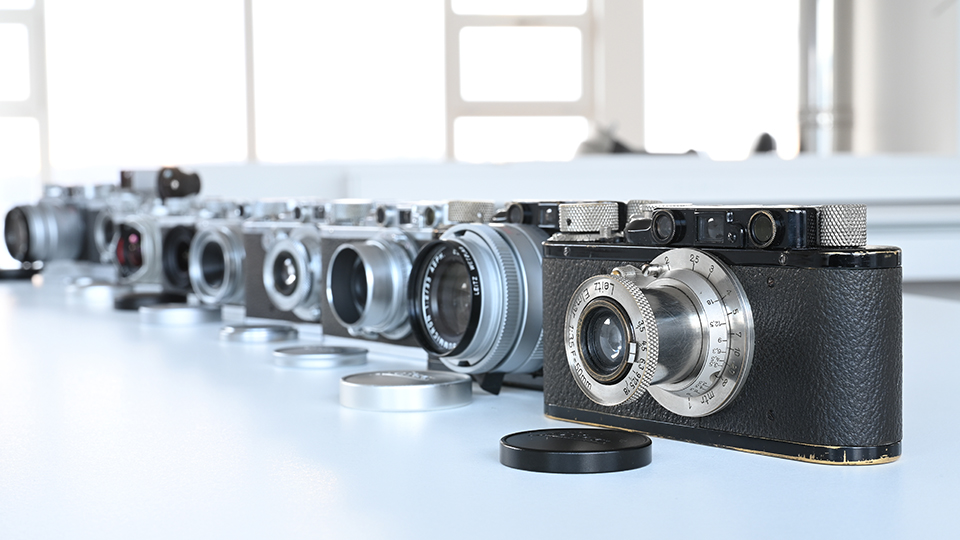
Available as an accessory to the Leica I was a slim, vertically oriented optical device: the Leitz FODIS rangefinder. Though it was released two years prior to the camera, it offered a convenient method to assess the distance to a subject, which was then used to focus the lens. While the camera did come with a viewfinder, it only a provided a field of view and didn’t see through the lens.
Rangefinders work by triangulating two lines of sight, one of which moves when a calibrated wheel is turned and merges the two images at the plane of focus. The first camera with a coupled (integrated) rangefinder was the Kodak No. 3A Autographic Special, marketed in 1916 as a folding pocket camera, but it was the combination in the 1930’s of the coupled rangefinder with the 35mm film format that solidified the rangefinder’s enduring design and ethos.
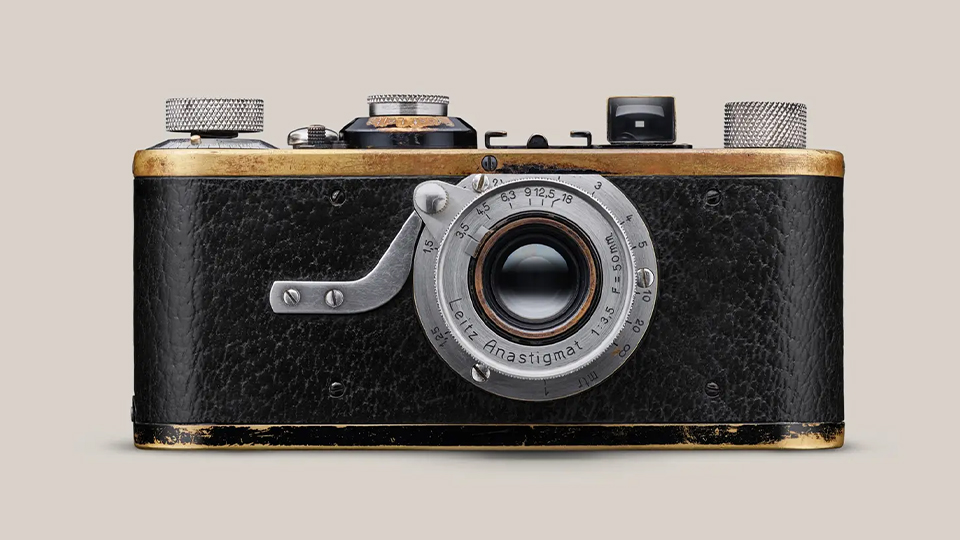
The form factor turned photographers into moment-hunters and made entire genres possible. Whereas earlier cameras were slow and cumbersome, the 35mm rangefinder camera was small, discreet, and fast. Photographers could bring their Leicas and Contaxes into the world, be it the streets or the front lines of war. Integrating the viewfinder and rangefinder created a field of view that went beyond the film frame, allowing for precision timing and composition. Leaf shutters dampened the sound of capture, adding stealth to the toolkit.
The development of the single-lens reflex system (SLR) added a mirror and prism to the camera, making it bigger and louder but also simplifying focus and broadening the number of available focal lengths. They quickly became the standard for professional work, and as photography transitioned from film to digital, the DSLR emerged as the flagship build. Digital point-and-shoot cameras had wide popularity, but small housings severely limited sensor size and image quality.
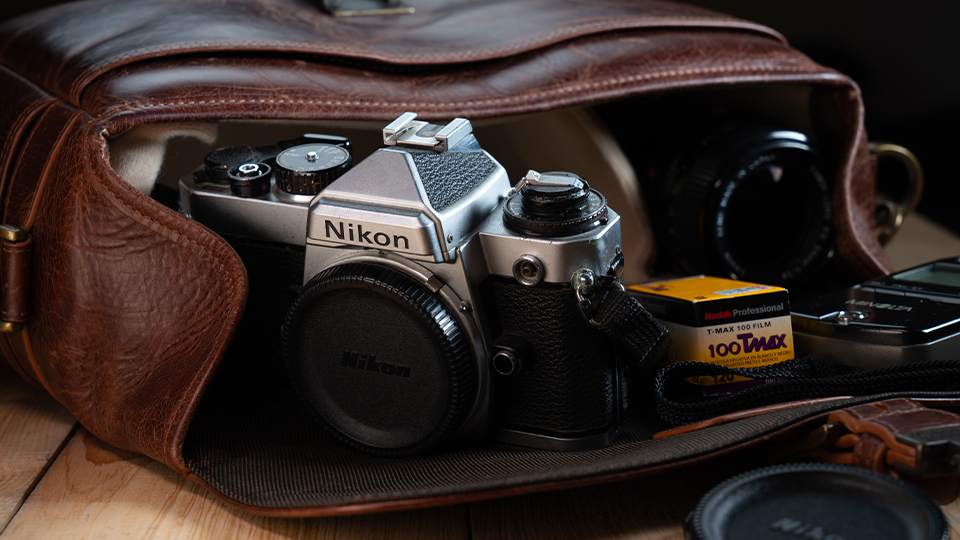
Fittingly, it was a rangefinder that was the mirrorless canary in the digital coal mine. Looking at 2004’s Epson R-D1, you can see many of the design features that distinguish some of today’s most popular cameras, including the shutter-cocking “film advance” lever and analog dials. Not only did Epson of all companies beat Leica to the punch, but their camera also took Leica M-mount lenses.
The Micro Four Thirds sensor arrived four years later, spearheaded by Olympus and Panasonic and announcing a new era of digital imaging where small could once again be beautiful. Leica debuted their full-frame digital rangefinder quickly thereafter, with the FUJIFILM X-Mount and the first X100 coming a year after that.
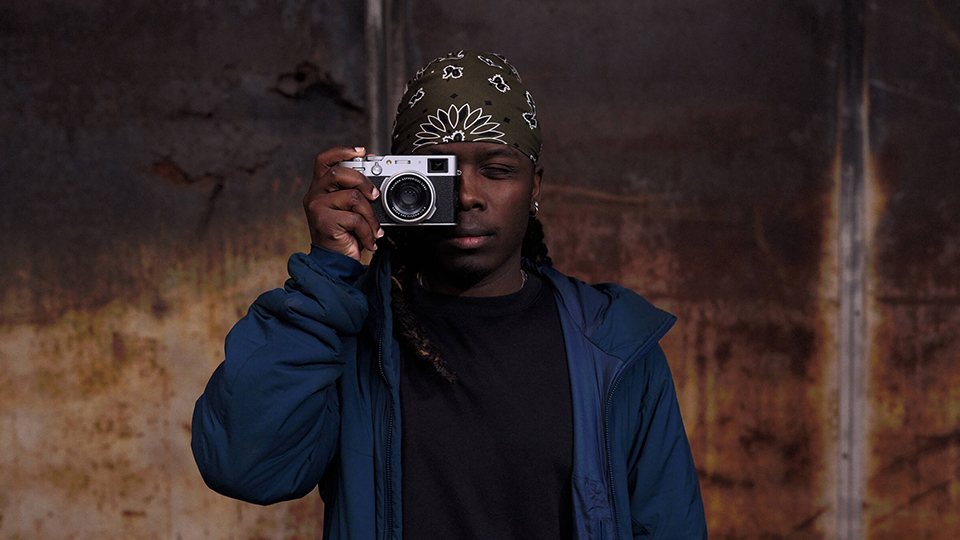
Removing the mirror wasn’t simply an optical sleight of hand. It also required more efficient sensor designs and improved processing power. The mirrorless design also allowed for new lens mounts, and these mounts unlocked new improvements in optical design, producing compact, lightweight lenses.
The optical sweet spot for traditional rangefinder lenses is between 28-50mm, with selection usually pivoting around the photographer’s preference and application. Coincidentally, the lenses for mirrorless cameras that afford the most rangefinder-like experience also tend to fall into this range. These compact, flatter-than-longer “pancake” lenses are almost always primes featuring maximum apertures between f/1.8 to f/2.8, with variance on either end. As mentioned earlier, several cameras feature a built-in, fixed lens like many traditional film and digital rangefinders.
None of this speaks to the nostalgia factor driving the design of many of 2025’s most popular cameras. Dials, knobs, levers, offset viewfinders, compact bodies, fixed lenses: the camera’s look and feel have as much allure as the images it produces. Calling the rangefinder “iconic” becomes more than a metaphor when it serves as the muse and model for the camera emoji. The rangefinder has come to symbolize photography itself as an authentic artistic pursuit and the translator of the ephemeral into the eternal.
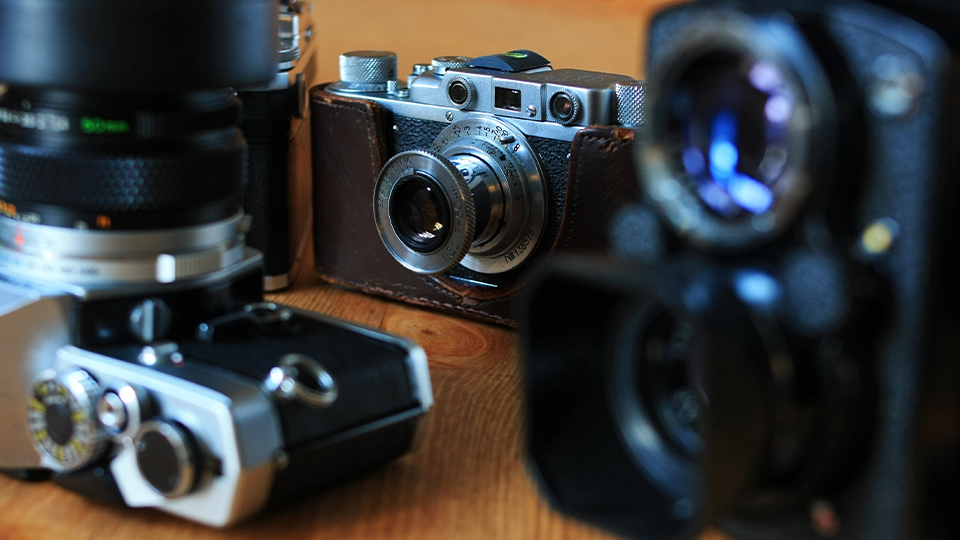
The “spirit of the rangefinder” isn’t about specs or even slinging a beautiful object across your shoulder. It’s about a small, quick, discreet tool that brings its wielder into the world on a hunt for shapes, hues, tones, faces, feelings, and moments. It’s the camera you use when you just had to be there.
A Few Recommendations
-
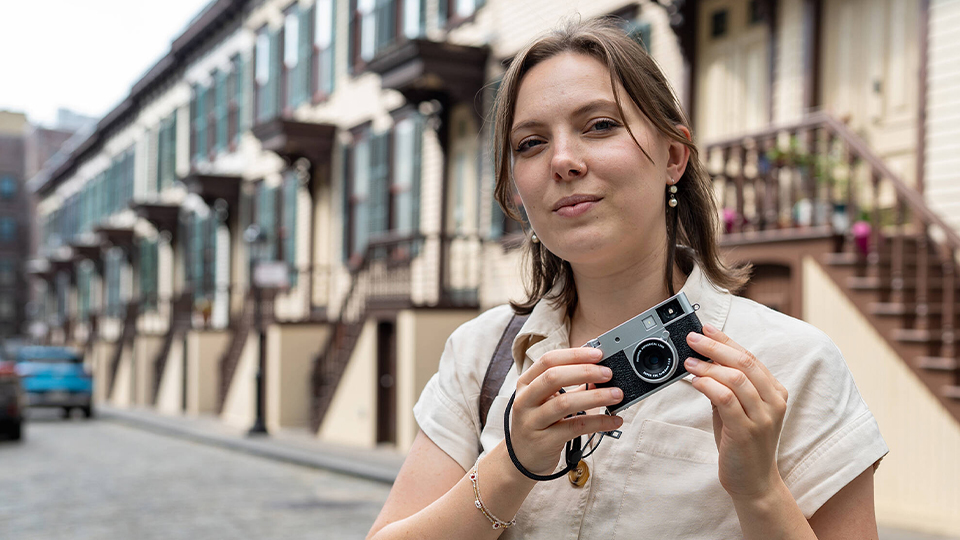
I’ve been talking around it, but the FUJIFILM X100VI is the obvious choice and reigning champ here, and with good reason. Its virtues in both design and functionality have been sung around the world and it shows in its perennial lack of availability. The company has spent most of the year permutating the X100 formula, with the fixed lens medium-format GFX100RF and 1” vertical sensor X Half, as well as the APS-C interchangeable lens X-E5 and X-M5 cameras, both of which pair well with the company’s new XF 23mm f/2.8 R WR lens.
-
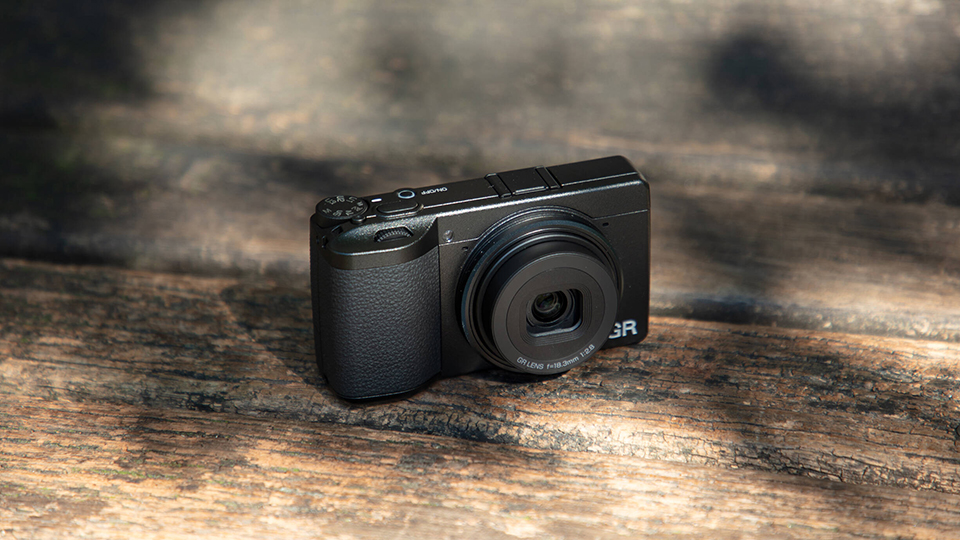
No line has so relentlessly catered to street shooters as Ricoh’s GR-series, which just announced its latest camera, the GR IV. It’s a premium camera that remains truly pocketable, and its matte black build is as low-profile as it is streamlined. Snap focus, a fixed 28mm full-frame equivalent lens, and improved low light performance all contribute to its pedigree as the ultimate snap shooter.
-
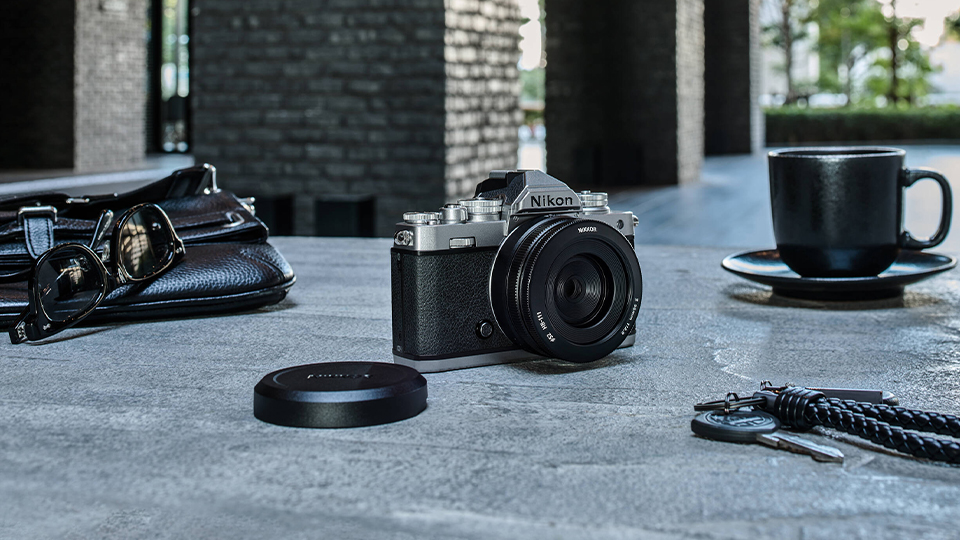
Nikon has embraced the nostalgia of its own history with the Zf and Zfc pair of cameras, in full-frame and APS-C formats respectively. While the cameras technically draw design inspiration from their film SLR cameras (specifically the FM2), they pack a lot of imaging power in small, stylish bodies. A NIKKOR Z 26mm f/2.8 lens will fit both cameras, having a 39mm full-frame equivalence on the Zfc, with other manual, third-party pancakes available as well.
-
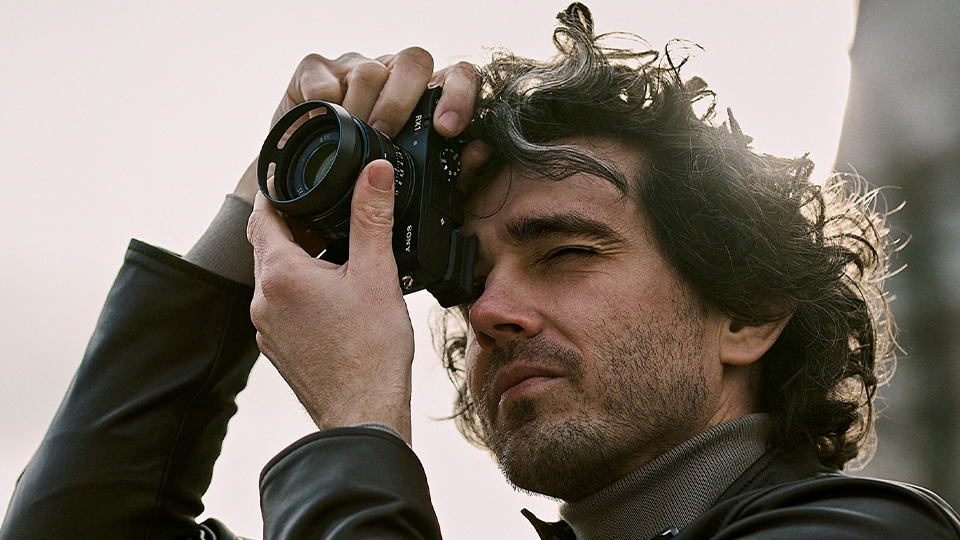
Sony’s contender here is the a6700, which many people say shares the same sensor as the Ricoh GR IV. The powerful and versatile APS-C camera nails the compact, lightweight form factor, and pairs well with the E 20mm f/2.8 lens for a minimal footprint and a 30mm full-frame field of view. And for the profligate and uncompromising compact full-frame shooters, Sony’s RX1R III puts a 61MP sensor with a 35mm f/2 lens into the smallest body on the market.
-
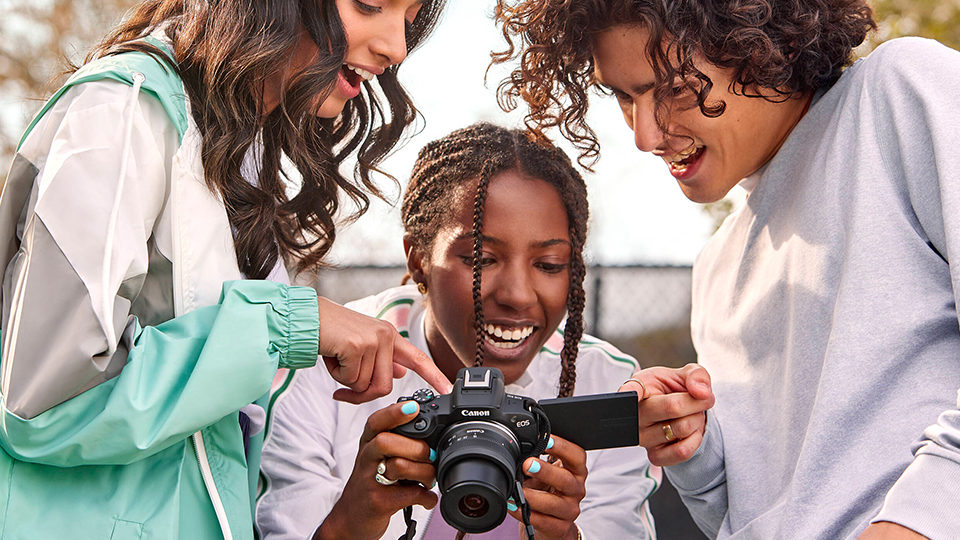
Canon shooters have the R8 on the full-frame end and the R50 for APS-C. The RF 28mm f/2.8 STM, a true pancake lens, has a 44mm field of view on the R50 and remains well within the rangefinder sweet spot on either camera. The lens will also work well with Canon’s advanced autofocus algorithms, benefitting split-second, decisive moment shooting.
-
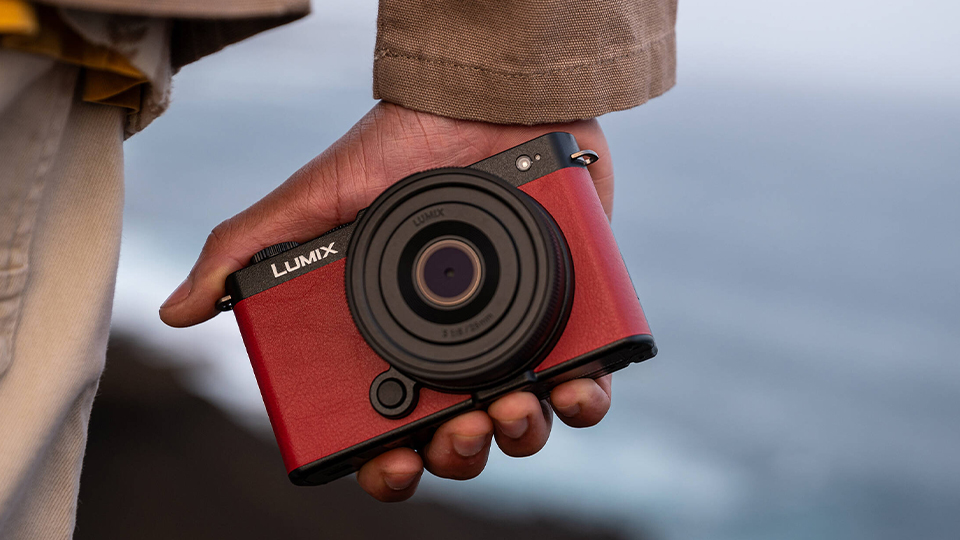
Panasonic has one of the smallest interchangeable lens full-frame cameras with the Lumix S9, which it offers paired with a 26mm f/8 fixed-aperture lens. This bundle wins best-in-show for “f/8 and be there” minimalism. Alternately, if you’re after a bona fide point-and-shoot, the ZS99 is another truly pocketable camera offering a massive 24-720mm equivalent focal length zoom and an 8MP, 30 fps burst mode.
-
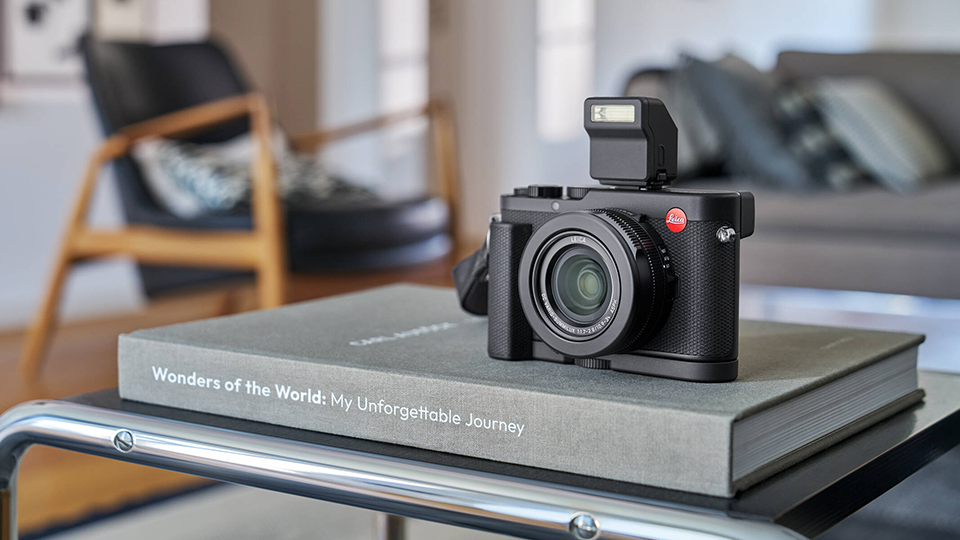
The first shall be last: beyond Leica’s M11 digital rangefinder cameras, there’s the Q3 full-frame camera with a built-in 28mm f/1.7 lens, the Q3 43 with a built-in 43mm f/2 lens, and the D-Lux 8 with a Four Thirds sensor and a built-in 10.9-34mm f/1.7-2.8 zoom lens. All of them possess Leica’s timeless design and superior imaging quality. If you’re after a more affordable and more authentic digital rangefinder experience, consider either the full-frame Pixii Max or the APS-C Pixii A2572+, both of which forgo a rear LCD screen, store images internally, and take Leica M-mount lenses.
There’s a whole world of used options out there too, and for the real purists, there’s always a good old-fashioned film rangefinder. I have one myself: the Olympus 35RC. It’s compact, lightweight, discreet, and a joy to shoot.
