After the smartphone revolution, it appeared that the days of the compact camera were done. How wrong we were. It’s true that a few years back, point-and-shoot options were few and far between. There were just a handful of options on the market, and some industry titans even left the market entirely. Despite the long-rumored demise of the compact camera, it seems that photo enthusiasts still desire a dedicated device without the distractions that come with a smartphone.

What is a compact or “point-and-shoot” camera? Just because a camera is “point and shoot” doesn’t necessarily mean it’s not comparable to a larger, interchangeable lens camera. The key features that make up a point-and-shoot are that the focus and exposure are entirely automatic. Simplicity is the key. After all, who doesn’t want a fun, simple camera to tote around day to day?
Whether you’re here to find a camera for yourself or looking for the perfect gift, we’re going to take a look at some of the most popular features folks are looking for and of course, the cameras that offer them. We’ll be starting with some of the most basic models, and working our way up to some of the most popular cameras available today.
Getting Started
As stated above, simplicity is key. Some of the basic features photo enthusiasts want from a point-and-shoot are ease of use and cosmetics. A small, pocketable size is often all you need. In fact, the quality of the image may be of no consequence. There’s a big push for older used cameras as that low-resolution, digital look can be a draw for many photographers.
Our first three camera on this list deliver the “digital” look but do so while offering significantly better image quality than the cameras of 20 years ago. This is thanks to improvements made to the imaging sensor, the heart of the camera. This is what records the image and will come up in this guide periodically, but to keep things simple remember this. The bigger the sensor, the better the quality, but only if you need it.

Under $200
To get started, we’re looking at the very affordable Kodak Pixpro FZ45. This camera is small, portable, takes two AA batteries, and comes in three colors including black, white, and red. Equipped with a small throw 4x optical zoom, the FZ45 is convenient and quite simple. It offers all the basics, from one-touch HD video to red-eye removal, making it the perfect starting point for any beginner, though some real budget cameras do exist for the fledgling photographers out there.

Another great option is the equally budget-friendly Kodak PIXPRO FX55. This pocketable camera features a slightly increased 5x optical zoom and a rechargeable lithium-ion battery, which delivers significantly better battery life and limits what you need to travel with.

Another name familiar to the photo enthusiasts out there is Minolta, and their offering of the MNB5Z Digital Camera has much to offer in this relatively inexpensive package including a touch screen and a surprisingly high-resolution sensor delivering detail pictures and 5K video recording. It even has a rear-facing selfie camera! Sporting a 5x optical zoom akin to the kodak models above with so many upgraded features, this is a great option for someone looking for a little more performance.

For a more retro design, look no further than the Minolta MND70. This stylish camera is available in three colors and carries many of the same features found in the previous model. High resolution photos, 5K video return, while the digital zoom gets an upgrade to 16x magnification. The touchscreen and front facing camera have been removed, but this compromise allows for even newer features, such as the aforementioned zoom, but most notably is the addition of Built-In Wi-Fi with app integration. Control your camera and send photos to your smart device using the iSmart DV2 app.

Smartphone connectivity: iSmart DV2 App
Under $400
First up in this category is the Yashica City 200. This is a simple digital camera made with the traveler in mind, offering the perfect mix of detail and zoom to capture a variety of images. Front and center is the powerful lens, delivering a 10x optical magnification up to a full-frame equivalent 338mm. With reach like this, the camera is capable of capturing distant subjects with ease while remaining sleek in appearance.

Canon’s PowerShot line of cameras starts with the ultra-slim ELPH 360HS. The 360 is the smallest compact camera in Canon’s arsenal today. It’s the perfect camera to slip into your purse, backpack, or pocket. It sports a higher resolution than the Kodak and offers a greater 12x optical zoom range. The ELPH 360 is the perfect compromise of size and image quality. It even offers smartphone connectivity via Canon’s Camera Connect App. This allows the user to easily transfer images right to their phone and share them to their hearts content.

Smartphone Connectivity: Canon Camera Connect App
Have you ever wanted to take your camera underwater? Perhaps you’re going snorkeling or just headed out on a rainy backpacking trip. Each camera on this list has its own strengths and weaknesses, from zoom range and sensor size to ergonomics and flash placement, but what none of the above offer is true waterproofing. Luckily, our next contender does just that.
For dedicated outdoor or worksite use, the Ricoh Pentax WG-90 is a great choice. Losing some of the zoom range and versatility of the prior two models, this camera opts to prioritize durability and resistance, designed to operate in the harshest conditions. The heavy-duty build of the WG-90 allows it to be used underwater at depths as low as 46’ for upwards of two hours. Additionally, the camera is shock proof against falls up to 5’ and freeze proof in temperatures as low as 14°F. That said, it’s no slouch when it comes to resolution, sporting a 16-megapixel sensor, which is more than enough for social media posts or the odd small print here and there.

Under $600
As we move on up the list, we start to add more advanced features such as larger imaging sensors, flip up or tilting rear LCD screens, longer zoom ranges, and the ability to take greater control over our image settings. Going forward, the cameras are going to get more powerful bit by bit. 4K video has become the standard for most cameras at this point, so you’ll see greater video features begin to trickle their way in as well. Another advantageous feature is smartphone connectivity like the kind found in the ELPH 360 HS above. This is common in most point-and-shoots going forward with the help of brand-specific apps.
First up we have an evolution of the previously mentioned WG-90, and it’s another Ricoh. Enter the Ricoh PENTAX WG-8. Sporting by far the greatest operating depth of any WG series camera so far, the WG-8 is submersible to depths of up to 65.6’ and is dust proof with an IPX6 rating. Internally, the WG-8 is no slouch. As users will likely be using a camera in this class out in the wilds, a built-in GPS and compass automatically records position and travel log data onto the images themselves.

Next up is the Canon SX740 HS. This camera has the very same sensor as the ELPH 360, but it’s physically larger and features a more comfortable, rubber grip. Alongside the physical changes, come several internal upgrades. First and foremost is the increased 40x zoom range—that’s a 24-960mm lens! The pop-up flash is also an advantageous inclusion, as the traditional built-in flash found on the front of many smaller point-and-shoots can easily be blocked by the user’s hand if not careful. Vloggers and selfie takers alike can rejoice at the addition of a tilting 3” rear LCD screen. What more could Canon possibly offer?

Smartphone Connectivity: Canon Camera Connect App
Under $800
Next up is the Panasonic LUMIX ZS99. Building on the reputation established by predecessors like the ZS70 and ZS80, the ZS-99 is a true jack of all trades. It features a high resolution 20.3-Megapixel sensor and a 30x zoom range of 24-720mm. A significant update is the addition of a tilting 3” touchscreen, which gives the user control over camera settings, image review, and menu navigation. 4K burst, which allows the user to capture 4K quality images at 30 frames per second!

Smartphone Connectivity: Panasonic Image App
Alternatively, we have yet another rugged, waterproof option in the OM System Tough TG-7 comes close with a maximum working depth of 50’ but pulls ahead with a longer zoom with an effective reach of 100mm. While much of the durability and internal specs are the same, the TG-7 offers those additional 3mm at the wide end of its focal length and a faster maximum aperture of f/2.0. Additionally, the TG-7 is compatible with 17 unique accessories that are separately available to further expand the camera’s capabilities from a fisheye adapter to flash extenders.
One factor that makes the TG-7 so popular are it’s specially designed accessories like the OM float-strap, which keeps the camera afloat god forbid you lose your grip. Alongside this handy strap are a series of lens and flash adapters, each optimized for select use cases.

Smartphone Connectivity: OM Image Share App
Under $1000
Remember way back when we asked what more Canon could offer? The next camera in Canon’s compact lineup is by far one of 2025’s most popular products. I am of course referring to the elusive G7X Mark III. This camera has been the leader of the pack, or “flagship”, in the PowerShot line for several years now, and it doesn’t take much to see why. The G7X trades the larger zooms found in its smaller siblings for a larger, faster imaging sensor and the best glass Canon has to offer in a camera of this size. The G7X features a 1” Stacked CMOS Sensor, meaning you get even better image quality and high-speed readouts resulting in cleaner panning shots. The lens has a 4.2x Optical zoom, but a maximum aperture of f/1.8-2.8. This allows a greater amount of light into the camera for improved low performance, meaning less grain in our images.

Smartphone Connectivity: Canon Camera Connect App
Panasonic reenters the picture with the Lumix ZS300, a simple, minimalistic pocket-sized camera that fits easily in a pocket or small bag. It too comes equipped with a larger 1” type 20-megapixel sensor, paired with a high-quality Leica DC Vario-Elmar 15x optical zoom lens, which captures distant subjects in crisp detail thanks to Leica’s exquisite performance. The larger sensor also delivers reliably clean still images no matter the lighting conditions. Additionally, the camera is capable of recording breathtaking 4K videos, as well as 4K photo mode where the perfect still can be pulled from fast-moving scenes.

Smartphone Connectivity: Panasonic Image App
Under $2000
Our next contender features the same 1” type sensor found in the G7X but pairs it with a longer zoom from renowned lens manufacturer Zeiss. We are of course talking about the Sony RX100 VII. This is the seventh iteration of the popular RX100 line and features a 20.1-Megapixel 1” sensor, however, the real prize in this camera is the lens. The RX100 VII is paired with optics from ZEISS, known for their exceptional image quality. The ZEISS Vario-Sonnar T* f/2.8-4.5 lens with a zoom range of 24-200 is a powerful image making tool. This great range gives the user incredible versatility in any situation. Not to mention this camera’s small footprint makes it one of the most portable in its class.

Smartphone Connectivity: Sony Creators' App
Another popular choice for still photographers is the robust Ricoh GR IV. This APS-C or “crop” sensor camera offers a larger imaging area than the cameras we’ve seen so far, and as a result, delivers even greater image quality. It’s also the first on our list to feature a fixed focal length or “prime” lens with an effective 28mm focal length and a maximum aperture of f/2.8. While it’s missing video-centric features like 4K recording and an articulated rear LCD, it makes up for this with image and build quality. It’s perfectly suited for street or travel photographers, and when you’re not using it, its size makes it a breeze to fit in your pocket with ease.

Smartphone Connectivity: GR WORLD App
Offering an advanced, yet versatile quality while maintaining a small, stylish form factor, the Panasonic Lumix L10 is a powerful compact camera equipped with the latest and greatest tech. At the center of this camera sit’s a 20.4-megapixel Multi-aspect sensor, which sits behind a Leica-designed 24-75mm full-frame equivalent lens. What sets this camera apart from its contemporaries is the inclusion of a free-angle touchscreen LCD, and bright OLED viewfinder. For the video shooters out there will benefit from 5.6K recording and slow motion 4K 120p recording as well.

Smartphone Connectivity: Panasonic Image App
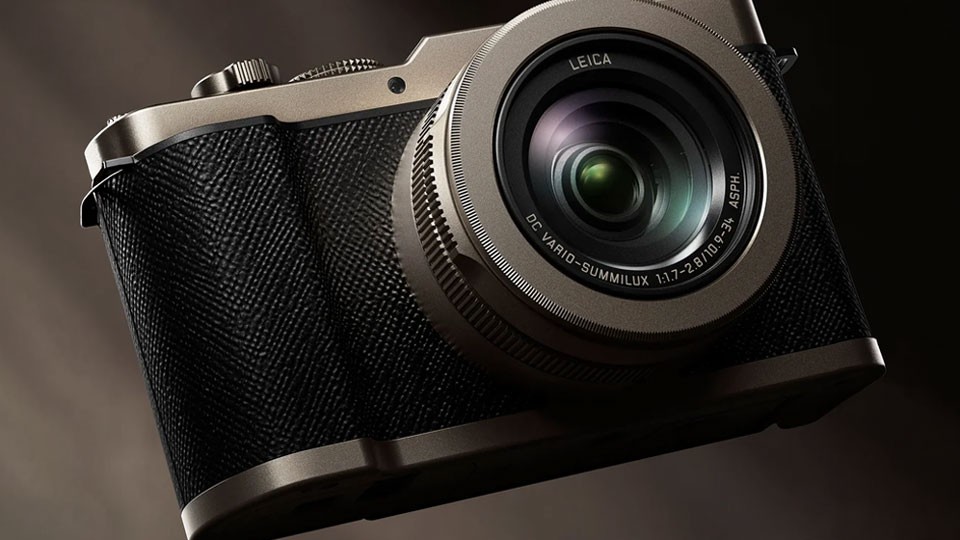
For an uncomplicated, yet superbly powerful option, look no further than the Leica D-Lux 8. Offering a minimalistic design and top-quality construction inspired by the Leica Q series, the D-Lux is perfect for those looking to keep things simple while capturing high-quality images. This camera is equipped with a 17-Megapixel Four Thirds CMOS Sensor, which is smaller than the GR IV’s crop sensor but larger than the 1” sensors found in other models so far. It also features a 24-75mm f/1.7-2.8 lens, which is bright enough for indoor and late-night outings. Again, this is more of a photo-focused option, and although it does feature 4K recording, it does not have the articulated screen vloggers have grown accustomed to.

Smartphone Connectivity: Leica FOTOS App
$2000 and Up
As mentioned at the beginning of this article, point-and-shoots, by definition, are compact cameras in which the focus and exposure are entirely automatic. By that definition, any camera with an auto mode could technically be a point-and-shoot, though consensus usually ties in built-in lenses and simple overall operation. Many of the cameras above offer manual controls or even RAW file shooting, so these next two cameras are by no means a stretch to add to this list.
What they do uniquely offer is a large full-frame sensor. Full frame gets its name from the sensor being similar in size to a traditional 35mm film format. Larger sensors deliver overall greater image quality and allow the photographer to crop their image later with less of an impact on that quality.
Our first full-frame camera is the long-awaited Sony RX1R III. This is the third iteration of a line of cameras dating back to 2012 with the second generation launching in 2015. Now you get an idea as to why we used the phrase “long awaited”. The RX1 R features a super high resolution 61-Megapixel full frame sensor and the latest intelligent auto focus tracking found in Sony’s Alpha series cameras. This gives the camera an edge as it’s AF system can identify and track human and animal eyes, vehicles, and more. The larger imaging sensor, fast autofocus, and fast lens combine to create images with excellent detail and stunningly blurry backgrounds when used for portraits.

Smartphone Connectivity: Imaging Edge Mobile App
For full frame shooters, there’s no camera like the Leica Q3. The same minimalist design qualities we gushed about on the D-Lux are on full display here with one of the brand’s most iconic camera lines. The standard version comes with a fixed 28mm lens, which has been paired with the Q system since day one. This is ideal for street photography or more scenic images. For those who favor a slightly tighter field of view, whether that be for portraits or more-focused images, the Q3 43 replaces the 28mm lens with a 43mm lens. The benefits being of course a longer focal length, but also a shallower depth of field. This translates to even smoother backgrounds for portraits!

Smartphone Connectivity: Leica FOTOS App
Vlogging Much?
After a few still-photo-centric cameras, we’re shifting to some models that put their focus on the video. Fully articulated or “flip out” screens are among the most sought-after features among vloggers, but we can’t forget about improved audio. But wait, just because these are “video” centric, doesn’t mean they can’t produce fantastic images—in fact you’ll find them quite capable in that regard too. Both models are around $1000, but with the features they offer, it’s well worth the investment.

Canon added a point-and-shoot styled vlogging-friendly model to their PowerShot line-up in 2025 with the PowerShot V1. This is the first PowerShot camera to spot a newly designed 22.3-Megapixel 1.4” sensor, which is larger than the one found in the G7X Mark III. The 16-50mm effective zoom range, while optimized for vlogging, serves as an excellent travel and portrait range camera, and the larger grip makes this an ideal option for those with larger hands.

Smartphone Connectivity: Canon Camera Connect App
The Sony ZV-1 II Digital Camera has some years on the Canon, though much of what it has to offer is still valid today. First and foremost it sports a similar sensor to cameras like the G7X and RX100, making it quite capable of capturing sharp, detailed images. Like the V1, it features improved in-camera audio and a flip-out touchscreen rear LCD for video. The 18-50mm lens, while not as wide as the Canon, sports an additional stop of light at the wide end.

Smartphone Connectivity: Imaging Edge Mobile App
Building Bridges
Bridge cameras earned their name from bridging the gap between traditional point-and-shoot cameras and their larger, interchangeable-lens cousins. These are perfect for shooters looking for extra reach, whether it be for wildlife or sports. They pack super-telephoto focal lengths into relatively small packages and often provide more control options thanks to their physical similarities to larger cameras. We’ve done a deep dive on this specific subcategory of point and shoot cameras in our overview of the Best Bridge Cameras of the Year, but we had to mention some of our favorites here.
First up is the Panasonic Lumix FZ80D under $600. This camera is popular among bird watchers as its 18.1-Megapixel 1/2.3” sensor and an effective zoom range of 20-1200mm delivers the detail and reach required to identify birds at a distance. The camera is equipped with optical image stabilization, which keeps the lens steady for both still and video users. What’s more significant is that it can do all of this without the need to lug around a heavy, expensive telephoto lens.

A bonus contender in the bridge camera category is the $1200 monstrous Nikon Coolpix P1100. This behemoth of a camera packs a staggering 24-3000mm lens. For the record, that’s a 125x zoom! For bird watchers looking to capture ID shots of distant subjects, there’s no better camera. Just don’t leave the tripod at home, as the longer our lens, the greater we magnify any shaking. Luckily, the camera features optical vibration reduction to keep things sharp and steady, but 3000mm is a lot to handle. Plus, the camera is larger and heavier than the other two bridge cameras above.

Smartphone Connectivity: SnapBridge App
Just for Fun
What’s technically a point and shoot camera, but also something entirely different and super fun to use? If you guessed the Fujifilm INSTAX Mini EVO Hybrid Instant Camera, you’d be correct. I know, I know, but hear me out. This IS a digital camera. It features internal storage as well as a micro SD card for added image storage, though the main highlight of this camera is its instant-printing capabilities. With Fujifilm’s Mini film size, you can print images right away as well from your phone via the Instax EVO app. This just might be one of the most fun cameras to use on this list for that fact alone.

Smartphone Connectivity: Instax Mini Evo App
Leica threw their hat in the ring with the SOFORT 2 Instant camera. When it comes to specs, there’s not much of a difference between the Instax and this model, but that’s to be expected with an instant camera. Resolution and the like take a backseat to fun and creativity here. Speaking of fun, the SOFORT is available in black, white, red and a few special edition colors like the Burton Edition "Jake Blue".

Smartphone Connectivity: Leica FOTOS App
Who could expect a keychain to also be a camera? Next we have the Kodak Charmera, a true point and shoot in the classic sense that you really can’t do much with it, and that’s the point. This blind box camera combines the excitement of collecting various designs with a fun, nostalgic feel harkening back to the classic look of the Kodak Fling from 1987. The charmera isn’t winning any resolution awards with its small 1.6-megapixel sensor, but it sure is fun to use. It’s so fun that we even took one to Alaska!

Last but certainly not least is a new take on an old concept. The Fujifilm X half is a half-frame digital camera that brings all the features people love about the Fujifilm system to a tiny, social-media-focused format. What is half frame? In the film days, half-frame cameras exposed half of a normal 35mm negative, doubling the number of images you could capture on a single roll of film.
The X half, while not a film camera, features an 18-Megapixel Vertical sensor, recreating the same shape as a traditional half-frame camera. Smaller sensors make for smaller cameras, and the half-frame format just so happens to line up with the typical social media post format. We also can’t forget the 13 film simulation modes which emulate classic Fujifilm film stocks, a feature that has earned Fujifilm a dedicated fan base.

Smartphone Connectivity: X Half App
Wrapping Up
Still with us? Thanks! We hope you enjoyed this breakdown of point and shoot cameras. If there’s a camera that you’re curious about that didn’t make the list, check out the detailed product pages on our web store here. While we couldn’t fit every point and shoot on this list, we hope this guide aids you in your search for the right compact camera. For more tips and guides, check out the B&H Explora page!
