Search results for: photography buying guide how to choose a lens filter
About 22 filtered results
by Mathew Malwitz · Posted
It is probably safe to say that many of us photographers have, either with our cameras or smartphones, tried to capture a close-up image of an insect, flower, toy, or other object. We have an idea of what we want this photograph to look like as we prepare to capture the image. We've seen and admired beautiful close-up images before but, when we nose the camera lens up to the object, we see nothing but a blur—the lens can't focus close enough to

by Mathew Malwitz · Posted
Wedding and portrait photographers looking for a lightweight, compact system with exceptional performance need look no further than the FUJIFILM X cameras and lenses. While the size and weight advantage of mirrorless cameras spans from Micro Four Thirds to full frame, the APS-C sensors in the FUJIFILM X system allow the cameras and lenses to be relatively small and light. Full-frame mirrorless is attractive to many, but the portability advantage of APS-C sized lenses is not to be understated.
For those looking to one-up the full-frame shooters

by Christopher Witt · Posted
Humans’ fascination with the stars is as old as our ability to think and ask questions. For millennia we, as a species, were limited to observing the heavens with just our eyes. Of course, back then we were able to see more because light pollution didn’t exist, but making detailed observations was impossible. The invention of the microscope led to the development of the telescope, which allowed people to finally start exploring the larger universe. As technological advances were made and telescopes got bigger and better, their reach and the

by Todd Vorenkamp · Posted
Leave it to the world of photography to confuse size and speed. In lens-speak, the term “fast glass” refers to lenses with large apertures. In this article we take a look at the lenses with the largest-opening apertures. The aperture is the opening of a lens. The aperture’s size is expressed as a number that shows the ratio of the opening to the lens’s focal length. This number is referred to as an f/number, f/stop, focal

by Rebecca Melville · Posted
If you ask most consumer-camera owners why they keep a filter on their lens, a majority will most likely reply, “For protection.” While filters do protect the surface of your lens against dust, moisture, and the occasional thumb print, the primary function of lens filters is really to improve the image quality of the pictures you take. There are many kinds of filters with obvious and lesser-known benefits, so if you’re looking for a lens

by Rebecca Melville · Posted
2023 has been another banner year for vloggers. Not only did we see new releases from familiar faces like GoPro and Sony, but big-name camera brands like Canon and FUJIFILM wheeled out their own vlog-specific and vlog-friendly cameras, making content creation more accessible than ever. With vlogging on the rise and showing no signs of stopping, you might be interested in getting a vlogging camera for yourself.
The vari-angle rear LCD touchscreen is a must-have for most content creation and vlogging. Vari-angle touchscreens can twist and

by M. Brett Smith · Posted
While cameras and lenses create the base of any photographic kit, there are a few photo accessories available without which many photographers say they cannot live. The term “photographic accessories” covers a wide swath of what you’ll find at the B&H SuperStore and online, but it includes tripods, camera bags and cases, memory cards, batteries, filters, flashes, and more. In the world of digital photography, the computer and its accessories are

by Todd Vorenkamp · Posted
Photographers and photo enthusiasts are some of the best people to shop for. Do you know why? Because there are a ton of things your shutterbug needs and wants to augment their pursuit of the ultimate photograph. And luckily, there are completely useful and thoughtful photography-related gifts available for any budget.
Let’s dive in.
1. Multitool
Eventually, everyone finds themselves in the field battling against a loose tripod, desperately using a penny or dime to tighten a screw (and potentially stripping both in the process). This is

by Bjorn Petersen · Posted
While film photography tends to take a back seat to digital photography nowadays, many photography programs still teach film photography to help you gain a better understanding of how the basic photographic process works. Without computers and an LCD screen to fall back on, shooting with film helps to reinforce technique and make you learn, understand, and trust yourself while shooting.
Film
The most obvious thing someone needs to begin his or her education in film photography is

by John Harris · Posted
When you think of photography accessories, of what do you think? Cameras? Of course, they’re not. Lenses? No, too integral. Tripods? I feel they are their own item, not an accessory. Flashes? I say yes, because what good is a flash without a camera, but Nikon lists flashes as their own category, not an accessory. Can we all just agree that straps and caps are accessories and if not, how do you define an accessory?
Speedlights
For the sake of this article, let’s start with flashes, a.k.a. speedlights. The top of the line from Nikon is the
by Shawn C. Steiner · Posted
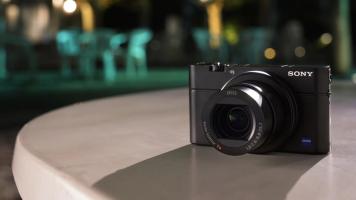
Believe it or not, Sony now has manufactured seven different versions of the RX100, and all but one are still available for purchase. After six years of development, we decided to take a close look at the differences and changes introduced in each generation, both to illustrate the evolution of Sony’s perfect pocket camera and to help you figure out which is the best choice for your bag.
Series Overview
When Sony launched the first RX100, in 2012, it changed things. With a “large” 1"-type sensor, the pocketable camera could deliver higher

by Cory Rice · Posted
You've been studying star charts for weeks. You’ve read “Tips for Buying a Telescope,” picked out, and purchased your first telescope. You can hardly contain your enthusiasm while setting up your new scope. Finally, the moment arrives—you take your first magnified look at the night sky, prepared to be blown out of this world. It is a beautiful sight. Yet after the initial awe wears off, you can’t help feeling a

by Steven Gladstone · Posted
Cinematography, videography, photography: ultimately, it is about showing something in a way that hasn’t been seen before. How you achieve this is a combination of framing, exposure, and post effects. It is the Digital Age—you can create just about any effect you want if you have the time, tools, talent, and software, of course. You can also hire someone to pull it off for you. While either of those options are valid, as you probably know, there is more than one way to skin a cat, so the focus of this article will be practical lens

by Christopher Witt · Posted
A great deal of mystery and misconception surround the topic of observing the sun and solar eclipses, and while you should absolutely not look directly at the sun without proper protection, we here at B&H have got you covered on how to enjoy viewing the sun and, later this year, the solar eclipse. Read on to see what’s available for you, if you’re interested in investing in a dedicated solar telescope.
White Light or Narrow Band?
Right out of the gate, you need to decide: White light or Narrow-band (Targeted) viewing? For specifics about

by Bjorn Petersen · Posted
In today’s fast-paced, constantly evolving world, it's tough to keep up with the latest photographic trends and gear options available. Many find it too overwhelming to do so and, instead, simply choose to relax in the comforts of tested, proven designs for photographic equipment. While they are not the latest and greatest by any means, here are ten tools or processes that hardly require any introduction due to their reputations as classics, or by how they defy consistently transforming technology.
Wista 810DX Cherry Wood Field Camera