Search results for: photography buying guide lighting modifiers softboxes umbrellas more
About 13 filtered results
by Luke Rollins · Posted
Subject and style may vary, but consistency is a quality shared by all successful photo studios. When working indoors, that begins with lighting. Strobes remain the bread and butter of many still photography studios. Unlike natural light, which can be finicky and unpredictable; on-camera flashes, which are not typically designed for studio use; or continuous lights, which can become costly as output increases; strobes are built to withstand the rigors of studio life while providing flexible and powerful light. But with so many options on the

by Shawn C. Steiner · Posted
After you pick up your first speedlight, strobe, or LED panel, the best investment you can make is in some modifiers. These are tools that shape and alter the intensity of our light source. Modifiers come in all shapes and sizes based on the type of light you plan to use them on, which can make it difficult to pick one out if you are new to photography. Since each modifier comes with its own distinct look and ideal use, here is a

by Mathew Malwitz · Posted
One of the most effective ways to improve your portraiture is by controlling the light, and one of the most effective ways to control your light is to move it. Seems like a simple enough concept, but it can be daunting at first, especially if you're using a speedlight or an on-camera flash. Despite its misleading name, an on-camera flash can, very easily, be used off the camera. The "on-camera" part simply refers to its form factor

by Mathew Malwitz · Posted
Finding the right lighting solution on a budget can be overwhelming, even for the most seasoned shooters. To make things a little easier, we’ve put together a list of some our favorite lights and lighting accessories for under $100.
Speedlights
The Godox TT350 Flash is a small TTL speedlight available for most major brands. TTL stands for “through-the-lens” metering, which is as close to auto as flash photography can

by Rebecca Melville · Posted
Shopping for lighting solutions can be overwhelming, even if you are a professional photographer with decades of experience. Sometimes it’s easier to cut right to the chase with a kit that has everything you need―whether that’s multiple fixtures, bundled accessories, or even just a good carrying case. We have compiled our top flash and continuous lighting kits you should consider for your own creative workflow.
Flash Lighting
Flash lighting,

by Cory Rice · Posted
The equipment used by fashion photographers varies considerably, depending on what is being photographed and who is behind the camera. In general, the kit requirements for documenting a fashion show are more standardized than those for creating editorials. There are successful fashion photographers who can fit all of their gear in a single bag—and others who require an entire equipment truck. This article is aimed at photographers getting started with fashion productions. Photographers interested in capturing runway should read Theanos Nikitas

by Rebecca Melville · Posted
Finding appropriate gifts for portrait photographers can be tricky, so if you’re looking for some inspiration, you’ve come to the right place. We have some neat gift suggestions that are sure to please any portraitist, from beginner to pro.
Profoto A2
While most portrait photographers already have their tried-and-true studio configuration, that doesn’t mean you can’t gift them with a nice strobe. We recommend Profoto’s A2,

by Cory Rice · Posted
Subject and style may vary, but consistency is a quality shared by all successful photo studios. When working indoors, that begins with lighting. Strobes remain the bread and butter of many still photography studios. Unlike natural light, which can be finicky and unpredictable; on-camera flashes, which are not typically designed for studio use; or continuous lights, which can become costly as output increases; strobes are

by Bjorn Petersen · Posted
When working with flash lighting, it is rarely the case that bare-bulb flash is the ideal choice for lighting subjects, especially when those subjects are wedding participants and your objective is to create inviting, flattering light. Flash can be modified in several ways, which all effectively diffuse and redirect the initial light source into a broader, more aesthetically pleasing source that is ideally suited for creating interesting and controllable illumination.
Softboxes and umbrellas are two of the most frequently used light modifiers,

by tom kirkman · Posted
A softbox is an enclosure designed to fit around an artificial light source, such as a flash tube or halogen lamp. Its reflective interior intensifies the light output and projects it through its only means of escape—the front diffusion screen. This creates a quality of light long appreciated by photographers and videographers, which resembles the softer light one might find streaming through a window. It also creates square or rectangular highlights in the reflective surfaces of your subjects. The "soft" name stuck because of the quality of

by tom kirkman · Posted
The cameras in phones keep getting better and better, while the image quality in reduced-format cameras has shown superior quality in natural light. And they all have flashes, right? Then one day it hits you—usually after buying a DSLR and a flash—“I want more light,” and “I want it when I need it, not just on nice days, but maybe in the dark and rain.” Basically, you want to create light to more accurately express your perception of the subject or for cataloging or ecommerce, for example. Of the five kits below, four of them can be used by

by Jill Waterman · Posted
As they say, a company is only as great as the people within it. The product experts at B&H exemplify this adage daily, in the personal attention they offer every customer interaction, as well as their depth of knowledge and passion for practical solutions.
“Many people don’t realize, it’s not just knowing the tech that’s important; the sales reps behind the counter get customer feedback about the items that serve people best,” explains B&H Sony Specialist Yisroel Ybgi. “So, their recommendations are not only based on what it says in a
by Daniel Wagner_1 · Posted
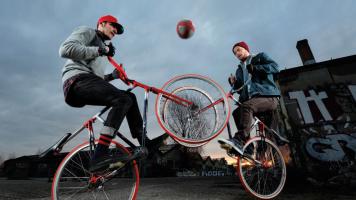
Always shooting with an on-camera flash is like always shooting with the sun behind your back. While this is a good way to illuminate a subject and capture an image, it may not be the best way to capture your imagination creatively. Positioning your flash off-camera, using an on-camera flash for fill with a second flash, or shooting with three or more Speedlites at the same time, is a great way to add a new level of expression and control to your photography. And, thanks to the integration of radio transmission on Canon’s latest Speedlites,