Search results for: photography composition negative space
About 23 filtered results
Posted
Now that you understand your camera from Part 1, the next step is understanding what makes a good photograph. Derek goes over some of the core elements of photo theory, composition, perfective, and storytelling.
0:00 - Intro
5:05 - Review of what makes an effective photograph
5:47 - Composition
12:54 - Rule of thirds
18:37 - Golden/Fibonacci spiral
23:47 - Leading lines
32:59 - Negative space
38:29 - Asymmetry
41:52 - Frame within a frame
43:10 - Patterns/Repetition
44:34 - Perspective
55:01 - Storytelling - Photo breakdown
1:15:29 - Photo

by Mathew Malwitz · Posted
These days, everyone has a camera right in their pocket. Smartphones have long been the go-to camera for quick photos of our friends, family, pets, and of course, ourselves. With features like portrait mode, users can simulate blurry backgrounds and isolate their subject for more eye-catching images. What else could you ever need? What if I told you that with the

by Mathew Malwitz · Posted
Typically confined to the northernmost latitudes of our planet, the northern lights—or "aurora borealis"—are a natural spectacle many dream of seeing. Recently, it may seem like auroras are occurring more often and are visibly farther south than ever before. Maybe you've already seen one or even photographed one with your phone.
While rare, exceptionally powerful auroras have been seen with the naked eye as far south as Alabama. These are uncommon, but in mid-latitude states, visible auroras are a bit more frequent. Last summer, I found myself

Posted
Back in late 2022, Ricoh Imaging/Pentax had announced that it was working on a “new project involving the research and development of new Pentax-brand film camera products.” Today, we finally get to see the fruits of that labor: the Pentax 17. This is a brand-new 35mm half-frame film camera built using a wealth of inspiration from Pentax’s rich history of film camera development. It’s perfectly simple, elegant, and functional, just as a film camera

by Rebecca Melville · Posted
Over the weekend I channeled my inner influencer to practice vlogging with the Nikon Z30 Mirrorless Camera. As the lightest and least costly camera of the Nikon Z-series, the Z30 is a great introduction to Nikon’s fleet if you are a vlogger looking to up your game. Weighing a comfy 350 grams, the Z30’s uniquely light body still feels sturdy and capable of withstanding rugged use. With an ergonomic

by M. Brett Smith · Posted
LeAnne Shor is a celebrated food photographer, writer, and content creator. She is also the creator of the Lion’s Bread food blog, where she shares tons of great content, including mouthwatering recipes and photos. We asked Shor for some advice on how to shoot food, and she gave us these five great tips.
Lighting Is Everything
Without good light, it doesn’t matter how you style your food; the subject won’t look appealing or appetizing. So, what is good light? This is somewhat subjective, but generally,

by Todd Vorenkamp · Posted
Like the world’s tidal waters, photographic creativity ebbs and flows for many of us. Sometimes creativity can use a jump-start, an artificial method to get the photographer to start looking at the world in a new way in order to facilitate, restart, refine, or improve your photography.
There are many ideas on how to get yourself to push through an artistic block or inspire you to further expand your boundaries. Not all of them involve the camera. Several websites and books publish a mix of assignments or exercises for the intrepid photographer

by Todd Vorenkamp · Posted
Welcome to the world of photography beyond what you can do with your smartphone! With an interchangeable-lens digital camera (DSLR or mirrorless) you can do so much more than when you’re using the camera in your phone. Even though it can be intimidating at first, there are some fun photographic challenges that even beginning photographers will enjoy. Not only are they relatively easy, these photo assignments will build photographic fundamentals for all your

by Allan Weitz · Posted
A friend of mine once described his favorite wide-angle lens as his “gateway to landscape photography,” and that’s a pretty good metaphor for wide-angle lenses if I ever heard one. Wide-angle lenses and ultra-wide-angle lenses naturally lend themselves to capturing landscapes with a sense of depth. They also tend to capture a sense of drama that you seldom get when photographing landscapes with longer focal length lenses.
Photographs © Allan Weitz 2021
Wide-angle lenses feature angles of view (AoVs) ranging from about 63° to about 74°, which

by Todd Vorenkamp · Posted
There are seven basic elements of photographic art: line, shape, form, texture, color, size, and depth. As a photographic artist, your knowledge and awareness of these different elements can be vital to the success of your composition and help convey the meaning of your photograph.
When a line, or more than one line, closes or connects, a shape is formed. This is the topic of this next part of our Elements of a Photograph series.
Photographs © Todd Vorenkamp

by Todd Vorenkamp · Posted
There are seven basic elements of photographic art: line, shape, form, texture, color, size, and depth. As a photographic artist, your knowledge and awareness of these different elements can be vital to the success of your composition and help convey the meaning of your photograph.
What separates form from shape? Form takes shape from the two-dimensional and brings it into the three-dimensional. And, speaking of form, it is the next part of our Elements of a Photograph series.
Photographs © Todd Vorenkamp

by Bjorn Petersen · Posted
There is no doubt that digital photography is here to stay, and film has certainly seen better days, in terms of availability and affordability. However, what if you’re a digital photographer who simply wants to shoot a roll of film every once in a while, for fun? Film photography has a distinct look that, even with the latest and greatest 50MP cameras, cannot be duplicated by digital imaging. It’s subjective to say whether one look is better or worse, but there is no denying that there is a unique quality to film. Back in the halcyon days of
Posted
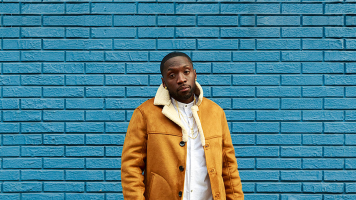
Portrait photographer Shotti shares his techniques for utilizing negative space in your portraiture, from photo composition to visual storytelling.
Join in the conversation—share your own tips on incorporating negative space in your portraits in the Comments, below.

by Allan Weitz · Posted
For many people, the word “landscape” typically conjures up images of snow-capped mountains, mighty rivers, and flower-covered meadows awash in the light of golden sunsets. But what if these photo utopias are beyond the bounds of a reasonable driving distance? What if your choices of places to photograph is limited to your immediate neighborhood or town? Are you skunked when it comes to landscape photography? The answer is, “No, not at all.”
Photographs © Allan Weitz 2021
Let’s start by defining our goal. A random Google check for a definition

by Jill Waterman · Posted
Calling up the hashtag #macro on Instagram currently reveals more than 18 million posts, with #macrophotography coming in a close second at more than 10 million. Numbers like that make finding individual feeds that stand out from the pack somewhat akin to searching for a needle in a haystack. There is certainly no shortage of talent, but more often than not, individual feeds include a smattering of macro views, along with the rest of the kitchen sink.
To assemble this current selection, we sought out consistency of subject matter that included