Search results for: photography features mood exposure
About 18 filtered results
by Luke Rollins · Posted
FUJIFILM's beloved instant photography format instax recently surpassed 100 million cameras and printers sold, all while eyeing its 30th anniversary. In spite of brand recognition that still lags behind Polaroid, instax has both the people's vote and the lion's share of sales, expanding that popularity into a full-on ecosystem of films and formats, analog and hybrid cameras, smartphone printers and digital capture devices, and, coming soon, commercial photobooths and other event-oriented products.
by Luke Rollins · Posted
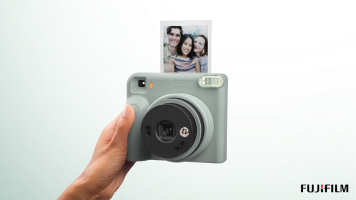
FUJIFILM is announcing their first instax SQUARE camera in three years: the new instax SQUARE 2 Instant Film Camera, the follow-up to 2020’s SQ1. Serving the well-loved but oft-neglected 2.4 x 2.4” format, the SQUARE 2 returns FUJIFILM to the 1:1 fray with new imaging options and new colorways.

by Luke Rollins · Posted
By now, the film resurgence has eclipsed its charming underdog status to become a full-blown front in what has become an all-out, open revolt against the smartphone and its visual aesthetics. What distinguishes the “film look” from the digital—texture, material imperfections, color magic, and the analog halo of yesteryear—comes at a price tag as resurgent as the medium itself.
Despite the contradiction (or perhaps because of it), the pursuit of the film look in a digital format has become something of a cottage industry, with manufacturers,

by Luke Rollins · Posted
Achieving a standard of production value is an essential component of establishing a brand and growing a following. For part-time, burgeoning, and mid-level creators, it can feel like bridging that gap is less a matter of learned skill and more about the equipment you can afford.
In most cases, the problem isn’t budget at all. Acquiring the specific know-how can give your content professional sheen with little to no financial outlay.
Lighting design is arguably the most immediately visible production component—and the one most capable of

by Jill Waterman · Posted
There is perhaps no truer sign of summer than Independence Day in the United States. The Fourth of July is when the summer season kicks into full gear, with barbeques, pool parties, family gatherings, and road trips galore—not to mention the fireworks!
One lead-up to this holiday that I will never forget found me hurtling down the New Jersey Turnpike at sunset in a Greyhound bus. As the twilight deepened, bright bursts of fireworks began shooting up past the tree line, close by and at a distance, reflecting in the darkened glass of the

by Luke Rollins · Posted

by Zack Young · Posted
Any photographer worth their salt should be familiar with portrait photography, but they’re likely less familiar with high-volume photography, an offshoot of traditional portraiture that focuses on providing large quantities of professional-level headshots. The most common clients for this type of work include schools, sports teams, large corporations, government-run entities, and basically any other organization that needs a sizeable amount of quality headshots in a short amount of time. Because of the economies of scale, high-volume

by Steven Gladstone · Posted
Let’s face it: Shooting film and video isn’t just a job for most of us, it is something we love. Everything that we do contributes to creativity of the images that we make. But the toll the day-in and day-out work can take on our creativity can be devastating. Sometimes you just need a break, something to reinvigorate you, like a fun, non-professional optic. Sometimes you need a different challenge, working with a different set of limitations; experiment, explore, create without having to worry about others judging or the consequences of

by Marjorie Perlas · Posted
It might be easier just to stick with natural lighting for portraiture, but there are times when a portrait needs more mood than the standard light or on-camera flash can provide. The on-camera flash is a great and portable way to brighten up a scene, whether it’s in the studio or on location. Combining it with a wireless flash trigger opens up many doors for creativity and allows a photographer more control over the results.
Syncing
Wireless flash triggers are usually configured in two parts: a transmitter, which is mounted on the

by Marjorie Perlas · Posted
There’s a reason that softboxes are a preferred lighting modifier in the world of fashion photography and portraiture. With an effect that mimics daylight, the softbox offers a more flattering light source for models and a more diverse set of lighting options for photographers. It’s a versatile staple that should be in every portrait photography lighting kit.
A Dynamic Light Source
The softbox’s

by Todd Vorenkamp · Posted
If you are selling a used car online, one great way to make your car stand out from the rest and attract more attention is to up your photo game. You don’t need to be a professional photographer to capture compelling images of the car or truck you are ready to sell—a few simple tips can help your photos grab the attention of possible buyers.
Photographs © Todd Vorenkamp
You’ve seen the standard used-car photo—the boring shot taken outside a dealership, in a driveway or crowded parking lot, midday, from standing eye level, of a sterile-looking

by M. Brett Smith · Posted
LeAnne Shor is a celebrated food photographer, writer, and content creator. She is also the creator of the Lion’s Bread food blog, where she shares tons of great content, including mouthwatering recipes and photos. We asked Shor for some advice on how to shoot food, and she gave us these five great tips.
Lighting Is Everything
Without good light, it doesn’t matter how you style your food; the subject won’t look appealing or appetizing. So, what is good light? This is somewhat subjective, but generally,

by Boyd Hagen · Posted
If you wanted to be considered a professional photographer in 1979, the year the Olympus XA was released, your choice of cameras was limited. For some in the upper reaches of the profession, Leica was still the only option. For the rest of us, there were large, solid machines like the Nikon F2 and the Hasselblad 500C/M.
But I also wanted something smaller and easier to use when I didn’t have a paying client to impress.
Above photograph: Luxor, Egypt 1982 The Olympus XA is a low-profile camera that doesn’t call attention to itself. Ektachrome

by Jill Waterman · Posted
Katrin Eismann’s fascination with the visual world started early. “When I was very young, my parents had a faceted crystal stopper on a bottle of cognac, and I would run around the house looking through it, taking pictures … in my mind,” she recalls.
She got her first real camera at 12, a little Instamatic that she earned from collecting the S&H Green Stamps her mother gave her from food shopping. “It was called a Lady Carefree Camera, and it had a lace cover and little flash cubes, she says. “But my father photographed with a Rolleiflex,

by Jill Waterman · Posted
Numerically speaking, the New England road map is as straightforward as it gets, which makes it a great starting point for a travel excursion. Highway numbers are ordered from East to West, so the lowest numbers—such as historic Route 1—are located farthest east. North/South highways tend to have odd number designations, such as the heavily traveled I-95, whereas East/West routes are assigned even numbers. East/West roads also tend to be numbered from north to south, with the lowest numbers located further north—such as secluded Route 2 from