
Let's face it: throwing a heavy camera over your shoulder can seem like a hassle, especially if photography isn't the main purpose of your trip. Those big mirrorless and DSLR cameras might stun with their incredible clarity, but not every outing calls for a "serious" camera. Still, there's a desire to capture fun photos, either for your own enjoyment, or to share with friends and family when you return.
Enter the bridge camera. Bridge cameras are an excellent, all-in-one solution for wildlife enthusiasts looking to capture images of their finds. Known best for their extreme zoom ranges and compact builds, these cameras are perfect for travel or when you just want to keep your kit lightweight while enjoying the natural world around you. How do they stack up against their interchangeable lens cousins, and just how good are they at capturing wildlife? Let's find out.
What Is a Bridge Camera?
A bridge camera is a mid-priced, user-friendly compact camera that quite literally bridges the gap between the traditional point and shoot and the more advanced mirrorless/DSLR camera. They feature the simple controls of their point and shoot cousins, with a fixed lens and overall user-friendly form. What sets them apart is their powerful zoom range, often even greater than those found in interchangeable lens setups.

For all the reasons mentioned above, these are the go-to cameras for birders and wildlife enthusiasts alike. While they won't deliver the same punch and detail as a professional camera, a bridge camera allows you to capture decent quality photos of distant subjects in a small, lightweight package, making them one of the best imaging tools for birds and wildlife.
What Makes Bridge Cameras Good for Wildlife?
Zoom
Bridge cameras provide an unrivaled zoom range, even when compared to most interchangeable lens format cameras. Sure, you could put a long lens and an extender on a mirrorless camera, but you would need to spend thousands to get the same focal length. With the extenders needed to achieve this feat, the resulting image quality may only be marginally better than what a camera like the Panasonic LUMIX FZ80 can provide.

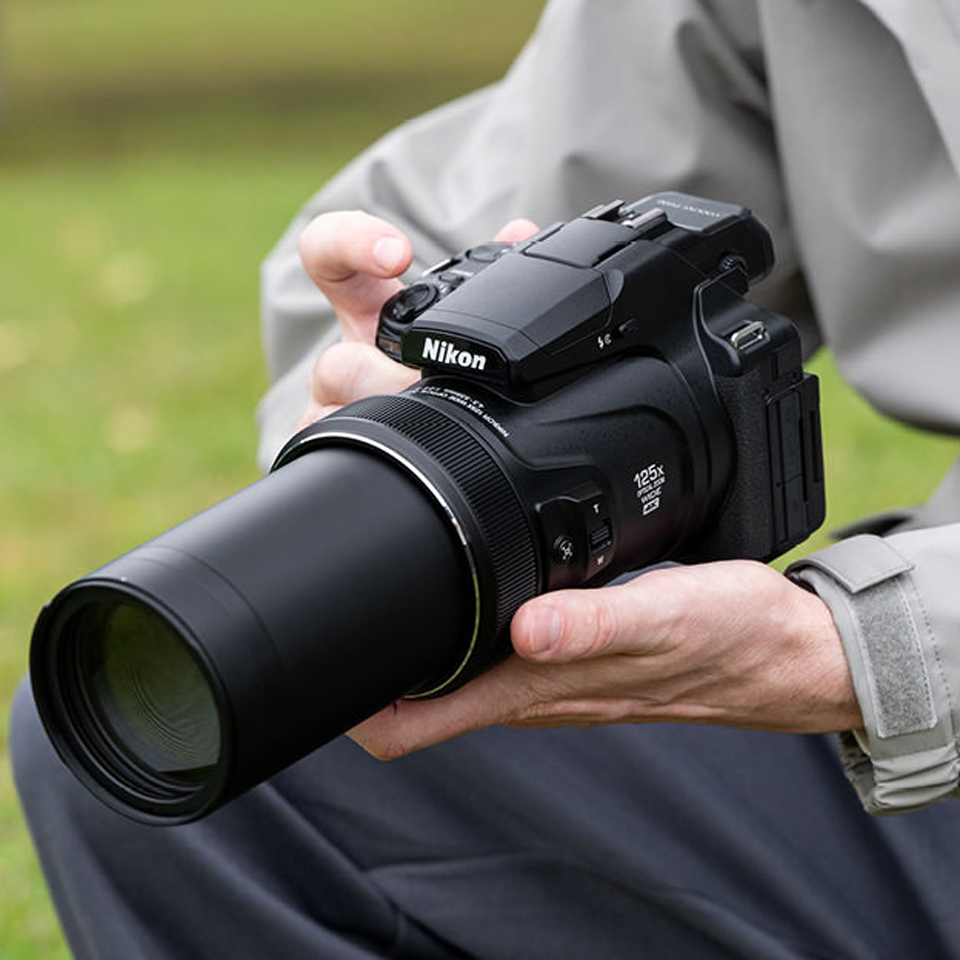
1200mm should be more than enough for the average birding hotspot or safari, but then again these are wild animals. There will probably be a time when a little more zoom can go a long way. After all, there's a saying among wildlife photographers: no matter how much reach you have, it'll never be enough. The aforementioned LUMIX FZ80 is tiny compared to cameras like the Nikon P1100, but that extra bulk is a sacrifice some may be willing to make for 3000mm of reach.

You heard that right: the P1100 comes equipped with a staggering 24-3000mm optical zoom range and an additional 250x dynamic digital zoom, which gives you an equivalent to 6000mm of reach. This comes in a package that weighs around 3.1 lb versus the FZ80's 1.4 lb. That may sound like a negligible amount of weight, but 1.5 lbs. may be critical to hitting your limit on a safari plane. Just for fun, let's see what 600mm, 1200mm, 2000mm, and 3000mm look like.
Portability
One of the main reasons you may opt for a bridge camera over Another benefit of the bridge camera is its unrivaled size and portability, but not every model is as compact as the next. We mentioned the relatively monstrous Nikon P1100, but even this is compact when compared to a lightweight mirrorless camera and lens combo.
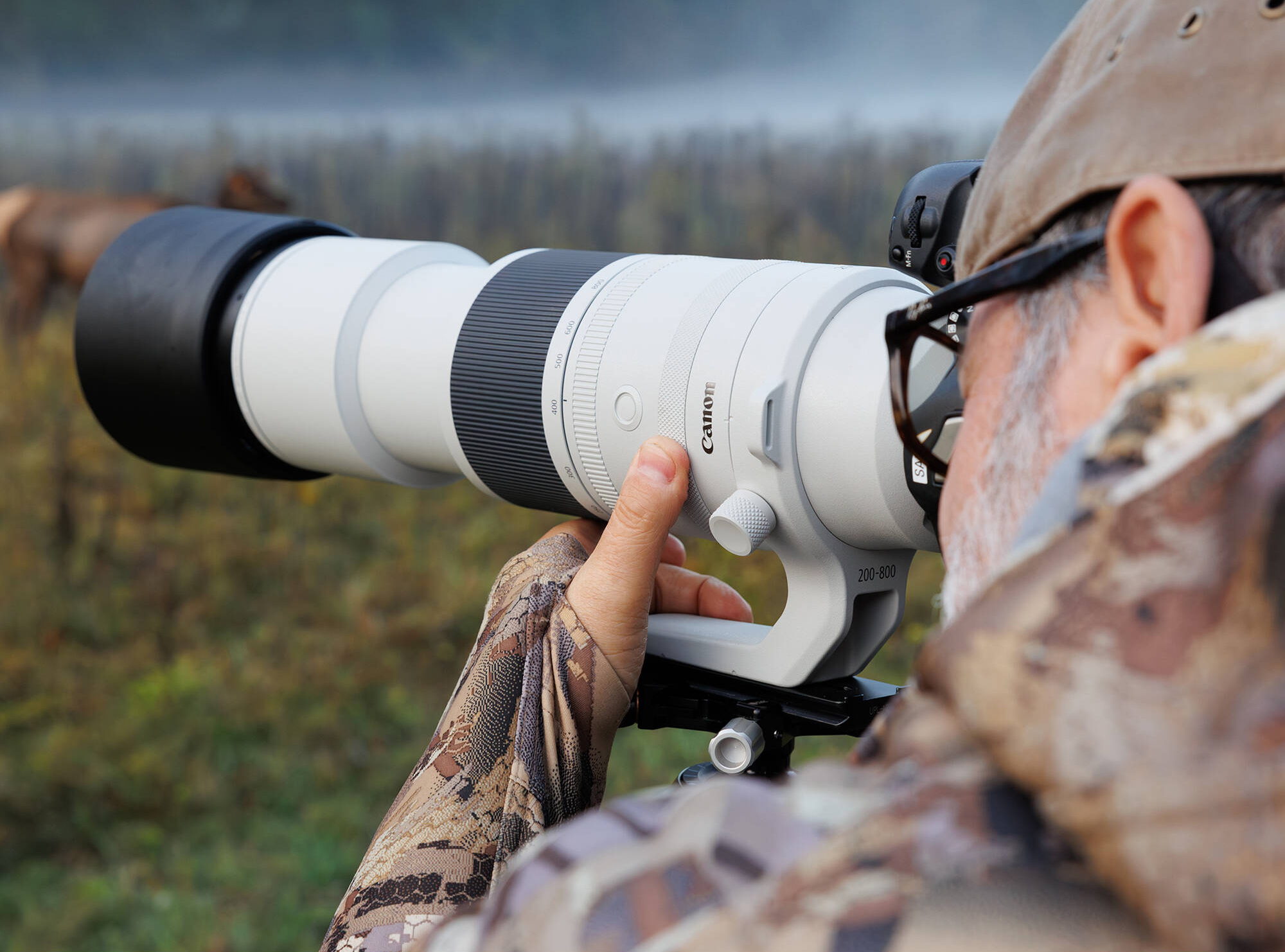
For instance, a relatively compact setup like the Canon EOS R50 and the RF 200-800mm f/6.3-9 IS USM lens can deliver an effective focal length of 1280mm when you consider that the camera sports a crop sensor. This rivals the FZ80 in reach, and does so with better image quality, faster focusing speeds, and better low light performance. However, it weighs over three times as much as the FZ80 and, with the 200-800mms hood attached, three times longer.
Ease of Use
Another area where the bridge camera excels is in ease of use. A mirrorless or DSLR camera comes with some inherent assumptions. Instead of zooming via the flip of a switch, we need to manually rotate the lens barrel. This may sound simple enough, but in the field, that ease of use can make or break the shot for those not familiar or comfortable with the larger option.

One of the biggest contenders to the traditional compact camera is the cell phone. Smartphones have become the de facto "point-and-shoot" camera, replacing those fun little colorful cameras so many of us are scouring online marketplaces for. Their ease of use is unmatched, with our devices going as far as to make alterations to our photos before we even take them.
The challenge of smartphones is how they go about zooming in. Watch any advertisement between the big two phone manufacturers, and you'll see the zoom as point of contention, with one or the other claiming their zoom capabilities are better. Put any smartphone against a bridge camera using its optical zoom range, and the winner will be clear.


The bridge camera, once again, bridges the gap between oversimplification of our phones, and the complicated nature of the interchangeable lens camera. Most bridge cameras do allow you to dial in select settings such as manually adjusting your exposure settings if you choose to do so. But they can also be as simple as you'd like, functioning much like their point and shoot relatives.

Good Practices
We have the tools; now, how do we use them to create stunning images? Just because we're using a compact camera doesn't mean we can't implement the creative skills used by pros around the world. After all, the key to getting good wildlife photos doesn't come from the gear we use, it comes from understanding the foundations of photography. The two most essential concepts are light and composition.
What is good light for wildlife photography? Typically, it's soft, and free of harsh or distracting shadows. The first and last hours of the day provide a soft, warm glow, earning it the nickname golden hour. Many photographers refuse to shoot at any other time as this is considered the best light to shoot in, but we can't all be so lucky. Overcast days provide a soft, diffused light throughout the day, meaning we can shoot all day long without worry. That said, if we find ourselves out under the midday sun, look for shade.

Once we're out in the best lighting conditions, how do we situate everything in our picture? This practice is known as composition. Composition for wildlife photography is quite simple, as there's no one way to do it across images. Instead, there's a set of rules to consider when taking a picture, from perspective to the rule of thirds, and even head angle. Practice good composition and your images will stun.

The Best Camera for Wildlife?
So, when all is said and done, are bridge cameras truly the best cameras for birds and wildlife? It's impossible to say, as choosing any camera is a highly personal venture. If above all else you want the best possible image quality for printing or just because you want to zoom in and see eyelashes, choose a mirrorless or DSLR camera setup). The Canon combo we mentioned earlier is an incredible combination, just be ready to carry that sizeable lens around on your adventures.

That said, if weight and size are a serious consideration, and your priority is more so capturing memories and sharing them with friends or family, the choice becomes much simpler. A bridge camera is an excellent, travel friendly option that we cannot recommend enough. Whether it be the powerful Nikon P1100, or a more compact option, these cameras can deliver close-up views of distant subject matter with ease.
Depending on your needs, a bridge camera can very likely be the best wildlife camera for your needs. With the powerful zoom ranges needed to capture up close looks of animals, and the ability to better control our settings, these are truly a great companion for anyone interested in birds and wildlife.

Final Thoughts
While the variety of bridge cameras may not be what it once was, what remains has been refined to suit the needs of those looking for that extra punch. Bridge cameras are one of the best tools you can add to your bag for any wildlife viewing. For specific model recommendations, check out our guide to the best bridge cameras on the market.
We hope you've enjoyed learning about one of the most travel friendly wildlife cameras available. To learn more about bridge cameras, and to branch out into the world of wildlife and bird photography, check out our other guides and articles on the B&H Explora page!
