Search results for: photography tips solutions 10 tips for better macro photography
About 22 filtered results
by Mathew Malwitz · Posted
We’ve all tried to photograph something up close. This small-scale world fascinates us all, whether it be a stunning flower or a bumble bee crawling about, but our cameras can’t seem to focus as close as we want. So, what is a struggling photographer to do?
There are several ways to do close-up, or "macro" photography, but the

by Mathew Malwitz · Posted
Are you interested in the wide and wonderful world of photography? Well, you’ve certainly come to the right place! Check out this short checklist of a dozen items, designed to get you started in digital or film photography and headed in the right direction.
1. Inspiration
The first thing you need is a bit of inspiration. This may seem obvious, and odds are, if you’re reading this, you’ve already checked that box. Consider what exactly you’re interested in photographing, as this will help you make more informed decisions when purchasing gear

by Todd Vorenkamp · Posted
The sun. Always on. Always overhead (of some part of the planet). Always free. Always a consideration for every photograph taken outside of a windowless studio or closet. The sun is nature’s free light source for photography and video. Regardless of whether you are making a landscape image, architectural photograph, portrait, macro shot, street photo, etc., sunlight, or the absence of sunlight, is a critical ingredient in the image.
Photographs © Todd Vorenkamp

by Todd Vorenkamp · Posted
If someone were to ask me what is the fastest, easiest, and most effective way of instantly improving their photography, my answer would be: a tripod. In the quest to make better photographs, we often dream of owning the latest camera body or the most expensive lenses. For many of us, these remain out of reach and impractical. A quality tripod, however, can be had for less than the price of a New York City dinner for two (with drinks) and, because of that, I

by Todd Vorenkamp · Posted
Macro and close-up photographers often employ the technique of “focus stacking” to increase the depth of field in their images. While this is often done in a controlled studio environment with a sturdy tripod or support and sometimes the benefit of macro focusing rails, it is possible to use this technique out in the field armed only with a minimal amount of gear. Handheld focus stacking is challenging, fun, and can produce some great results.

by Allan Weitz · Posted
Going eye-to-eye with a praying mantis can be a trip and a half, but understandably, not everybody shares my enthusiasm for creepy crawlies. This doesn't mean you cannot enjoy the visual treats afforded by peering at everyday objects at life-size or greater magnifications. To illustrate my point, I pulled a half dozen spice jars out of my cupboard along with a few herbs from our spring garden and photographed them with full confidence that none of them would bite or sting me.
Photographs © Allan Weitz 2021

by Allan Weitz · Posted
The term “macro photography” is most often defined as close-up photographs taken with macro lenses, but isn’t always the case. True, macro lenses are designed to deliver life-size photographs of small objects with sharp edge-to-edge detail, but macro lenses are not the only tools of the trade when it comes to going face-to-face with bumblebees.
If macro photography is something you’d like to delve into without first having to invest in a macro lens, you have several

by Todd Vorenkamp · Posted
Congratulations on getting a new camera, and welcome to the world of photography! You are going to love it. Before you go out shooting, take a look at these 10 things you should do first with your brand-new camera.
1. Charge the Battery
Being fresh out of the box, your camera’s battery is unlikely to be fully charged. Plus, manufacturers usually recommend a full charge cycle before you go out shooting for the first time. So, throw it on the charger and fill 'er up!
Also, we highly recommend having a

by Allan Weitz · Posted
I went out for a walk with my camera one recent morning. It was bright and sunny—a perfect day for taking pictures. The camera ISO was set at 400, the aperture on my 105mm lens was three-and-a-half stops down from maximum aperture (the “sweet spot”), and my shutter speed was set to 1/500-second. According to the rules—never handhold a camera at a shutter speed slower than the numeric value of the lens in millimeters you are using—there was no reason I should have expected anything other than sharp pictures. Imagine my surprise when I opened

by Allan Weitz · Posted
Am I the only one who thinks it’s funny that when a new smartphone debuts, the only thing people ask about is the camera? Is it a decent phone? Nobody cares. Does the caller sound like they’re calling from Mars? If they do it’s not the phone—contact your carrier. The only things people seem to care about are how many megapixels and how many lenses it has.
Unlike earlier-generation smartphones, which typically had a single semi-wide-angle camera lens with some form of digital zoom, today’s smartphones offer multiple lens options that enable you
by Allan Weitz · Posted
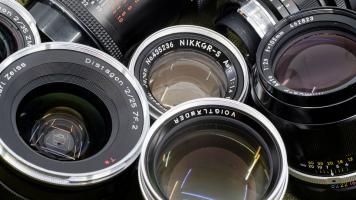
How “good” are vintage lenses when used on modern digital cameras? In a word, vintage lenses are “fine,” though I would have to immediately follow that statement by adding, “It depends,” because there are always exceptions to the rules, though even in these cases, the lens in question often works fine albeit with a technical or optical shortcoming of sorts.
Original photographs © Allan Weitz 2020
When adapting older-generation film camera lenses to DSLRs and mirrorless cameras, most perform well in terms of sharpness, color fidelity, color

by Jill Waterman · Posted
Each autumn, as the days get shorter and the weather cools, chlorophyll production slows in hardwood trees and bushes, causing leaves to lose the vibrant green of summer. As these conditions overtake the map, nature puts on a brilliant show of color in many parts of the United States. The changing of the leaves follows a rough pathway from north to south, starting in early September and often lasting into November in southern locales.
Above photograph: Colorado Gold, Maroon Bells Scenic Area © Bryan Carnathan
Fall foliage season is a big draw

by Allan Weitz · Posted
Over time I’ve been fortunate to have been able to shoot with almost every type of film and digital camera imaginable. The funny thing is, out of all of them, the camera that to this day amazes me the most is a pinhole camera I made out of a shoe box. Best part? I used it to photograph a magazine story and (thank goodness) the editors loved the results.
All Photographs © Allan Weitz 2020
Pinhole cameras are as basic as it gets. A darkened box with a pinhole on one side and a piece of photosensitive paper or film on the opposite side of the

by Allan Weitz · Posted
Image sharpness is an important part of the equation when purchasing a new lens. Who among us has purchased a lens without first inquiring about, among other things, how sharp the lens is? Anybody?
Don't get me wrong. Lens sharpness is an important piece of criteria when it comes to purchasing a new lens and that's because, just like you, I only want sharp lenses regardless of whether the lens is a pricier OEM lens or a lower-priced, third-party lens. If the lens isn't sharp, "Feh—I don't want it."
Photographs ã Allan Weitz 2020

by Bjorn Petersen · Posted
Despite much of the photography world being on pause right now, it’s also as good a time as ever to be honing your craft. Much in the same way an athlete trains for their particular discipline, photographers need to train, too, but likely not by lifting weights and working out. Think of it as mental strength training, or simply just practicing, acquiring inspiration, learning techniques, and spending more time with your work. Here are some tips on sparking some new creative impulses or ideas for improving your photography practice.
Find