Search results for: photography tips solutions architectural photography
About 21 filtered results
by Mathew Malwitz · Posted
At one point or another, you’re bound to hear someone say that you need to shoot in a RAW file format. There are advantages to this decision, from additional detail to better control over the look of our final image. But what exactly is a RAW file and what does it do for our photographs? In this guide, we aim to give you a better understanding of the RAW file and how to use it to our advantage.
What Is a RAW File?
RAW files, sometimes referred to as digital negatives, are the raw data recorded by your camera’s imaging sensor. This data is

by Todd Vorenkamp · Posted
Do you want to preserve the memory of that awesome neighborhood fireworks show? Let's discuss the best ways to try to make a memorable photograph commemorating the event.
Before we get started, let me say that there are many ways to accomplish fireworks photography and no technique is usually worse or better than others. The only thing that really matters as you head home after the show is:
You enjoyed the photographic process.
You are left with a photograph or photographs that you personally enjoy.
You enjoyed the fireworks show!

by Allan Weitz · Posted
Though there aren’t any hard rules on the subject—and all rules are made to be broken—wide-angle and ultra-wide-angle lenses are often considered to be the go-to lenses for landscape photography. It’s not like you can’t capture wonderful landscapes with normal or telephoto lenses (you absolutely can), but due to their broad capture angles, wide- and ultra-wide-angle lenses usually win out over the alternative choices. For those who wish to go wider than ultra-wide, you have to turn to fisheye lenses.
Photographs © Allan Weitz 2020
What Is a

Posted
Natalie Amrossi, aka Misshattan, shares five tips for capturing cityscapes, such as how to plan your shot, perspectives to consider, and other elements that make up this type of photograph.
0:00 - Introduction
0:18 - Tip 1
0:54 - Tip 2
2:00 - Tip 3
2:47 - Tip 4
3:36 - Tip 5
4:32 - Final Thoughts

Posted
Street photographer Hugh Brownstone shares his tips for shooting black-and-white photos with your digital camera. Whether you're making portraits, cityscapes, or architectural photos, these techniques will help you get started!
0:00 - Introduction
0:18 - Use Technology
0:44 - How to Expose
1:28 - Capture in Color
1:48 - Think of the Edit
2:14 - Where to Be
Did you find these tips helpful? Let us know in the Comments section, below.

by Todd Vorenkamp · Posted
Welcome to Part 2 of our deep dive into the world of Intentional Camera Movement (ICM) photography. In this second part of the three-part series of articles, we look at the kinds of gear that ICM artists recommend, as well as the technical side of the art including camera settings and techniques.
Above image © Ceri Herd
Camera
Gear is not a limiting factor in exploring ICM photography—you can even use a smartphone, provided you have a way of controlling the shutter speed. For repeatable, deliberate results, you will want to have a camera that

by Todd Vorenkamp · Posted
The sun. Always on. Always overhead (of some part of the planet). Always free. Always a consideration for every photograph taken outside of a windowless studio or closet. The sun is nature’s free light source for photography and video. Regardless of whether you are making a landscape image, architectural photograph, portrait, macro shot, street photo, etc., sunlight, or the absence of sunlight, is a critical ingredient in the image.
Photographs © Todd Vorenkamp

by Todd Vorenkamp · Posted
Like the world’s tidal waters, photographic creativity ebbs and flows for many of us. Sometimes creativity can use a jump-start, an artificial method to get the photographer to start looking at the world in a new way in order to facilitate, restart, refine, or improve your photography.
There are many ideas on how to get yourself to push through an artistic block or inspire you to further expand your boundaries. Not all of them involve the camera. Several websites and books publish a mix of assignments or exercises for the intrepid photographer

by Allan Weitz · Posted
I’ll never forget the first time I looked through the viewfinder of a camera fitted with a 20mm ultra-wide-angle lens. Everything looked amazing and I blew several rolls of film shooting everything I saw along the way. Prior to using this “exotic” lens, I had never shot with anything wider than the 50mm normal that came with my first 35mm camera.
The sobering part came when I developed the film and started eyeballing the results of my first outing. In a word, they were underwhelming, but I kept at it until I figured out how to use ultra-wide

by Allan Weitz · Posted
For many people, the word “landscape” typically conjures up images of snow-capped mountains, mighty rivers, and flower-covered meadows awash in the light of golden sunsets. But what if these photo utopias are beyond the bounds of a reasonable driving distance? What if your choices of places to photograph is limited to your immediate neighborhood or town? Are you skunked when it comes to landscape photography? The answer is, “No, not at all.”
Photographs © Allan Weitz 2021
Let’s start by defining our goal. A random Google check for a definition

by Jill Waterman · Posted
The prospect of an Antarctic journey is sure to conjure an inescapable sense of adventure in even the most seasoned traveler. Award-winning photographer and journalist Caryn B. Davis knows this feeling well, because her travel bug runs deep. A former producer, writer, and cameraperson for television documentaries, Davis shifted cameras and careers, in 2000, to specialize in architectural and travel photography.
“My dream has always been to travel the world and take pictures and write about it,” she says. “And that seems to be happening with

by Todd Vorenkamp · Posted
Since the days when the view camera declined in popularity and the 35mm camera came to the fore, photographers have been plagued by the distortion phenomenon known as “keystoning.” Keystoning occurs when vertical lines converge as the camera and lens are tilted above or below the horizontal plane. Today, digital images can magically generate geometric corrections with post-processing software, like Photoshop and Lightroom,

by Bjorn Petersen · Posted
One of the most underrated and possibly least understood tools of the macro world is the bellows. Seemingly antiquated and perhaps intimidating, a bellows is, simply put, a flexible tool that adds distance between a lens and your camera body to decrease the minimum focusing distance and increase your reproduction ratio. A bellows functions on the same concept as the more popular genre of extension tubes, but with the key distinction of added control. Rather than resorting to preset lengths to distance the lens from your camera, like an

by Allan Weitz · Posted
As a working photographer, the center of the universe is your camera bag and its contents. Your cameras and lenses are the tools of your trade. As you may have noted, both are mentioned in plural because just as you wouldn’t jump out of an airplane without a backup parachute, you shouldn’t attempt to photograph an emotionally spiked, non-repeatable event armed with only one camera. The same applies to lenses, too. The many aspects that comprise shooting weddings—portraits, the ceremony, dimly lit environs, tight, crowded quarters and bright
by Allan Weitz · Posted
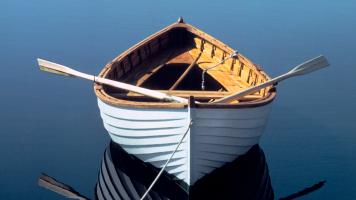
Many photographers have niche specialties for which they are known, intentionally or otherwise. My niche (one of them anyway) is… boat photography, a specialty I innocently and unintentionally stumbled into many years ago.
Photographs © Allan Weitz
The following 12 elements are worth considering when setting out to photograph boats, large or small. Some aspects over which you have control include
