Search results for: photography tips solutions flash photography tips
About 184 filtered results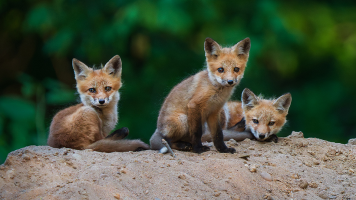
by Mathew Malwitz · Posted
Wildlife photography is one of the most therapeutic and rewarding genres of photography and it’s also one of the most popular. There’s just something so special about being able to witness the magic, and with new camera tech, wildlife photography is easier than ever. That said, the thrill of the shot can overshadow good decision-making, leading to unethical practices. But what are ethical practices?
Take nothing but photographs, leave nothing but footprints—an adage well-known by nature enthusiasts of all levels, but not all that practical.

by Luke Rollins · Posted
Learn about how to get started with dental photography, including what gear to use, which photographic fundamentals you should be focusing on, and why dental photography is critical for both clinical care and promoting your own dental practice.
IN THIS ARTICLE
1. (Don’t Fear) the Gear2. Good Dental Photography Is Good Photography3. Macro Discipline, Portrait Mindset4. Embrace the Flash5. Clinical,

Posted
When you're getting started in portrait photography, it can be tempting to buy the most expensive gear in order to improve your photos. But what if we told you that all you need is one 100W light? Enter Westcott's FJ100 100Ws Off-Camera Strobe and FJ100 M 100Ws Speedlight. Join Juan as he uses these lights on their own and together.
0:00 - Intro
0:27 - One Strobe Light Setup
3:23 - One Speedlight Setup
4:11 - Minimal Headshot Setup
5:55 - What's the Verdict?
Sponsored by

Posted
In this final live studio demo, Tony Gale combines part one and two. You'll learn to push your creativity further by combining constant light and flash.
0:00 - Intro
4:15 - Adjusting the model
5:51 - Different mixed lighting
7:16 - Mixing daylight & strobes
23:35 - Using gels
34:44 - Shooting in JEPG vs. RAW
37:42 - Correcting the background
40:56 - Using a bigger light source
48:15 - Combining LED & strobe lights
1:06:55 - Changing to diffuser
1:16:35 - Q&A
Sponsored by
by Luke Rollins · Posted
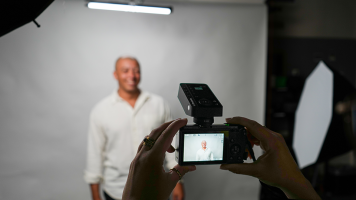
At first glance, studio photography and the compact camera may seem strange bedfellows. The type of work associated with the studio—still life, product photography, portraiture, macro photography—usually wants cameras with larger sensors and interchangeable lenses, especially in professional applications. Compact, point-and-shoot cameras, for their part, have their natural home in everyday, travel, nightlife, and street applications, where their discretion and size become virtues.
It might seem almost cruel to introduce the compact to the

Posted
In part 2, Tony Gale demonstrates how to use flash by focusing on light placement and optimal camera and flash settings.
0:00 - Intro
3:10 - Directing a model
4:51 - Sony a9 iii (High speed sync)
12:00 - Adjusting flash & camera settings
23:01 - Adding an umbrella modifier
34:07 - Softboxes
48:35 - Adding light with reflectors
52:23 - Grid modifiers
1:00:40 - Tony's portrait process/li>
1:11:25 - Q&A
Sponsored by
Posted
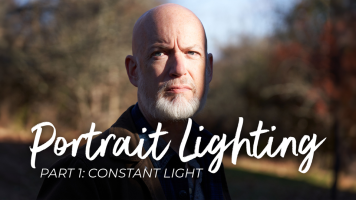
Sony Artisan of Imagery Tony Gale is back in the Event Space to give a three-part series on portrait lighting. In part one, you'll learn the fundamentals of using constant light to create beautiful, well-lit portraits.
0:00 - Intro
1:30 - Different constant lights
6:15 - Using sunlight
11:54 - Using a single lightbulb
14:14 - Single light (with modifiers)
23:43 - Why continuous lighting vs flash
32:29 - Controlling the background
40:14 - Main & full lights (with modifiers)
55:52 - Rim light
57:42 - White balance & color checkers
1:01

Posted
Should you go with on-camera or off-camera flash? There are pros and cons to each choice, and it depends on what you want to evoke with your work. Juan shares his tips for both on- and off-camera flash in an outdoor photoshoot.
0:00 - What're We Covering?
0:48 - On-Camera Flash
2:31 - Off-Camera Flash
3:21 - Soft Box with Off-Camera Flash
3:49 - Side-By-Side Comparison
4:19 - How Each Affect Your Backdrop
5:40 - How Far Away Can You Place Your Model?
6:01 - Should You Even Use On-Camera Flash?
6:47 - Are There Drawbacks to Off-Camera Flash?
7

Posted
Sony Artisan of Imagery Tony Gale shows how to use and improve your flash photography. Using both pop-up flash and speedlites, he goes over how to control and modify the flash for the best results.
0:00 - Intro
2:22 - Speedlite technology now
8:15 - The pros of speedlites
11:42 - Guide number
14:12 - Built in pop-up flash
34:50 - Flash hot shoe connection - TTL vs manual
40:14 - Reflectors
43:13 - Speedlites flash on the camera setup
1:00:17 - Other light modification
1:17:48 - Shutter speed in relation to flash
Sponsored by

by Luke Rollins · Posted
Achieving a standard of production value is an essential component of establishing a brand and growing a following. For part-time, burgeoning, and mid-level creators, it can feel like bridging that gap is less a matter of learned skill and more about the equipment you can afford.
In most cases, the problem isn’t budget at all. Acquiring the specific know-how can give your content professional sheen with little to no financial outlay.
Lighting design is arguably the most immediately visible production component—and the one most capable of

by Luke Rollins · Posted
Whether you’re the designated photographer at a friend’s night out or a professional working an event, a compact, point-and-shoot camera can be a strategic choice for creating a distinctive look for your images. Depending on where you’re starting, the move to a compact camera can be either a step up from the smartphone or an embrace of a more limited feature set. In either case, the best event and party photography with a compact camera says one thing: you had to be there.
The number one advantage to using a compact camera is social. The

by Mathew Malwitz · Posted
For a beginner, few things seem more intimidating than photographing a wedding. A sense of anxiety is perfectly normal if you haven't yet spent much time in this field. It's important to remember that we all begin somewhere, and even the most experienced pros were also novices at one point. With practice and education, nerves begin to morph into confidence.
No two weddings are the same, but whether traditional or unconventional, the goal is to be properly equipped to document the key moments of the day. A

by Mathew Malwitz · Posted
Smartphones have forever changed the world of photography, making the art form more accessible and connecting people from across the world through the instantaneous sharing of images. For all their benefits, there are plenty of criticisms to be had, especially on the creative front. Smartphone cameras are, for some, everything one could want from a camera. For others, they lack the control and creative freedom that makes photography so interesting.
Who can blame one for having hard feelings against smartphones. After all, they nearly wiped

by Mathew Malwitz · Posted
You don’t have to go far to capture fun and engaging images of wildlife. In fact, you may not have to go anywhere at all. A carefully landscaped yard and the right tools can attract an impressive variety of animal life to observe and photograph. Pair that with a little patience and soon you’ll be capturing stunning images from the comfort of your own home.
Attracting Birds
Birds are part of nearly every environment, from the densest cities to rural areas. While they are common, we’ll need to offer three essentials—water, shelter, and food—to

Posted
A powerful portrait doesn’t just capture a face, it creates a sense of depth, space, and emotion. Photographer Francisco Joel Hernandez will show you how to build strong visual depth in your portraits using lighting, lenses, and composition.
0:00 - Intro
3:09 - The flat portrait problem
8:55 - How to add depth
20:50 - Cheat code
27:28 - Off camera flash
35:46 - Lighting systems
39:16 - Technique breakdown
47:52 - Mistakes to avoid
49:14 - Final tips
53:00 - Live demo
Sponsored by