
There is nothing that can replace the extreme close-up view of a rare bird in the wild. Binoculars can get you close but, if you want to look the bird in the eye or confirm that identification for your life list, you need a spotting scope. Spotting scopes pack incredible magnification in a generally simple and lightweight package that is durable enough for field work while boasting fantastic optical quality for birding.
Getting Closer
At the heart of any birders kit is the trusty binocular. They’re compact, generally lightweight, and offer good, but manageable magnification for finding and viewing distant subject matter. However, sometimes binoculars just don’t cut it, and we may opt for something with a little more punch. Enter the spotting scope. At first glance, the spotting scope may look like a telescope, but it is more closely related to a monocular due to its image-erecting prism system. It delivers larger magnification capabilities to birders than all but the most powerful binoculars, and many spotting scope eyepieces can produce magnifications of up to 60x or higher.
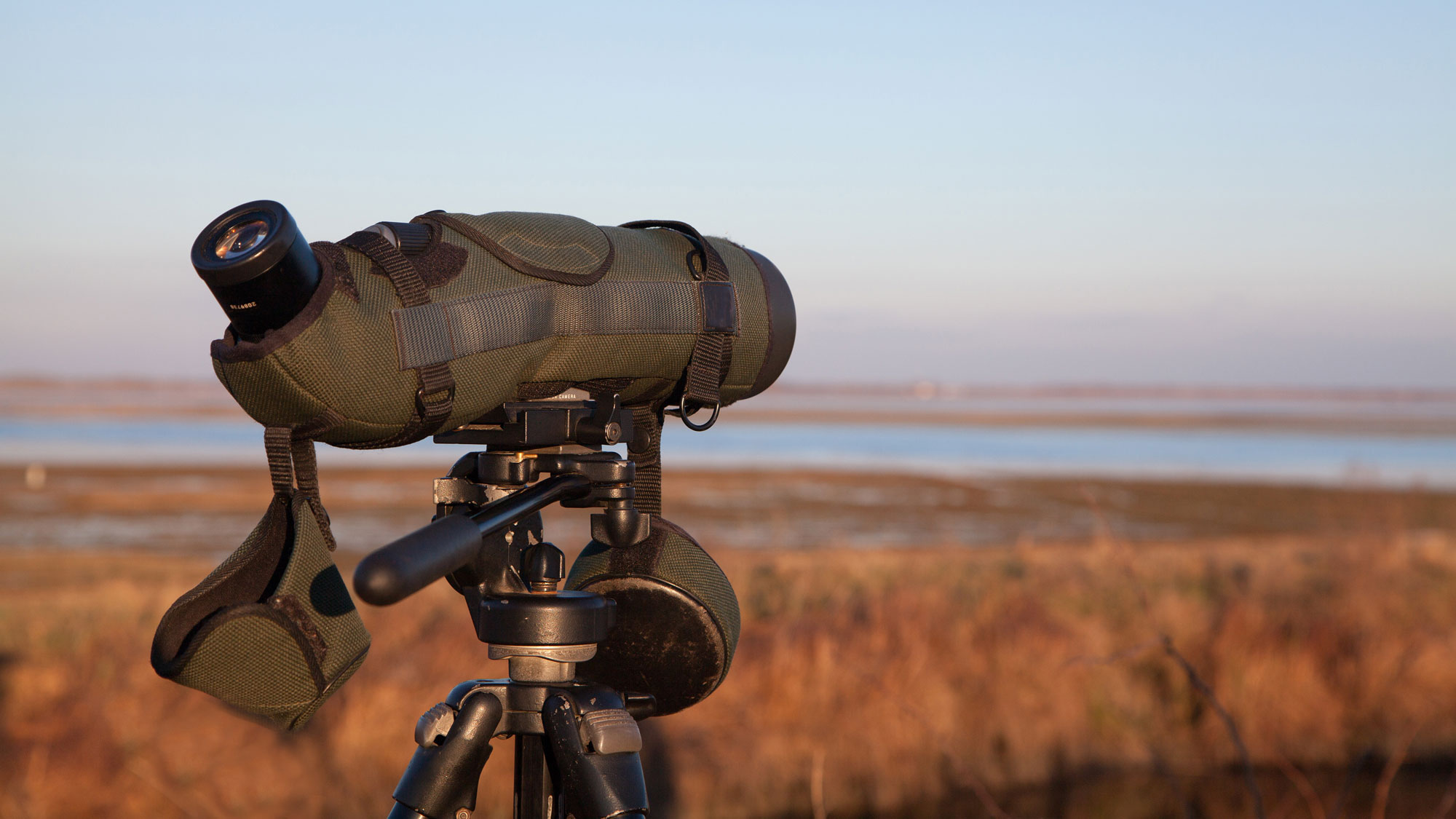
Unlike a telescope, which is designed for celestial viewing, the spotting scope, and its optics, optical coatings, and housing, is designed, from the start, to be a terrestrial viewing instrument. This does not mean that you cannot admire the moon, stars, or planets with a spotting scope; it just may not present an image quite as good as a purpose-built celestial telescope.
Straight Versus Angled Scopes
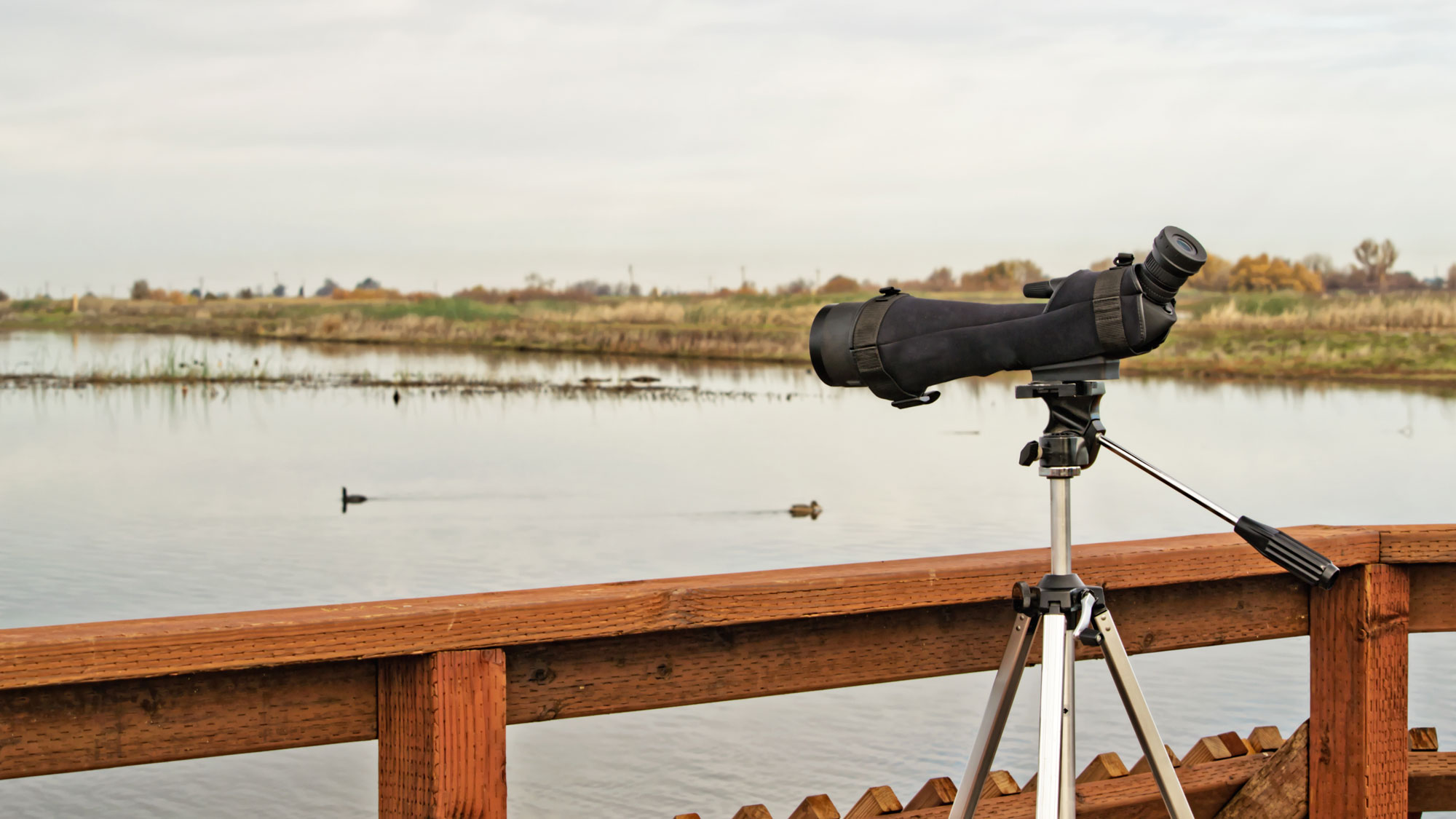
Spotting scopes come in two general configurations: straight viewing and angled viewing. The difference is at the rear of the scope, where the erecting prism directs the light path straight in line with the body, or at an angle, typically 45 degrees, to the body. The straight or angled configuration is one of the first considerations that a birder must evaluate when buying a spotting scope.
Advantages of Angled Scopes
The most popular style is the angled spotting scope. These can be mounted on tripods at any height, and this also serves to reduce shake from wind. The taller a tripod, the more prone it is to vibrations. If birding with others, there’s no better option than the angled scope, as it is much easier for people of varying heights to use the same scope.
Advantages of Straight Scopes
The most practical reason for the straight design is that it’s more intuitive to find and track a bird. In general, users, especially beginner birders, will find it is easier to acquire and track birds with a straight scope, but the angled scope offers more viewing comfort. For that reason, we recommend every birder start with a good pair of binoculars, as they provide an easier tracking experience at lower cost and smaller footprint.
Objectives and Eyepieces
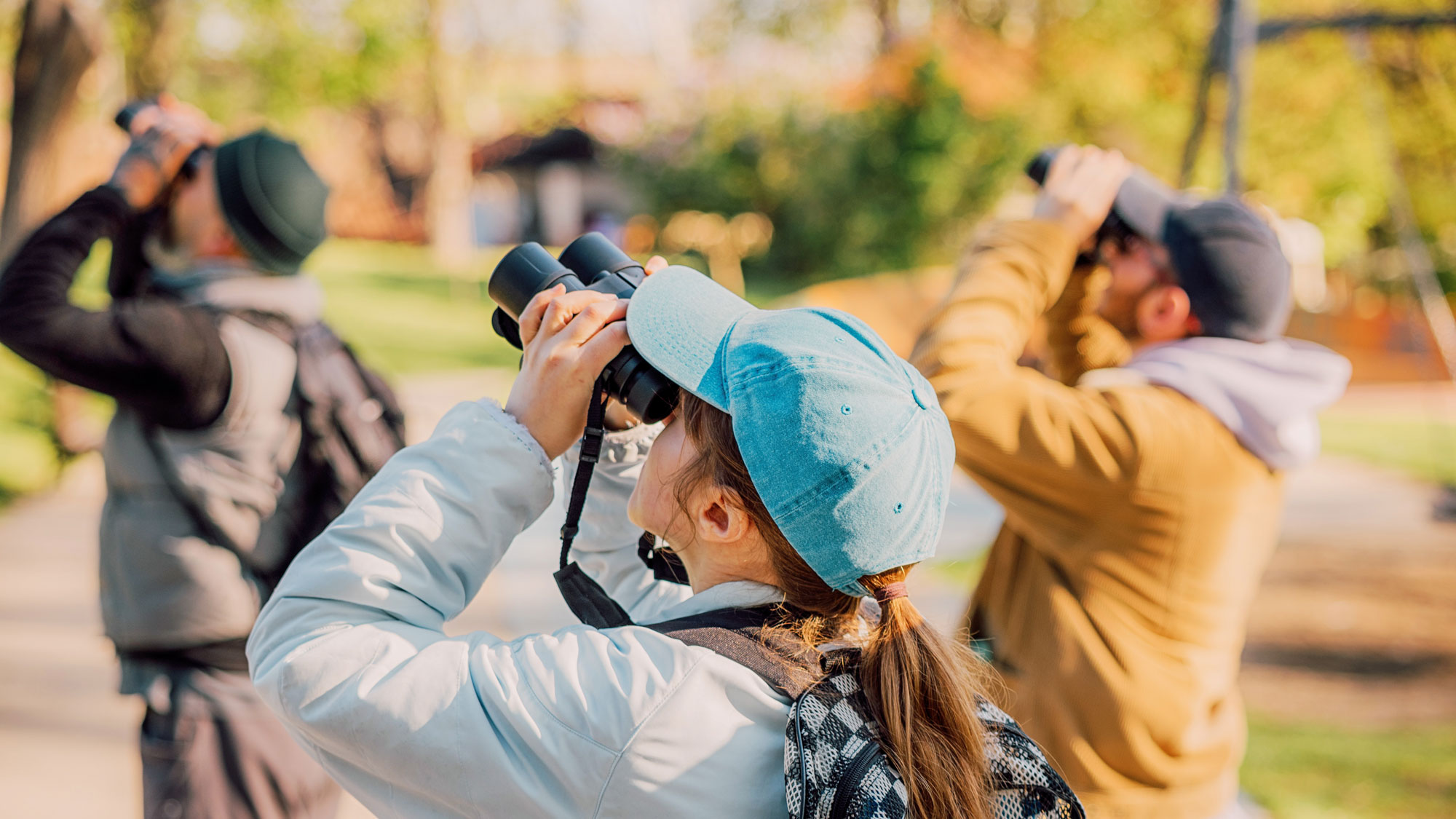
Like binoculars, spotting scopes are differentiated by their objective diameters and eyepiece magnifications. Those that have fixed eyepieces will, like a pair of binoculars, carry both the magnification and objective diameter in the product name. Scopes with interchangeable eyepieces will simply list the objective size. Just like with binoculars, the larger the objective, the more light-gathering power the scope has. The tradeoff is that more glass equals more weight and usually is more expense, depending on the other features.
Eyepiece magnification is another important consideration. This is the part of the spotting scope to which you put your eye. Many manufacturers include eyepieces with their scopes. Some of these eyepieces are not interchangeable, but many scopes offer interchangeable options, and the user has the choice of fixed magnification or zoom versions.
Fixed focal length eyepieces offer slightly improved optical quality over the zoom eyepieces (however, high-quality zooms are spectacular), but this comes at the expense of flexibility. For birding, a zoom eyepiece is a must-have, as the observer can zoom out to a wider field of view, find the bird they want to observe, and then zoom in for a closer look. For the best results, we recommend a minimum magnification of 25x.
Expanding their versatility, some spotting scopes accept standard-sized 1.25" telescope eyepieces that might give the user greater magnification options, as well as coatings and optics designed for improved celestial viewing.
Supports
All that magnification means that handholding the device is nearly impossible, so taking a spotting scope into the field means taking a tripod and tripod head (or alternative support) into the field with you—a big consideration when it comes to how far from home, or your vehicle, you will be setting up. Also, binoculars may be lifted a few inches from your chest to your face for a quick observation. The spotting scope needs to be set up.
Spotting scopes are not often very heavy and, therefore, do not require large tripods. But you do want to get a tripod that reaches a comfortable height for extended viewing while being heavy enough to provide needed stability for your scope. As mentioned earlier, an angled scope does not need to reach the same height as a straight design.
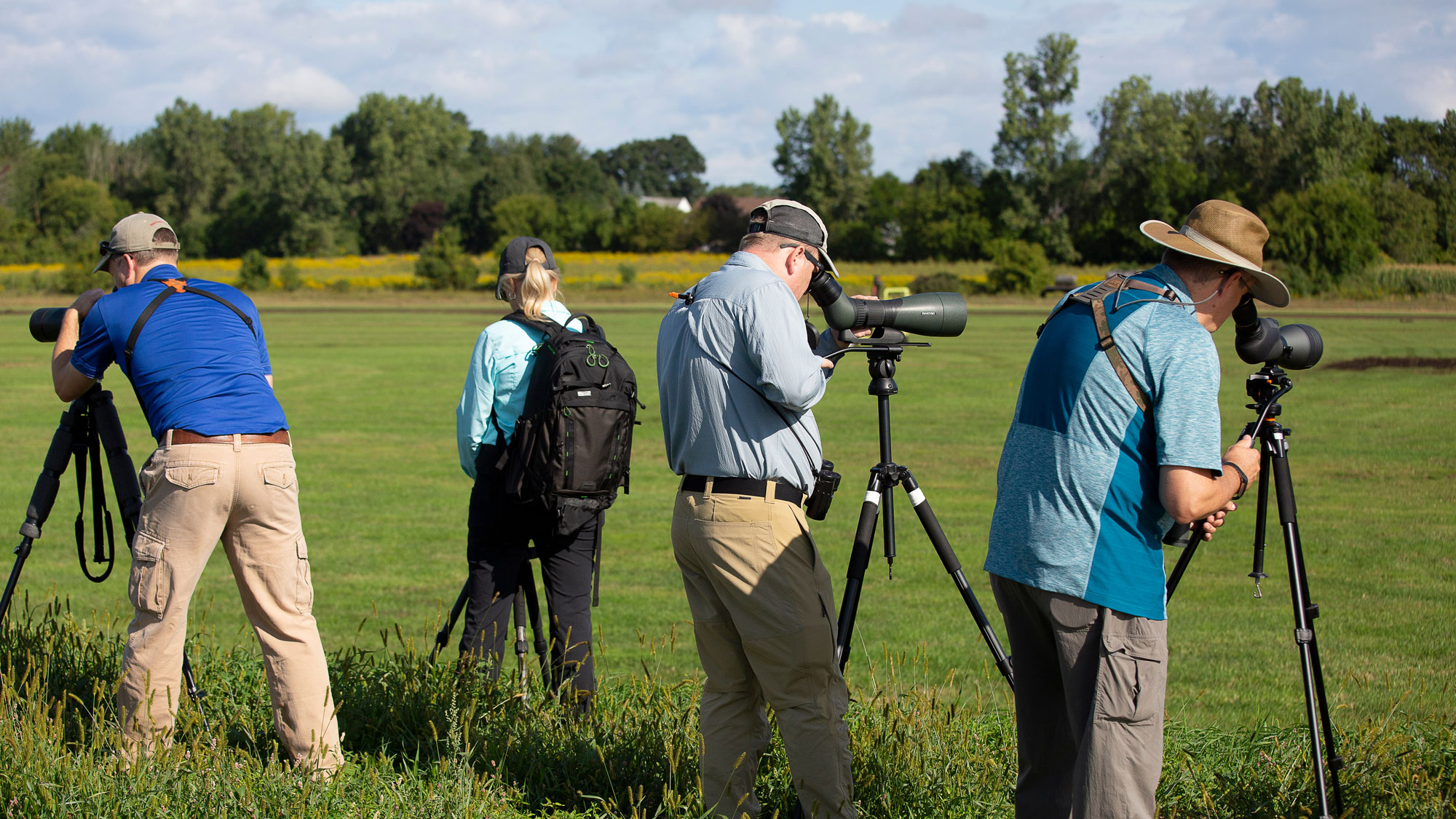
Almost as important as the legs themselves is the head. A tripod head is what we mount our scope to and what articulates to accommodate various viewing angles. For birding, a fluid tripod head, popular for use for video cameras and content creators, works fantastically with a birding scope. Their smooth movements make tracking moving subjects easier and prevent jerky motions that often lead to us losing sight of our bird.
Additional Options
Just like their binocular cousins, spotting scopes come with different levels of features. And, just like when shopping for birding binoculars, you’ll likely want to make sure your spotting scope is water and fogproof. Some spotting scopes come with rubber armoring to protect their surfaces and provide a tackier surface to grip.
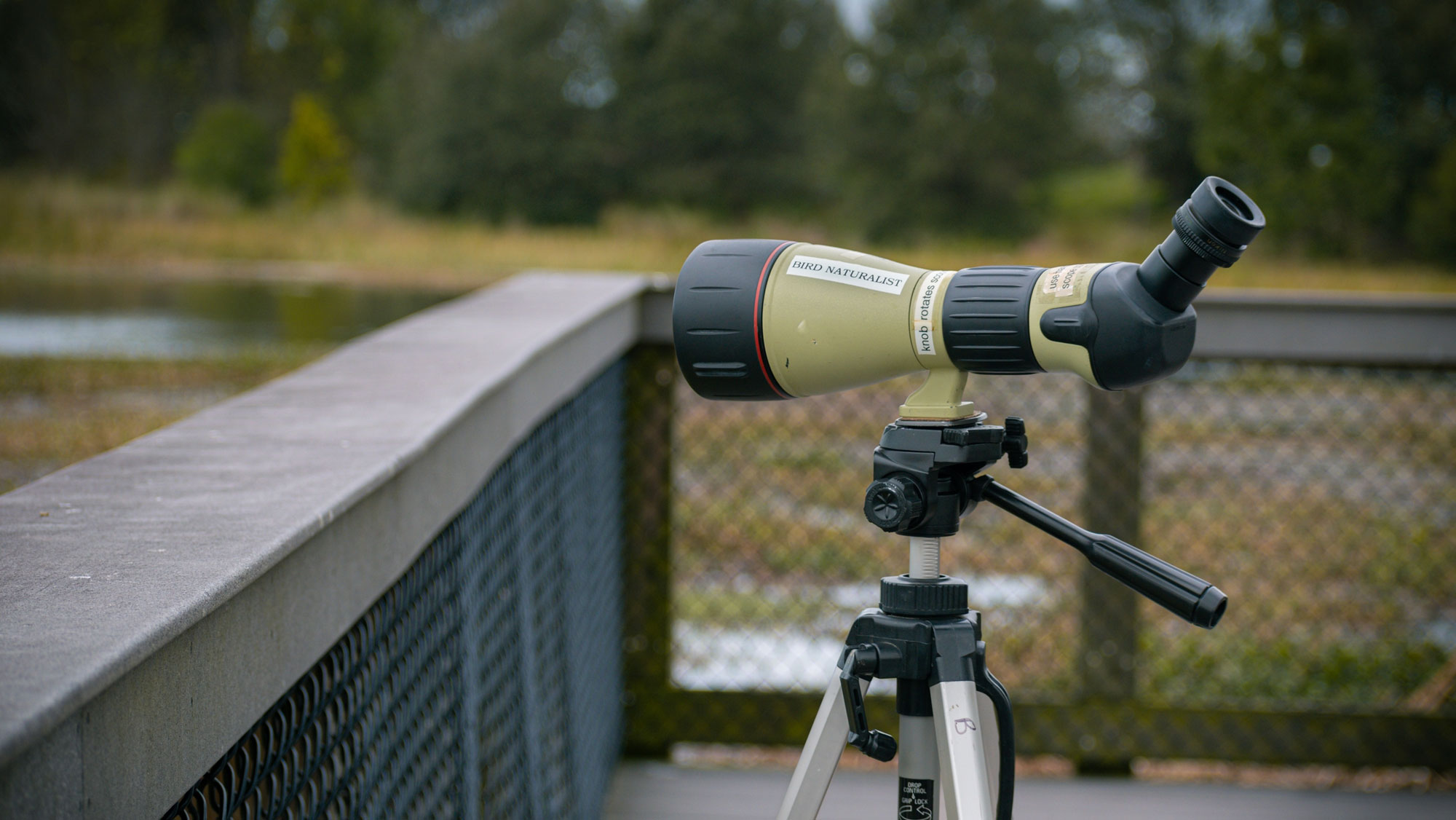
Some newer spotting scopes are specially designed with mounts that accept cameras from specific manufacturers, so, if you see yourself connecting a camera to the scope (referred to as digiscoping), this might be an important purchase decision. Many companies that offer spotting scopes with interchangeable eyepieces have the ability to take a specially designed camera adapter that usually just needs a threaded T-mount to connect to a mirrorless or DSLR camera. Some scopes have adapters to connect to point-and-shoot cameras or smartphone cameras as well.
Another characteristic of certain scopes to keep in mind is how they focus. Some have focus knobs while others have focus rings. Some feature dual focus, with coarse and fine adjustments available. At higher magnifications, the fine adjustment is often a nice feature to be able to access.
One term that spotting scope buyers may see pop up on the B&H Photo site while they shop for scopes is the term “apochromatic.” Many scope manufacturers offer apochromatic and non-apochromatic versions of a specific scope. The apochromatic versions contain a specially designed lens that helps remove chromatic aberrations, basically color fringing, from the image. Extra-low dispersion and achromatic lenses are designed with the same goal in mind: to ensure maximum image resolution and produce accurate color rendition so you can observe, categorize, and identify a bird confidently.
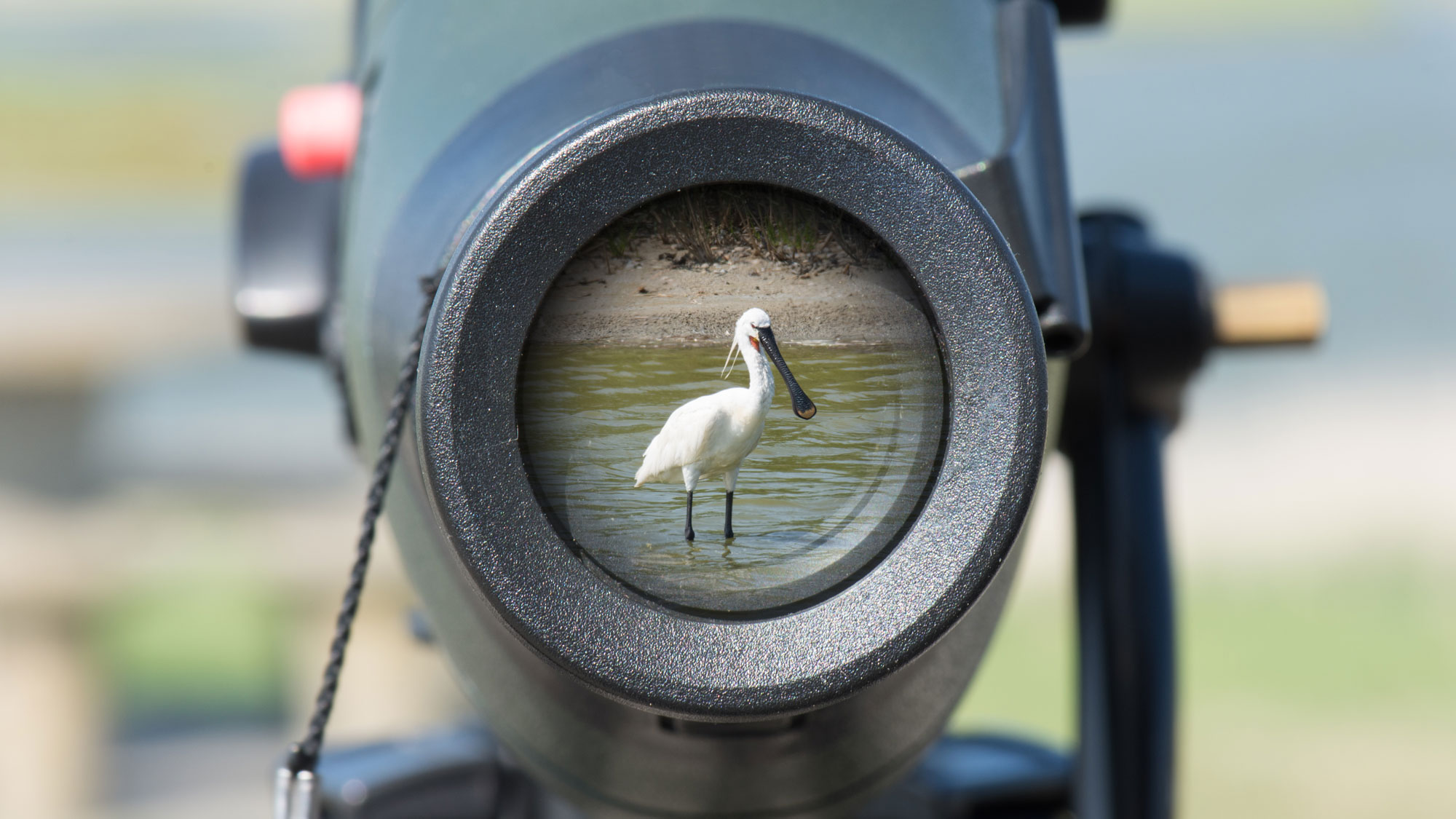
Like binoculars, spotting scopes have features that change from brand to brand and throughout a manufacturer’s product line: lens and prism coatings. Multi-coated lenses have an advantage over coated and non-coated, but for an in-depth discussion about coatings, visit our binocular buying guide. The article focuses on binoculars, but the coating information is applicable to this discussion, as well.
There are also numerous ways to customize your spotting scope. Manufacturers offer hard travel cases and some sell view-through soft cases that envelope the scope to further protect its chassis in the field. Many scopes have rubber armoring and some feature flip-up lens caps to help the birder set up faster and not worry about losing lens caps to the wind or brush.
Try Before You Buy
Like you would a camera or even a pair of binoculars, it is said that you should not only try out the spotting scope before you purchase it, but that you should learn how to bird with a spotting scope to be certain you want to make the investment. Join local bird walks or head to a birding event where spotting scopes can be used in the field. Alternatively, visit the B&H SuperStore to get a hands-on look if you can!
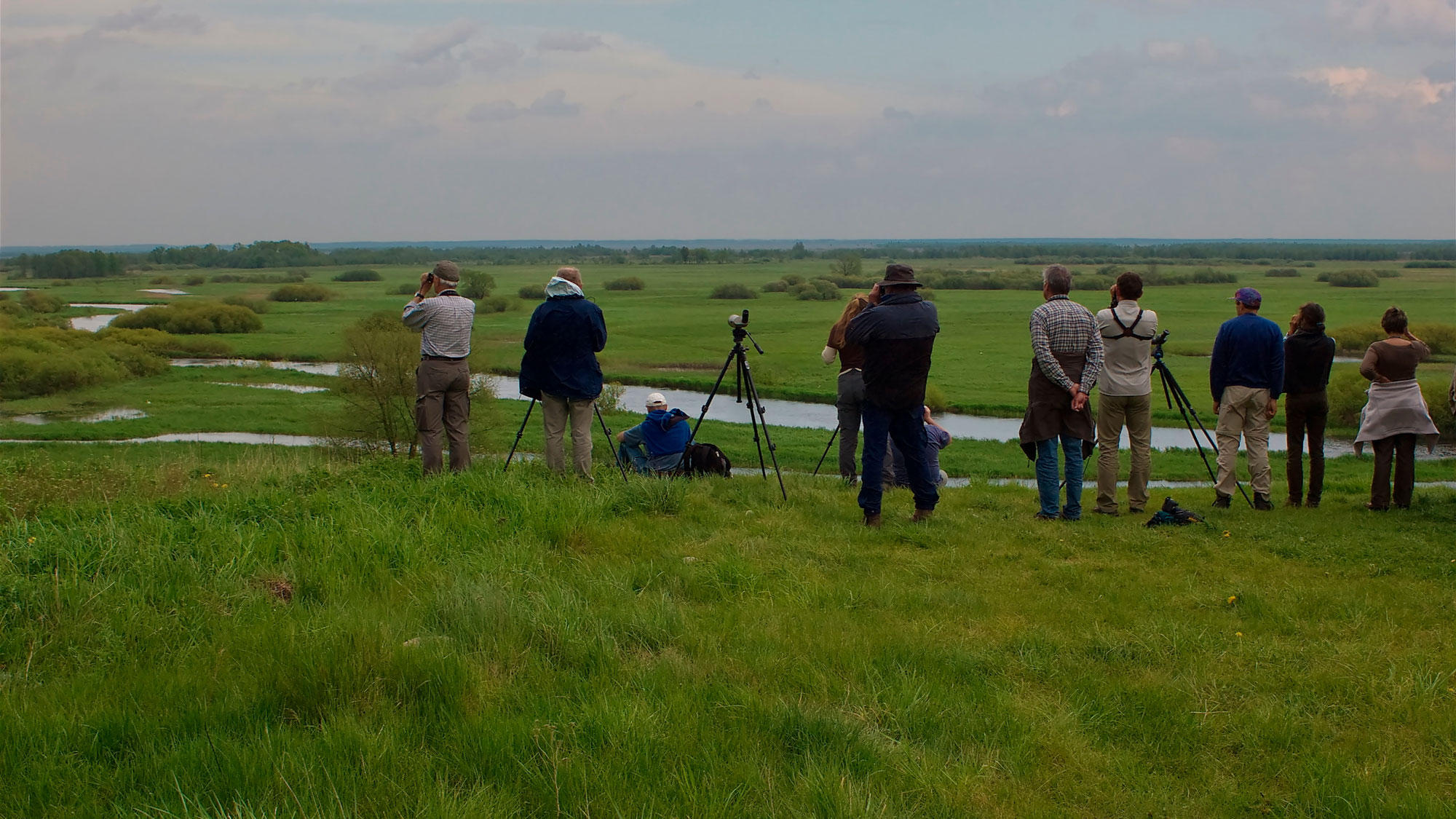
Just as in binoculars, the optical quality of spotting scopes can be the difference between a highly enjoyable outing looking at birds and a frustrating experience that makes the day less enjoyable. There are some good-quality mid-price-range spotting scopes on the market today, but that you also need to know that “you get what you pay for.” Buy the best spotting scope you can afford up front, and you won’t look back and spend more the second time. That is, unless you’re looking for a serious upgrade down the line.
The Best Spotting Scope
The spotting scope is a great tool for birding, but not necessarily the tool with which you would want to start your birding adventures. The learning curve for the spotting scope is noticeably steeper than that for learning to use binoculars.
Also, while you can get magnification past what practical binoculars offer, it comes at the expense of a relatively heavy optical device that must be accompanied by some sort of support for proper use. Mid-range-magnification binoculars can usually be carried around your neck all day long, but a spotting scope and tripod can become a logistical challenge for long hikes across rough terrain.
For the serious birder or for those wishing to get more serious about their observations, a spotting scope might be just the thing you need to get a superlative close-up of a distant bird. To learn more about birding, optics, and bird photography, check out our other guides and articles on the B&H Explora Page!
