Search results for: photography tips solutions how to choose right tripod head
About 12 filtered results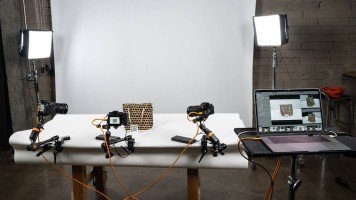
by Luke Rollins · Posted
At its most basic, tethered shooting involves connecting your camera, wired or wirelessly, to your computer as you shoot. You’ve likely seen it in some behind-the-scenes video for a professional studio shoot, or you just have a friend who swears it’s the best thing since sliced bread. Tethering is a shooting technique that can benefit many a photographer’s workflow significantly, though upon first hearing of it, the idea of tethering can be something that first requires a bit of education. Hopefully, this introduction will help get you started

by Mathew Malwitz · Posted
Despite what you might have seen on the internet, you don’t need all the money and time in the world to photograph wildlife. Sure, an African safari would be nice, but it is by no means the only way to capture stunning images of wild animals. In fact, regardless of where you live, odds are there’s a vast ecosystem that likely goes unnoticed. If you have trees in your neighborhood, you’re off to a great start.
What You Need to Photograph Wildlife
While gear plays a crucial role in our ability to photograph wildlife, it isn’t everything. In this

by Todd Vorenkamp · Posted
Before you venture out to photograph your first lunar eclipse, you should get some practice taking photos of the moon. If lunar photography is varsity-level stuff, lunar eclipse photography is all-pro. There are some unique challenges to the art, and great ways to get creative results, but the basics of lunar photography apply. Unlike

by Todd Vorenkamp · Posted
Congratulations on getting a new camera, and welcome to the world of photography! You are going to love it. Before you go out shooting, take a look at these 10 things you should do first with your brand-new camera.
1. Charge the Battery
Being fresh out of the box, your camera’s battery is unlikely to be fully charged. Plus, manufacturers usually recommend a full charge cycle before you go out shooting for the first time. So, throw it on the charger and fill 'er up!
Also, we highly recommend having a

by Allan Weitz · Posted
The leaves may be down and your frost-laden lawn might be making crunchy sounds when you cross it in the morning, but that doesn’t mean you have to pack your cameras away until Spring; if you do, you’re going to miss some fine picture-taking opportunities.
Appropriate layers of warm clothing and insulated boots aside, capturing strong stills and video during the cold months of the year requires a bit of foresight, a few recommended weather-related accessories, a measure of common sense, and the desire to take great pictures despite the cold.

by Cory Rice · Posted
Photo studios come in all shapes and sizes. If you are working with small subjects, there is no reason to rent a massive loft or build an addition onto your house to get the shots you need. In many of these cases, a functioning setup can take up as little space as a table. Like all things related to photography, tabletop studios can be as simple or complex as their creators require. For basic applications, plenty of all-in-one kits exist for “non

by Antoni Cladera · Posted
Have you ever seen an amazing photo of the Milky Way and wondered what’s the secret behind it? Is there some magic formula that made it turn out so great? Well, there is a formula, but it’s not magic. It’s all about planning and then nailing the shot. And I’m going to help you master both. But first, I’d like to introduce myself. My name is Antoni Cladera, and I’m a professional photographer on the PhotoPills team. Today, I’m teaming up with B&H to help

by Todd Vorenkamp · Posted
At some point, in the photographic journeys of many of us, we suffer from a chronic (or acute) case of Gear Acquisition Syndrome (GAS) and we keep buying stuff (thank YOU for shopping at B&H Photo!) that ends up in our camera bags. We launch into a holiday or family vacation wanting to be prepared for any photographic challenge, regardless of our destination. Super-telephoto action? Check. Wide-angle landscapes? Check. Moody street scenes?
by Jill Waterman · Posted
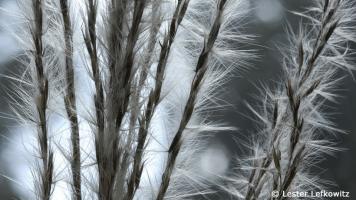
The mysterious realms of miniscule objects, colorful flora and creepy-crawly bugs hold a fascination for image makers of all sorts. Most photographers know that capturing images on such an intimate scale requires a macro lens or special accessories to allow for close focusing, but another critical component is the lighting.
For an overview on the different lighting tools and approaches to consider, we spoke with macro photography and lighting specialist Lester Lefkowitz, who will present a talk about macro photography at the

by Daniel Wagner_1 · Posted
There are several schools of thought regarding whether or not a Rolleiflex TLR is a good camera for street photography. On the negative side, the exposures per roll are limited to 12, the vintage design often attracts attention, and it takes longer to advance the film to the next frame. On the positive side, the camera can be operated stealthily by shooting from the waist and/or aiming the camera perpendicular to the direction you’re facing; the 120 negative is much larger than its 35mm counterpart; and the leaf shutter is quieter and has

by Todd Vorenkamp · Posted
Panoramic photography has never been easier than it is today, thanks to digital technology. In the days of film, your options for panoramic photos were the purchase of expensive, but very capable, panoramic cameras, stitching images together in a darkroom, or physically cutting and pasting prints together. Panoramic cameras, like the Linhof Technorama-series, Hasselblad XPan, Fujifilm GX617, or Horseman SW-series cameras, are beautiful machines and still incredibly viable tools of the trade if you want to take exquisite panoramic images with

by Joseph Albanese · Posted
Take only pictures, leave only footprints.” Over time, the origins of that quote have become muddy. Some attribute it to the Baltimore Grotto, a caving club whose members feared their activities would mar the landscapes they so enjoyed. Whatever the origins, it has come to stand for an ethos encouraged by many outdoor organizations that promote responsible recreational uses of our outdoor spaces. One activity that does not alter the scenery is photography. All you are doing is capturing the essence of an area—the blues, greens, reds, and