Search results for: photography tips solutions how to use extension tubes
About 18 filtered results
by Luke Rollins · Posted
Macro photography never ceases to amaze me. Show me the face of a jumping spider reproduced at life-size or greater and I’ll undoubtedly stop what I’m doing and stare at it for a while. What’s interesting is how ultra-wide-angle lenses, which are available for DSLRs and

by Todd Vorenkamp · Posted
Close-up or macro photography is an incredible way to capture the tiny world around us on a super-detailed level. While the dedicated macro lens is still one of the best tools for exploring the world on a miniature scale, there are some very inexpensive ways to jump into macro photography with the lens or lenses you already own—no need for a specialized close-up macro lens. In this article, we will take a closer look (no

by Todd Vorenkamp · Posted
Close-up or macro photography is an incredible way to capture the tiny world around us on a super-detailed level. While the dedicated macro lens is still one of the best tools for exploring the world on a miniature scale, there are some very inexpensive ways to jump into macro photography with the lens or lenses you already own—no need for a specialized close-up macro lens. In this article, we will take a closer look (no pun intended) at close-up

by Todd Vorenkamp · Posted
The question: What can you do with a macro lens? The answer: Just about anything! If you want to get into close-up photography, the best tool for the job is almost always a dedicated macro lens—preferably one that does life-size (1:1) reproduction. An alternative 1:2 (half-size) macro lens is nothing to sneeze at and could easily fall into the “best tool” category as well. Having said that, a macro lens is also a supremely capable tool for capturing portraits,

by Bjorn Petersen · Posted
Photography is a great way to get out of the house, explore the world around you, and can be a reason to visit new places. Sometimes, though, your own home and time spent indoors can also be a key source of inspiration and a tool to work through any creative droughts in which you might find yourself. Whether you’re confined to home because of weather, a global pandemic, or just because you feel like staying in, don’t let staying at home be a limitation to your photography practice; let the challenge of being indoors ignite new ways to approach
by John Harris · Posted
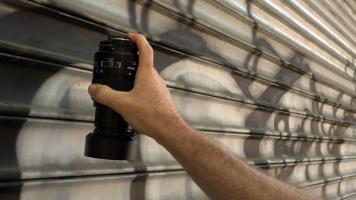
There are many articles discussing macro photography and what you can do with a macro lens; however, I’d like to also consider some of the things you cannot do with a macro lens.
You cannot grind pepper for your meal, but you can spice up your food photography by incorporating macro close-up images. The unique depictions you can give food and recipe ingredients with a macro lens perspective are ideal for food photography. The textures of foodstuffs and the details we often miss with the eye are brought to life with macro lenses; they seem to

by Todd Vorenkamp · Posted
The art of photographing the wristwatch is known as one of the most challenging aspects of still life photography. Between the relatively small size of the timepiece, reflective sapphire and acrylic crystals, shiny elements on the watch face, matte leather or nylon straps, etc., there are a multitude of surfaces with different properties and reactions to light and the camera.
Photographs ©Todd Vorenkamp
If you are a lover of the wristwatch or a horologist, you

by Allan Weitz · Posted
The term “macro photography” is most often defined as close-up photographs taken with macro lenses, but isn’t always the case. True, macro lenses are designed to deliver life-size photographs of small objects with sharp edge-to-edge detail, but macro lenses are not the only tools of the trade when it comes to going face-to-face with bumblebees.
If macro photography is something you’d like to delve into without first having to invest in a macro lens, you have several

by Bjorn Petersen · Posted
There is no doubt that digital photography is here to stay, and film has certainly seen better days, in terms of availability and affordability. However, what if you’re a digital photographer who simply wants to shoot a roll of film every once in a while, for fun? Film photography has a distinct look that, even with the latest and greatest 50MP cameras, cannot be duplicated by digital imaging. It’s subjective to say whether one look is better or worse, but there is no denying that there is a unique quality to film. Back in the halcyon days of

by Allan Weitz · Posted
Image sharpness is an important part of the equation when purchasing a new lens. Who among us has purchased a lens without first inquiring about, among other things, how sharp the lens is? Anybody?
Don't get me wrong. Lens sharpness is an important piece of criteria when it comes to purchasing a new lens and that's because, just like you, I only want sharp lenses regardless of whether the lens is a pricier OEM lens or a lower-priced, third-party lens. If the lens isn't sharp, "Feh—I don't want it."
Photographs ã Allan Weitz 2020

by Allan Weitz · Posted
If you ask the average photographer what the difference between a macro lens and a “regular” lens is, they will tell you macro lenses enable you to get closer to your subject than regular, or conventional, lenses. While this is true, the ability to focus close is only part of the story. The other part of the story has to do with an optical characteristic called “curvature of field,” of which there are two types—flat-field and curved-field.
All Photographs © Allan Weitz 2020
Most consumer lenses are curved-field lenses, and as you might have

by Todd Vorenkamp · Posted
At some point, in the photographic journeys of many of us, we suffer from a chronic (or acute) case of Gear Acquisition Syndrome (GAS) and we keep buying stuff (thank YOU for shopping at B&H Photo!) that ends up in our camera bags. We launch into a holiday or family vacation wanting to be prepared for any photographic challenge, regardless of our destination. Super-telephoto action? Check. Wide-angle landscapes? Check. Moody street scenes?
by Todd Vorenkamp · Posted
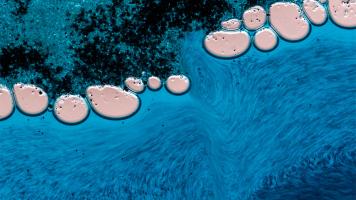
Nothing can put a damper on a photography outing like a rainy day. Of course, rain and wet ground can make for some spectacular photos if you have the right gear and the right mentality to go out in the wet, but there are times when even the most hard-core photographer sees falling precipitation and says, “I think I will stay indoors today.” Because not all of us have a beautiful photo studio in the home, I find that macro photography around the house is a great way to get photographic creative juices flowing while staying out of the rain.

by Todd Vorenkamp · Posted
For some reason, any web search for “extreme macro photography” takes you on an express train to the land of bugs. But, if you are like me, and not a fan of close-up macro photos of bugs, you might enjoy this guide on how to do extreme macro photography because we will not be seeing any bugs here! Sorry, entomologists, I prefer non-organic subjects for my extreme macro work.

by Bjorn Petersen · Posted
Macro photography is a specialized genre that has wide appeal. Despite its familiarity to most as just being “close-up shooting,” there are a variety of terms and tools that come up in the macro photography field that don’t seem to affect other broader, more general shooting methods. Let’s take a look at some of the specialized nomenclature and tools of the macro trade.
1. Macro
Starting with the obvious one first, macro photography is loosely defined as close-up photography done at scales of life-size or greater. We’ll get into this more in