Search results for: photography tips solutions noise reduction digital photography
About 17 filtered results
by Mathew Malwitz · Posted
Exposure can be challenging to master. There are many moving parts, and knowing which settings affect what aspect of our image takes time and practice. The goal might be to take full control and use manual exposure mode, but first, we need to learn the ropes using auto exposure modes.
These modes let us use our camera with a little help. As covered in our introduction to exposure article, photography consists of

by Todd Vorenkamp · Posted
Do you want to preserve the memory of that awesome neighborhood fireworks show? Let's discuss the best ways to try to make a memorable photograph commemorating the event.
Before we get started, let me say that there are many ways to accomplish fireworks photography and no technique is usually worse or better than others. The only thing that really matters as you head home after the show is:
You enjoyed the photographic process.
You are left with a photograph or photographs that you personally enjoy.
You enjoyed the fireworks show!

by Todd Vorenkamp · Posted
Taking a look at any modern mirrorless or DSLR camera, you’ll notice a slew of controls, buttons, and dials. Atop nearly all cameras sits a large dial labeled with many letters and icons. This is our mode dial. It is how we control the level of power we give to our camera or take for ourselves.
One of the wonderful things that modern electronic digital and film cameras give you is many high-tech options for your image making. One of the horrible things that modern electronic digital and film cameras give you is many high-tech options for your

by Mathew Malwitz · Posted
If you’ve been around photography for any length of time, you’ve probably heard of ISO. ISO is one of the three settings that determine our exposure in photography. These settings are collectively referred to as the exposure triangle. ISO is unique in this equation, and in this guide, we’re going to explore why.
ISO can be referred to in two ways. It’s most commonly spoken as an abbreviation, but it is also sometimes referred to as a word pronounced as eye-so. General consensus is that you call it whichever you like. After all, it’s not what

by Steven Gladstone · Posted
Whether you’re a student or a seasoned veteran, selecting the right camera can make your head spin with questions. Does sensor size matter? What’s the difference between 4:2:0 and 4:2:2? Do I really need a camera that can record 8K? What about raw? We’ll explain the key components that help a camera produce cinematic images, and in doing so, hopefully help you make that all-important decision.
Evaluate Your Needs and Your Budget
Before considering certain cameras, you must know your needs and your budget. And be realistic. If you are a student

by Todd Vorenkamp · Posted

by Todd Vorenkamp · Posted

by Todd Vorenkamp · Posted
Setting up your camera properly for night or low-light photography is a fundamental key to successful images. There are no hard and fast rules for settings for night photography because many of the settings you choose depend on the scene before you and how you want it to look in the final image. However, this guide will give you a foundation for setting up your camera to capture the wonders of the night.
Photographs ©Todd Vorenkamp
Exposure Mode

by Todd Vorenkamp · Posted
Astrophotography is awesome! But, is it difficult? No! Contrary to some opinions, you don’t have to own a ton of expensive gear, have perfectly dark skies, or have mad technical skills to pull it off. In this short four-part series, we will talk about how you can go out and shoot astrophotographs with basic photographic gear, and then digitally process the images with basic techniques. In the following stories, we’ll be talking stars, discussing gear, studying capture techniques, and learning some post-processing tips for optimizing your

by Todd Vorenkamp · Posted
Shallow depth of field (DOF) is one of the visual effects that many photographers seek in their everyday photographs. To accomplish this, there is the grail quest for lenses with larger and larger maximum apertures. In the world of macro and
by Jason T · Posted
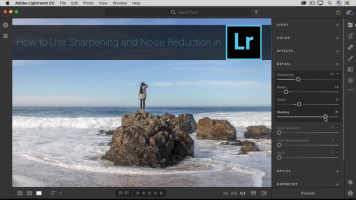
Photographers generally don’t agree on much. Sony, Nikon, or Canon? If you ask three different photographers, you’ll get three different answers. Color or black-and-white? Film or digital? The debates go on and on. But there’s one thing almost everyone can agree on, and that is that a good photo is a sharp photo. If there’s one immutable truth in the photography lexicon, that may be it. And, many of us will go through great lengths to get the sharpest photo, whether it was captured that way to begin with, or not.
The truth is, due to huge

by Jason T · Posted
Over the past few years, podcasting has enjoyed a resurgence in popularity. With renewed enthusiasm in the commercial and “do-it-yourself” segments of the medium, the art of the podcast is quickly evolving. As the content has gotten better and better, the standards for sound quality, sound design, and music have also taken a quantum leap. In my time co-producing and engineering the B&H Photography Podcast, I’ve picked up some useful knowledge that’s helped me create better
by Peter Ward · Posted
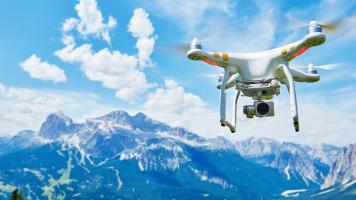
In these days of digital post production, filters are often overlooked as an image-control tool. But there are times when filters can be extremely useful, especially when capturing images from a drone. Common filters available for done cameras include UV, which are typically used as “protective filters,” neutral density filters (ND), which reduce light levels, and circular polarizer filters (CP), which reduce glare and have other properties. Unlike typical screw-on camera filters, filters for drones, in many cases, need to be made for the
by Tim Cooper · Posted
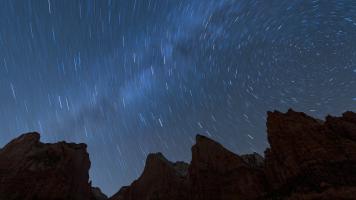
Noise is the addition of unwanted grain or splotches of color in digital photographs. It can occur by using a high ISO, such as 6400, or using very long shutter speeds that last into the minutes. In some cases, noise is a necessary evil that we need to accept, while in others, we should do everything possible to avoid it. As night photographers, we need to understand the limits of our cameras and the effects of pushing them too far.
Above

by Allan Weitz · Posted
Sometimes, the phrases, acronyms and strings of numbers or number-letter combinations used to identify photographic hardware or techniques can be daunting to the uninitiated neophyte photographer.
We've prepared a list of the basic terms. Have we left any out that you think should be added? Please let us know!
0-9 | A | B | C | D | E | F | G | H | I |