
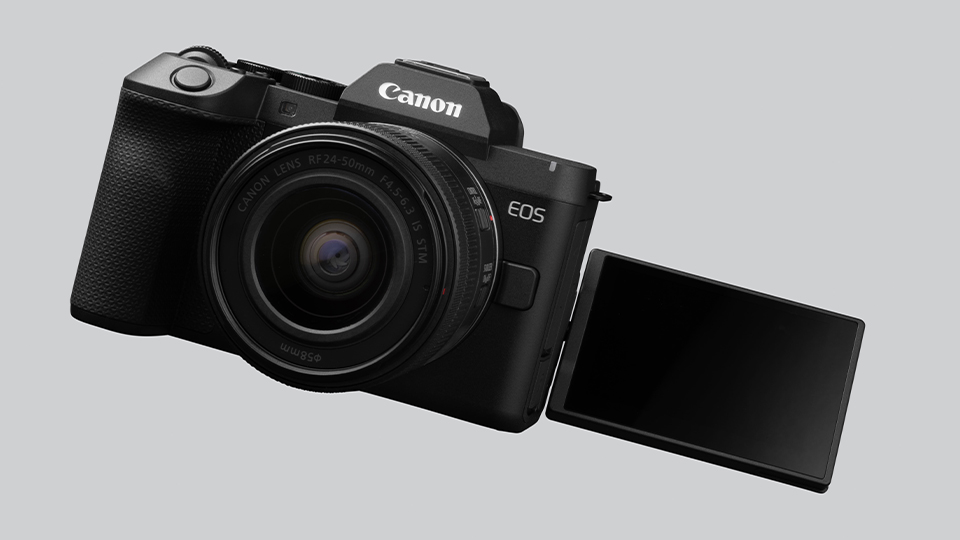
Canon has announced the second generation of its entry-level full frame mirrorless camera, the R8 Mark II. Having spent some time with the camera, we can speak to some of its most apt use cases: portraits, landscapes, street photography, and video.
Portraits
The Canon R8 Mark II is an excellent segue camera into professional full-frame portraiture, where the format’s larger sensors yield more pronounced depth of field and smoother bokeh. The new camera has several features that specifically benefit handheld portrait photography—not the least of which is its new lightweight, ergonomic build—delivering high-quality, client-pleasing images while keeping the shoot relaxed and fluid.
The R8 Mark II inherits the Register People Priority Autofocus feature from the flagship models, which, even in controlled studio environments, further aids in locking focus on a portrait subject, especially when paired with the Dual Pixel CMOS AF II autofocus engine.

The camera’s biggest feature addition is the introduction of 7.5 stops of in-body image stabilization for reducing camera shake. This benefits handheld, available light portraiture, especially when paired with a wide aperture lens.
Complementing the IBIS, in-the-moment capture improves with the R8 Mark II, where the camera’s inherited 40 fps continuous RAW shooting sees a 30% increase in overall capacity. This ensures that even smallest gestures and expressions are captured, all with the post-production flexibility that RAW capture provides.
One of the camera’s most underrated upgrades is the introduction of the multi-controller joystick, simplifying focus point selection and menu navigation when using the camera’s electronic viewfinder.
Landscapes
Not only is the R8 Mark II smaller than its predecessor, but it’s also currently the lightest-weight full-frame camera with IBIS on the market, as of the time of this writing. The redesign goes beyond weight and dimensions to include ergonomics and weather-resistance, making the camera an ideal companion for outdoor excursions. The compact, lightweight build will reward the kinds of jaunts that result in scenic, satisfying imagery.


The R8 Mark II’s 24.2MP CMOS sensor offers just enough room for effective cropping and reframing, while the camera’s dynamic range and 7.5 stops of image stabilization benefit low ISOs and handheld rendering of dawn, dusk, and everything in between. The bright electronic viewfinder allows for effective daylight composition.
Street Photography
The R8 Mark II’s build character makes its use for street photography something of a no-brainer. Small, portable, and full of functional flexibility, the camera is as easy to stow as it is to wield, especially when paired with a slim prime like the Canon RF 28mm f/2.8 STM Lens.


The camera’s subject detection modes and Dual Pixel CMOS AF II autofocus engine handle the quick, accurate autofocus that street photography demands, while the large 24.2MP full-frame sensor allows both for cropping and improved low-light performance. The addition of 7.5 stops of image stabilization also benefits available light shooting, especially where shutter speeds must remain high.
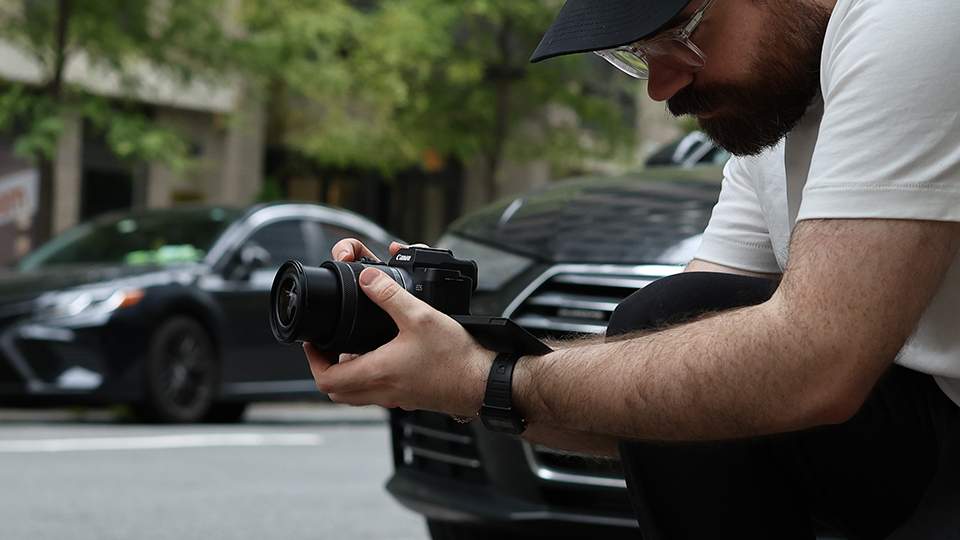
In addition to the R8 Mark II’s improved continuous shooting capacity in both RAW and JPEG, the camera also boasts up to 20 frames of pre-continuous recording before the shutter is fully pressed to ensure the moment is captured. Pair this with stylized, straight-out-of-camera JPEG settings for unique, spontaneous moments of the highest quality.
Video
The step-up in class is met with a step up in ask, and the Canon R8 Mark II’s high-quality video means the multi-hyphenate needs of today’s hybrid creators can be met in a single, capable camera body.
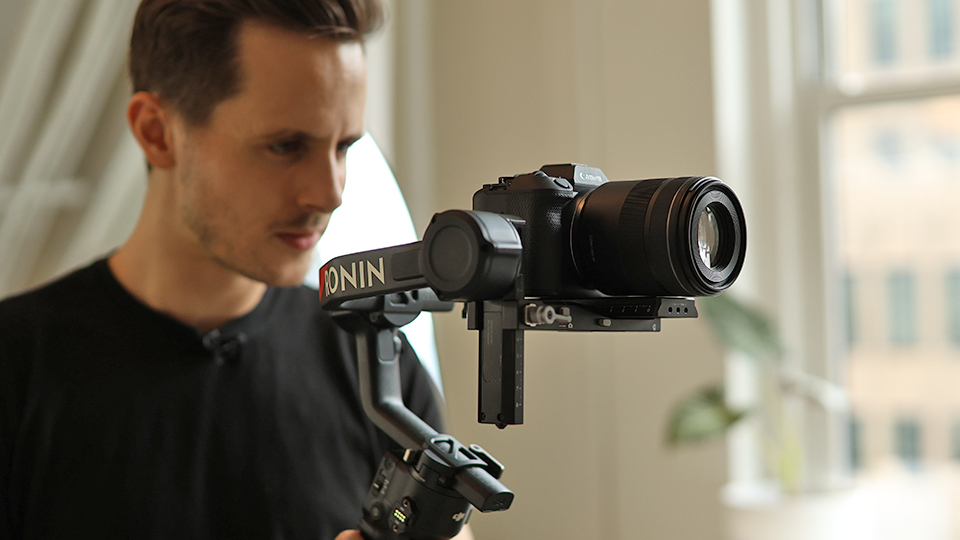
The camera shoots 4K video at 60p and Full HD video at 180p, resulting in detailed, well-rendered slow motion. Color-graders get post-production flexibility with Canon Log 3, while video newcomers receive preset Scene modes that optimize color and exposure.
In-body image stabilization up to 7.5 stops and Dual Pixel CMOS AF II provide accurate and reliable exposure and focus, especially shooting handheld in dynamic environments. The camera’s fully-rotating rear LCD screen simplifies self-shooting, and the camera’s USB-C port can also be used for live streaming.
For more information about the new camera, including additional features, specs, and highlights, be sure to check out the detailed product page for the Canon R8 Mark II Mirrorless Camera.
