Search results for: photography tips solutions reflectors for outdoor photography
About 9 filtered results
by Mathew Malwitz · Posted
Lighting is the key to all photography. While elaborate, multi-light setups may appear to be the standard, the creative photographer can produce a seemingly endless range of images using just one light source. This guide is designed to help those beginners out there build the perfect one-light kit for portrait photography.
Why One Light?
I completely understand why multi-light “studio in a box” kits are tempting to beginner and budget-conscience photographers. Why spend hundreds of dollars on one light when you can get three lights complete

by Shawn C. Steiner · Posted
When you start getting extremely close to your subject, you may run into some difficulty with lighting. This could be because your large lights can't get into position easily, you can't get the type of lighting you want, or you are so close that you are casting a shadow. There are solutions to these problems, and each has its own unique capabilities and look that will help you bring your macro photography up a notch.
Let's start things off with something you probably already have in your bag, an

by Cory Rice · Posted
When Nicéphore Niépce invented the first permanent photographic process in the early 19th century, he named it heliographie—or, sun-writing. Nearly two hundred years later, the sun continues to provide a quality light source to photographers at a fraction of the cost of its competitors. Like any creative decision, using natural light for portraits has its pros and cons. Its popularity stems from the facts that it is free, accessible,
by Dawn Wayand · Posted
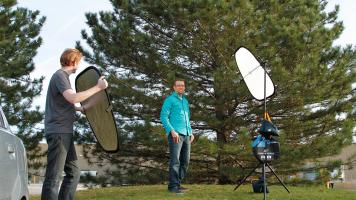
Generally, photographers are taught to shoot in the early morning hours, or around the “Golden Hour” (sunset/twilight hour) for the best light, because the light of midday afternoon is too harsh or too bright for making well-balanced exposures. However, if we were limited to just those nominal number of hours per day to capture a photo, we would miss many opportunities for great photos and decisive moments.


by tom kirkman · Posted
After posing for a few gigabytes of formals in a hall, you can sense the wedding party’s palpable relief when, weather permitting, it’s time to take it outside. If you’re lucky enough to have nicely landscaped grounds, it’s a great opportunity to stop fighting with the tungsten light sources inside and take advantage of that flash-friendly sunlight.
Whether you’re just starting out as a wedding photographer or a friend asked you to shoot his or her wedding or you’re a seasoned professional, you’ll need some kind of help to maximize your
by Dawn Wayand · Posted
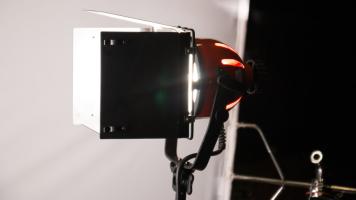
Flash lighting sources fire for a fraction of a second, just enough time to freeze, illuminate, and capture a subject. There are three main types of flash lighting sources: speedlights, monolights, and power pack lights. Which type you choose for your home studio will depend on how portable you need your lights to be, as well as your budget.
Four-monolight setup
Model: Mao Hanada
Benefits of Flash Photography
Flash photography offers several benefits. Flash can be used creatively to freeze motion because of its fraction-of-a

by Dawn Wayand · Posted
As photographers, we tend to monitor weather conditions before deciding whether to shoot outdoors on any given day. After investing thousands of dollars in a camera and lenses, we are determined to protect our gear at all costs. But if you truly think that rain or snow is an obstacle to getting outdoors and building that portfolio, you’d better think again!
Lone man walking in Times Square during a snow


by Allan Weitz · Posted
As a working photographer, the center of the universe is your camera bag and its contents. Your cameras and lenses are the tools of your trade. As you may have noted, both are mentioned in plural because just as you wouldn’t jump out of an airplane without a backup parachute, you shouldn’t attempt to photograph an emotionally spiked, non-repeatable event armed with only one camera. The same applies to lenses, too. The many aspects that comprise shooting weddings—portraits, the ceremony, dimly lit environs, tight, crowded quarters and bright

by Jill Waterman · Posted
With the year winding down and arrangements for family gatherings in the works, some advance planning for recording these moments through photographs is a worthwhile consideration. It’s no longer the era of your grandfather’s Kodak, with family members captured stiff as a rail or suffering from red-eye. There are lots of exciting imaging options out there, all of which involve slightly different approaches. In an effort to help you to make sense of the current spectrum, we’ve outlined these seven tips to walk you through the process, and to